Khami Ruins
The capital that followed Great Zimbabwe - terraced dry-stone platforms in decorated chevron and herringbone patterns, quiet outside Bulawayo.
Updated 18 October 2026

AI illustration
UNESCO World Heritage
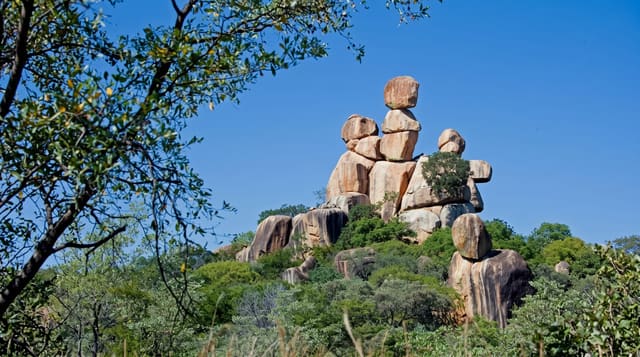
When Great Zimbabwe declined, the Torwa state built its capital at Khami, and what survives is a UNESCO-listed complex of terraced dry-stone platforms stepping up a hillside above the Khami river. The building style shifted here: instead of the massive free-standing walls of Great Zimbabwe, Khami's builders faced retaining terraces with decorative stonework in chevron, herringbone and checkerboard bands, creating platforms for houses that have long since gone. Portuguese and Chinese trade goods found in excavation show how far the state's networks reached. It is far quieter than Great Zimbabwe and, for many visitors, more atmospheric because of it.
History
Khami was the capital of the Torwa dynasty's Kingdom of Butua for some 200 years from around 1450, founded about the time the state at Great Zimbabwe disappeared, until, traditionally in 1683, Changamire Dombo and his Rozvi army from the Mutapa state conquered it; excavation suggests it was not lived in afterwards, as the Rozvi moved their capital to Danamombe, and in the 1830s Ndebele raiders drove them from Khami and their other sites. The city has seven built-up areas of the royal family, on stone-walled platforms, with commoners in the valley, among them a precipice platform wall 6 metres high and 68 metres long decorated with a chequerboard pattern, and it became a World Heritage Site in 1986 (Wikipedia, Khami).
The main sights
- The decorated terraces - chevron and herringbone stonework on the retaining walls.
- The Hill Complex - the royal platforms at the top of the site.
- The cross - a Dominican cross left on the site by early Portuguese contact.
- The site museum - excavation finds including imported trade goods.
When to go
The cooler dry months from April to September are the most comfortable for walking the terraces. Summer brings heat and thunderstorms. Mornings give the best light on the patterned stonework.
Practical notes
Khami sees very few visitors, which is part of the appeal but also means limited facilities and sometimes no guide on duty - arranging one through Bulawayo makes a large difference to understanding what you are seeing. The site is spread over a hillside with uneven ground. Signage is minimal. Combine it with the Bulawayo museum, which holds context and finds from the region.
Nearby
Bulawayo, the Matobo Hills and the Natural History Museum in the city.
Key facts
Source: Wikidata, item Q938685, read on 18 October 2026.
What to pack for Khami Ruins
Chosen from what this place is for. Tap a kit for the full checklist.
- Comfortable walking shoes - Sightseeing means kilometres of pavement and cobbles daily. Find on Amazon
- A slim anti-theft daypack - Zips that close properly; keep it in front in crowds and on transit. Find on Amazon
- A refillable water bottle - Many cities have public fountains; save money and plastic. Find on Amazon
- A light layer + compact umbrella - For museum air-con and a sudden shower. Find on Amazon
Some links on this page are Amazon affiliate links - if you buy through them we may earn a small commission at no extra cost to you.
All packing kitsPlan your trip
Where to start if Khami Ruins is going on the list.
Booking links on this page are affiliate links - if you book through them we may earn a small commission at no extra cost to you. It never changes what we write about a place.
Opening times, ticket prices and seasonal closures change - check the official source before you go: official site.