Liuwa Plain National Park
A remote western floodplain holding one of Africa's larger wildebeest migrations.
Updated 20 October 2026
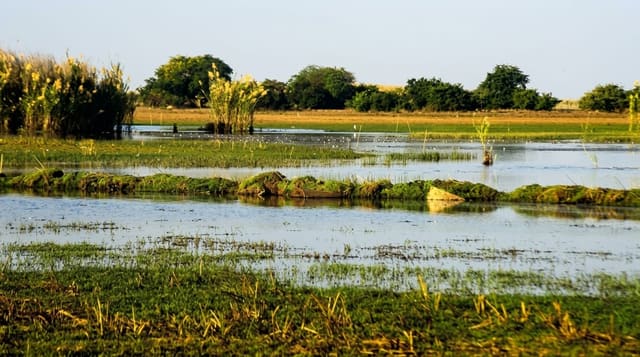
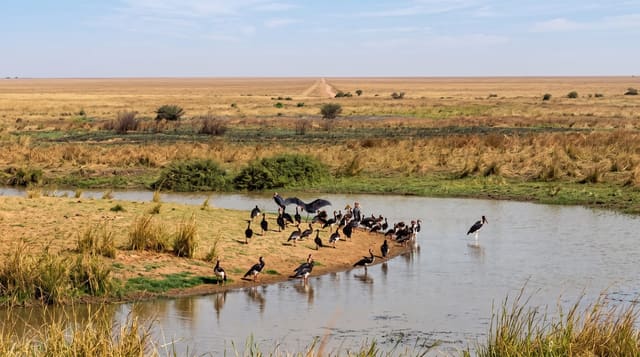
Liuwa Plain sits in the far west near the Angolan border, a flat grass plain that floods in the rains and dries into open country, and every November tens of thousands of blue wildebeest move across it in a migration that gets far less attention than the East African one because almost nobody comes here. The plain was the hunting ground of the Lozi king Lubosi Lewanika, who made it a protected area in the early 1880s, almost a century before it became a national park in 1972. Lady Liuwa, a lioness who lived alone here for years after the rest of the pride was lost, made the place briefly famous.
Highlights
- The wildebeest migration - tens of thousands of animals moving across the plain from November.
- The open grassland - flat country flooding in the rains and drying out after.
- The Lozi history - a royal hunting ground protected from the 1880s, a national park since 1972.
- The hyena clans - unusually large spotted hyena groups that dominate the plain.
When to go
November to December is the migration and the wettest, hardest driving. May to July is dry and easier but the animals are dispersed. The park closes in the peak floods.
Before you go
Access is genuinely difficult and self-drive requires full self-sufficiency in fuel and recovery gear. The migration timing shifts with the rains and can be missed. There is one lodge and a couple of campsites, nothing more.
Nearby
Mongu is east, and the Barotse Floodplain lies between them.
Key facts
Source: Wikidata, item Q1471784, read on 18 October 2026.
What to pack for Liuwa Plain National Park
Chosen from what this place is for. Tap a kit for the full checklist.
- Broken-in walking shoes or boots - Grip and ankle support matter more than looks; never hike in brand-new boots. Find on Amazon
- Binoculars - The single best wildlife tool - even a compact pair transforms a sighting. Find on Amazon
- Shelter suited to the place - Tent, tarp or hut booking - match it to the terrain and rules. Find on Amazon
- Layers + a waterproof shell - Mountain weather turns fast; a packable rain jacket saves the day. Find on Amazon
Some links on this page are Amazon affiliate links - if you buy through them we may earn a small commission at no extra cost to you.
All packing kitsPlan your trip
Where to start if Liuwa Plain National Park is going on the list.
Booking links on this page are affiliate links - if you book through them we may earn a small commission at no extra cost to you. It never changes what we write about a place.
Opening times, ticket prices and seasonal closures change - check the official source before you go: official site.