Manú National Park
A UNESCO-listed park descending from Andean cloud forest to lowland Amazon, among the most biodiverse protected areas on earth.
Updated 18 October 2026
AI illustration
UNESCO World Heritage
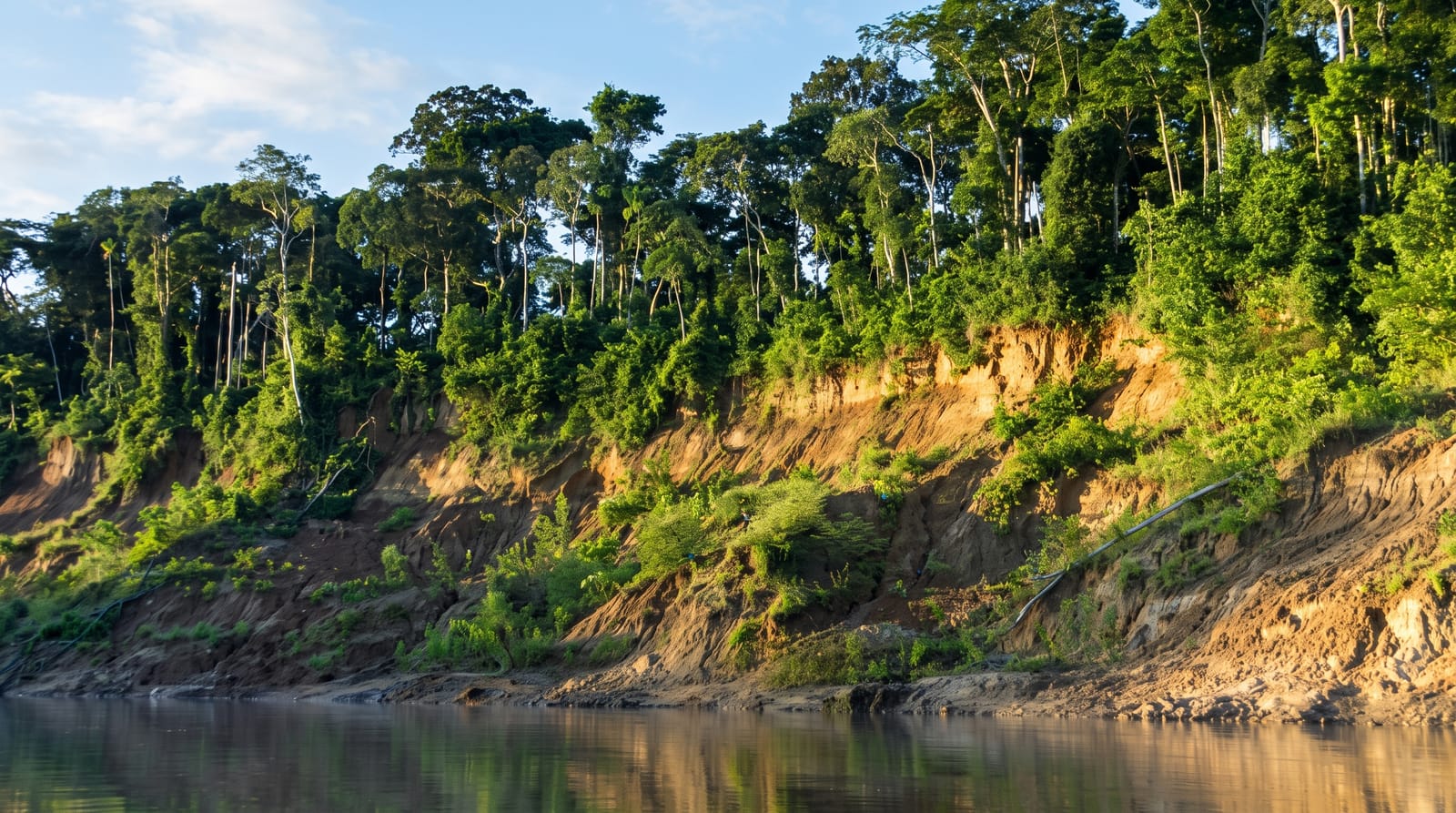
Manú protects an entire slice of the eastern Andes, running from high grassland down through cloud forest into lowland Amazon rainforest, and because it spans that whole gradient without a break it holds an extraordinary concentration of life: over a thousand bird species have been recorded, along with jaguar, giant otter, tapir, spectacled bear and thirteen species of monkey. Reaching it is part of the experience, a long overland descent from Cusco through cloud forest where the cock-of-the-rock displays at dawn, then by boat down the river into the reserved zone, where lodges sit beside oxbow lakes patrolled by giant otters and macaws gather at clay licks in noisy scarlet crowds. Access is deliberately restricted: the innermost zone is reserved for research and for Indigenous peoples living in voluntary isolation, and visitors are confined to the reserved and cultural zones with authorised operators.
History
Manu National Park was established by decree on 29 May 1973, UNESCO recognised it as a biosphere reserve in 1977 and as a World Heritage Site in 1987, and in 2002 the Peruvian government enlarged it to its present area (Wikipedia, Manu National Park).
Highlights
- The macaw clay licks - hundreds of parrots and macaws gathering on riverbank clay.
- Oxbow lakes and giant otters - the still lakes where otters hunt and hoatzin nest.
- The cloud forest - the descent through mist forest, with the cock-of-the-rock lek.
- The river journey - the long boat trip into the reserved zone.
When to go
May to October, the dry season, when rivers are navigable and trails passable, is the standard window; the wet season makes the overland road and the trails much harder. Clay licks are most active in the drier months. Trips run five to nine days and must be booked with an authorised operator well ahead.
Good to know
This is a serious expedition, not a day trip: the overland route takes the best part of two days each way, the roads are rough and prone to landslides, and lodges are simple, with heat, humidity, insects and no reliable connectivity. It is expensive because access is restricted and logistics are hard. Wildlife is wild, so jaguar and tapir sightings are luck rather than expectation, though birds and monkeys are near-certain.
Nearby
Cusco and the Sacred Valley are the gateway; the Tambopata reserve near Puerto Maldonado is an easier Amazon alternative.
Key facts
Source: Wikidata, item Q390264, read on 18 October 2026.
What to pack for Manú National Park
Chosen from what this place is for. Tap a kit for the full checklist.
- Broken-in walking shoes or boots - Grip and ankle support matter more than looks; never hike in brand-new boots. Find on Amazon
- Binoculars - The single best wildlife tool - even a compact pair transforms a sighting. Find on Amazon
- Strong insect repellent - DEET or picaridin; the jungle is where bites and disease risk are highest. Find on Amazon
- Modest clothing - Shoulders and knees covered - the single most common requirement. Find on Amazon
Some links on this page are Amazon affiliate links - if you buy through them we may earn a small commission at no extra cost to you.
All packing kitsPlan your trip
Where to start if Manú National Park is going on the list.
Booking links on this page are affiliate links - if you book through them we may earn a small commission at no extra cost to you. It never changes what we write about a place.
Opening times, ticket prices and seasonal closures change - check the official source before you go: official site.