The Japanese Covered Bridge
The small roofed bridge with a shrine built into its side, linking the old Japanese and Chinese quarters of Hoi An across a narrow creek.
Updated 18 October 2026

AI illustration
UNESCO World Heritage
Chua Cau is about eighteen metres of covered timber over a creek that once separated the Japanese and Chinese merchant quarters, and it has been rebuilt many times since Japanese merchants first built it in 1593-1595. A tiled roof runs the full length, carried on wooden posts with benches along the sides. Halfway across, a small temple opens off the north wall, dedicated to a northern deity associated with weather and floods. Carved animals guard each end, dogs at one and monkeys at the other. The bridge appears on the twenty thousand dong note, and a restoration completed in 2024 took it apart and put it back with new timber and fresh paint.
History
Japanese merchants who settled in the port of Faifo, today's Hội An, began the covered bridge across a neighbourhood canal in 1593 and finished it in 1595, linking their quarter with the Chinese one, and in 1653, legend says, they built a temple on it to calm Namazu, the monster believed to cause earthquakes. After the Japanese and Dutch traders withdrew in the 17th century the quarter changed little, and in 1719 Lord Nguyễn Phúc Chu named it Lai Viễn Kiều, the bridge for welcoming guests from afar. It was rebuilt in 1817 and renovated in 1865, 1915 and 1986, gradually taking on Vietnamese and Chinese features in place of Japanese ones, and as underground erosion makes it sink, works are under way to keep it standing (Wikipedia, Japanese Bridge).
The main sights
- The covered span - a tiled roof over timber posts, with benches and worn boards underfoot.
- The bridge shrine - a small temple opening off the north side, with incense and offerings.
- The guardian animals - carved dogs at one end of the bridge and monkeys at the other.
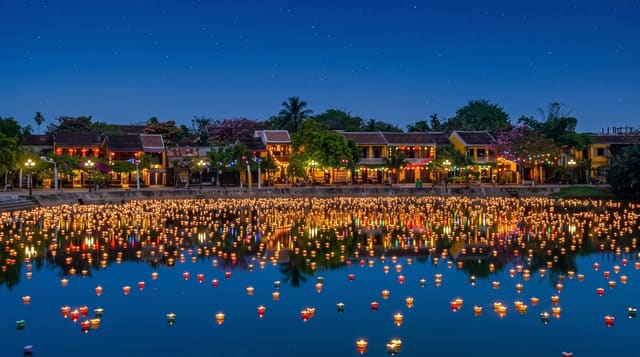
- The creek frontage - old shophouse walls and lanterns framing the bridge from either bank.
When to go
February to August is the drier half of the year, while October to December brings rain and occasional flooding that puts water across the surrounding lanes. Come at dawn or late at night if you want it without a crowd. Crossing requires a punch on the old town ticket, though the bridge can be seen from both banks for nothing.
What to expect
It is very small. Crossing takes twenty seconds and there is a permanent scrum of people photographing it from either side. The 2024 restoration left the paintwork and timber looking new, which drew criticism locally and does reduce the sense of age. Expect to wait your turn for the standard view and to be asked for a ticket at the entrance.
Nearby
Hoi An's shophouse streets, assembly halls and riverside market are all minutes away.
Key facts
Source: Wikidata, item Q1091054, read on 18 October 2026.
What to pack for The Japanese Covered Bridge
Chosen from what this place is for. Tap a kit for the full checklist.
- Head torch + spare batteries - Hands-free light is essential; caves are truly dark. Find on Amazon
- Comfortable walking shoes - Sightseeing means kilometres of pavement and cobbles daily. Find on Amazon
- Modest clothing - Shoulders and knees covered - the single most common requirement. Find on Amazon
- Grippy closed shoes - Cave floors are wet, muddy and slick with formations. Find on Amazon
Some links on this page are Amazon affiliate links - if you buy through them we may earn a small commission at no extra cost to you.
All packing kitsPlan your trip
Where to start if The Japanese Covered Bridge is going on the list.
Booking links on this page are affiliate links - if you book through them we may earn a small commission at no extra cost to you. It never changes what we write about a place.
Opening times, ticket prices and seasonal closures change - check the official source before you go: official site.