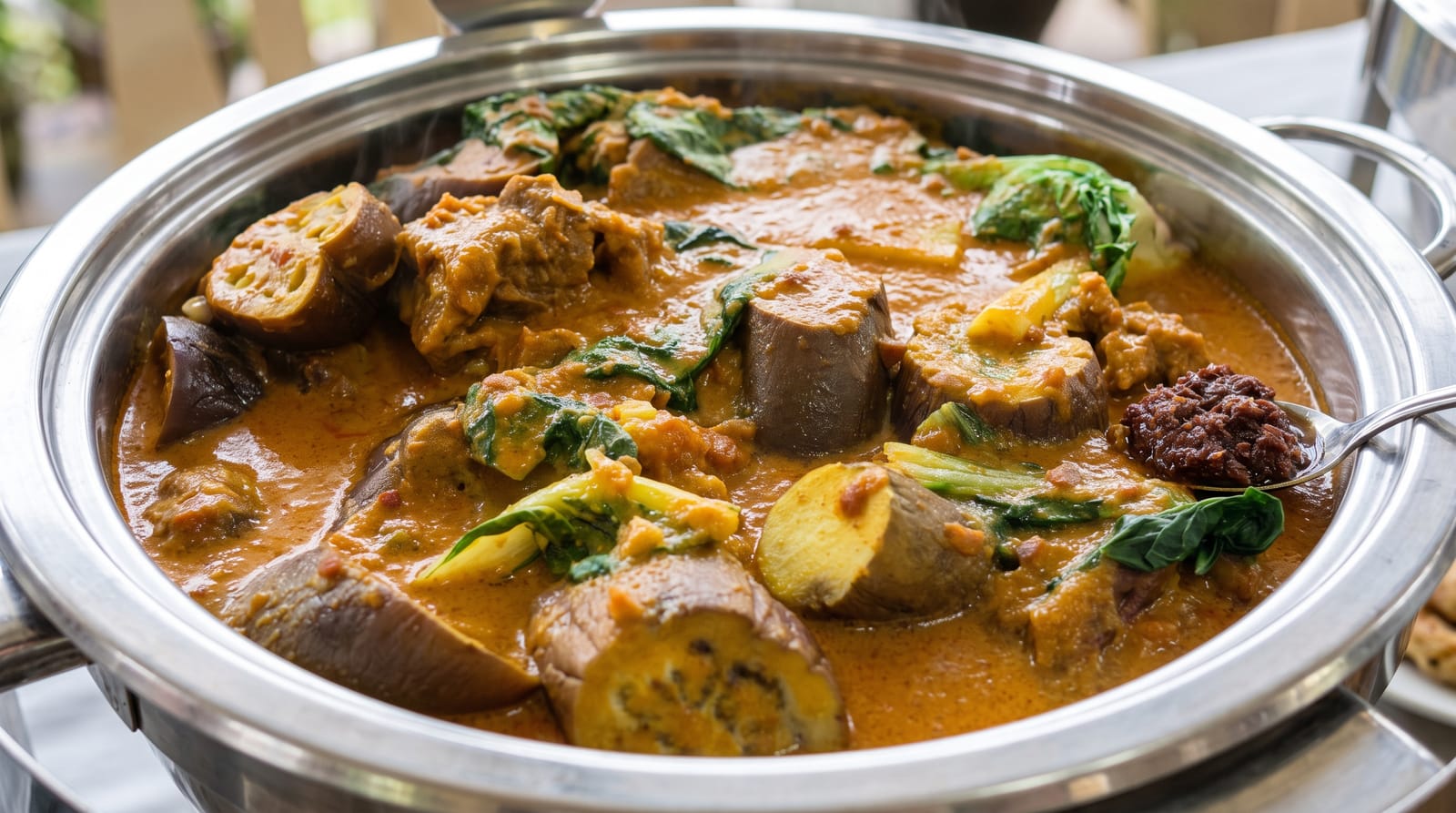
Uzbek Cuisine
The hearty food of the Silk Road - the beloved national plov of rice, meat and carrots, the tandoor bread non, grilled shashlik, dumplings and green tea, shaped by nomadic and Persian traditions.
Updated 3 September 2026
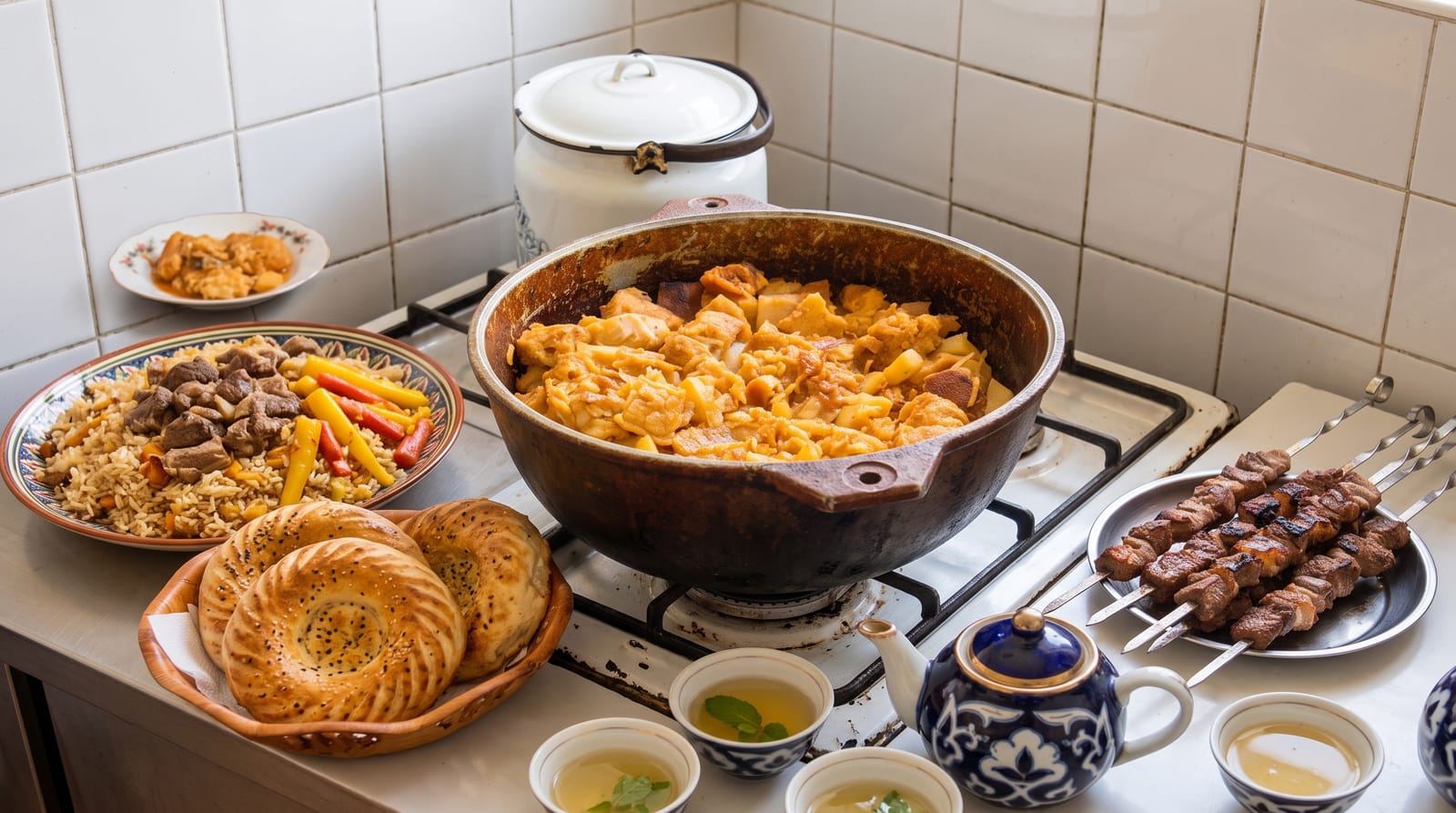
AI illustration
Uzbek cuisine is the hearty, richly flavoured food of the Silk Road, shaped by nomadic, Persian and Turkic traditions and built around rice, meat, bread and vegetables. Its national dish, cooked with great pride and ceremony, is plov, or osh, a fragrant one-pot dish of rice, lamb, carrots and onions slow-cooked in a huge cauldron. Alongside come the round tandoor-baked bread non, grilled shashlik kebabs, hearty soups, the dumplings manti and samsa, and endless bowls of green tea in the shady chaikhana teahouse.
What you'll find
- Plov (osh) - the national dish of rice, lamb and carrots.
- Non bread - the round, decorated tandoor-baked bread.
- Shashlik and samsa - the grilled kebabs and baked pastries.
- The chaikhana - the traditional teahouse and its green tea.
When to go
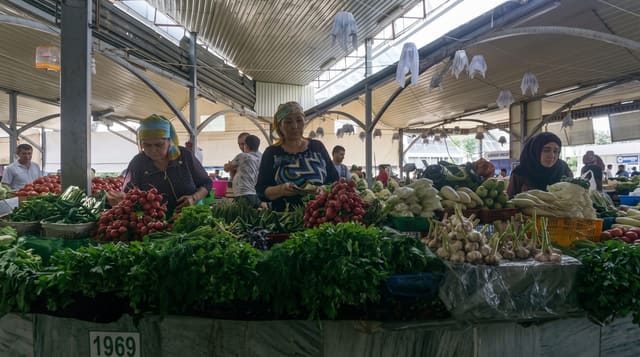
Year-round; plov is traditionally eaten at lunch and central to celebrations, and watching it cooked in a giant cauldron at a plov centre is a spectacle. The bazaars and chaikhana teahouses are the atmospheric places to eat and drink tea.
Good to know
Uzbek food is very hearty, meat-and-rice-heavy and rich, so it can feel repetitive over a long trip and is a challenge for vegetarians, though the bread, salads, samsa and dairy help. The famous plov is delicious but oily. Green tea, not water, accompanies meals. The bazaars and teahouses are wonderful, sociable places to eat, and the hospitality is warm and generous.
Nearby
Every region has its own style of plov; the bazaars everywhere sell fresh non and fruit.
What to pack for Uzbek Cuisine
Chosen from what this place is for. Tap a kit for the full checklist.
- A reusable bag or container - For market produce and cutting down on packaging. Find on Amazon
- Wet wipes + hand sanitiser - Street food and washbasins do not always go together. Find on Amazon
Some links on this page are Amazon affiliate links - if you buy through them we may earn a small commission at no extra cost to you.
All packing kitsPlan your trip
Where to start if Uzbek Cuisine is going on the list.
Booking links on this page are affiliate links - if you book through them we may earn a small commission at no extra cost to you. It never changes what we write about a place.
Opening times, ticket prices and seasonal closures change - check the official source before you go: official site.