Kare-kare
Oxtail and vegetables in a thick peanut sauce, coloured with annatto and eaten with a spoonful of fermented shrimp paste alongside.
Updated 25 August 2026
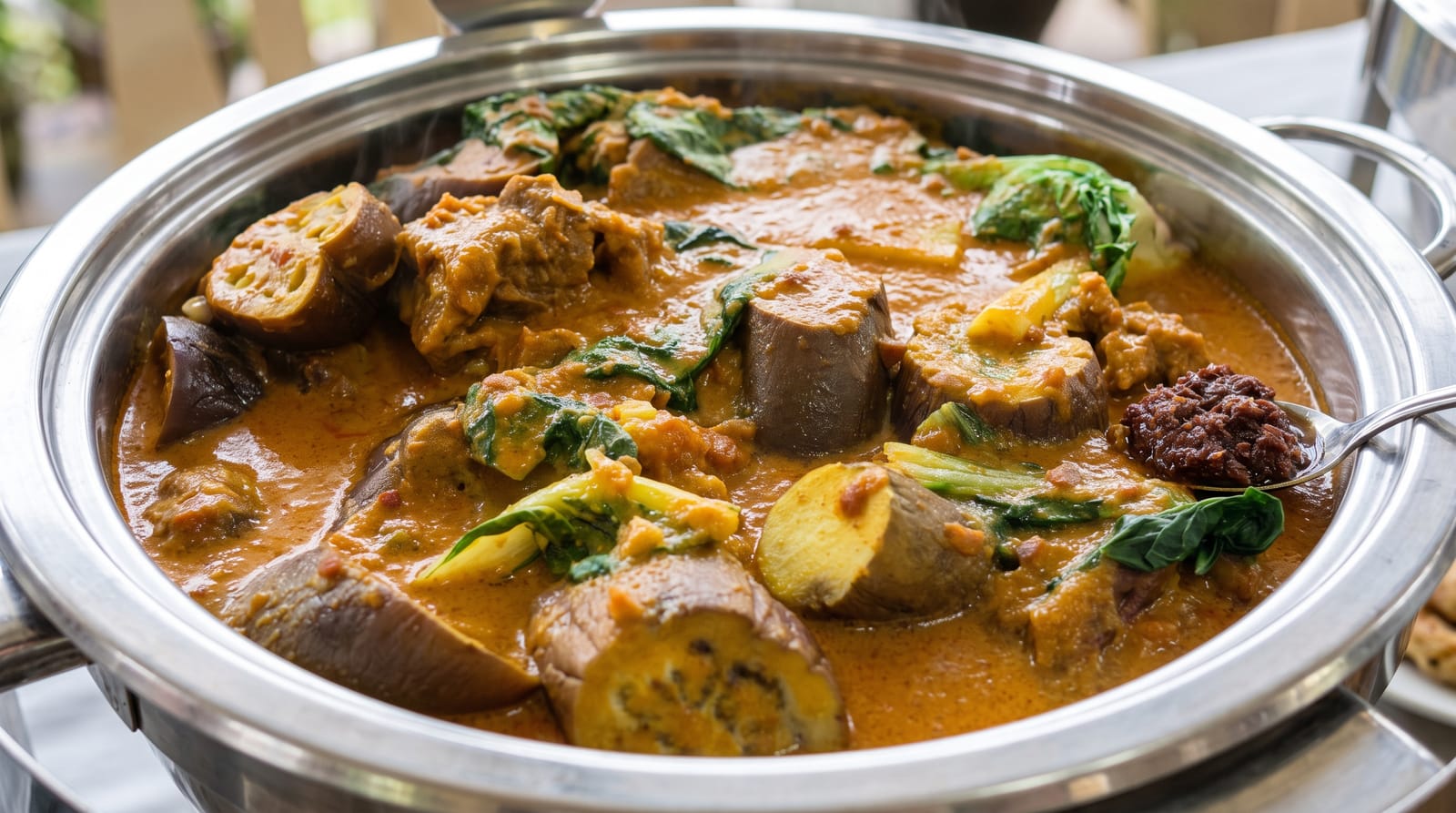
AI illustration
Kare-kare is oxtail, tripe and sometimes ox foot simmered until the meat gives, in a sauce thickened with ground peanuts and toasted rice and coloured orange with annatto, served with banana heart, eggplant, string beans and bok choy. The sauce is rich and deliberately bland - no salt goes into it - because the seasoning arrives separately as bagoong alamang, fermented shrimp paste, sautéed with garlic and sometimes sugar, which the eater adds by the spoonful to their own plate. Getting that ratio right is the skill of eating it. The origins are disputed: some trace it to Kapampangan cooking, others to Indian influence through Sepoy soldiers who settled in Cainta, and the peanut-and-annatto combination points in several directions at once. It is a fiesta and Sunday dish rather than everyday food, largely because oxtail is expensive and the cooking takes hours.
What's there
- The peanut sauce - thick, orange and unsalted.
- The oxtail and tripe - long-simmered cuts in the pot.
- The vegetables - banana heart, eggplant and string beans.
- The bagoong - shrimp paste added at the plate.
When to go
Year-round, but it belongs to fiestas and Sunday tables. Pampanga and Bulacan are where to eat it if you have the choice.
Practical notes
Without the bagoong the sauce tastes of very little - that is by design, so use it. Cheaper versions substitute peanut butter and thin the sauce. Tripe and oxtail are not to everyone's taste; some places offer a seafood or vegetable version.
Nearby
Pampanga and Bulacan's fiesta tables are the best versions; Manila restaurants serve it year-round.
What to pack for Kare-kare
Chosen from what this place is for. Tap a kit for the full checklist.
- A reusable bag or container - For market produce and cutting down on packaging. Find on Amazon
- Wet wipes + hand sanitiser - Street food and washbasins do not always go together. Find on Amazon
Some links on this page are Amazon affiliate links - if you buy through them we may earn a small commission at no extra cost to you.
All packing kitsPlan your trip
Where to start if Kare-kare is going on the list.
Booking links on this page are affiliate links - if you book through them we may earn a small commission at no extra cost to you. It never changes what we write about a place.
Opening times, ticket prices and seasonal closures change - check the official source before you go: official site.