Central Park
843 acres of entirely constructed landscape in the middle of Manhattan, built from 1858 on ground that had to be blasted flat.
Updated 20 October 2026
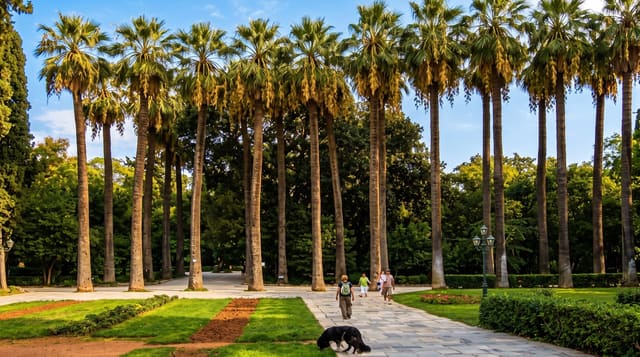
Nothing in the park is natural. Frederick Law Olmsted and Calvert Vaux won the 1858 competition and the ground was rebuilt wholesale: swamps drained, more explosive used than at Gettysburg to move the rock, around five million cubic feet of soil and rock carted out, and every lake, meadow and wood placed. The transverse roads were sunk below sight line so crosstown traffic would not break the illusion. Seneca Village, a mostly African American settlement of about two hundred and twenty-five people, many of them landowners, stood on the west side and was cleared by eminent domain to make way; the park has acknowledged this and marked the site. Bethesda Terrace, the Ramble, the Reservoir and Sheep Meadow are the set pieces.
Highlights
- A wholly constructed landscape - every lake and hill placed by design.
- Sunken transverse roads - hiding crosstown traffic from the park.
- The Seneca Village site - a Black community cleared to build it, now marked.
- Bethesda Terrace and the Ramble - the designed set pieces.
When to go
April to October; spring blossom and autumn colour are the peaks. Half a day.
What to expect
It is large - crossing it end to end is over four kilometres. Weekends are crowded, especially the southern end. Some paths are confusing by design. Horse carriage rides remain contested locally.
Nearby
The Met is on the east edge; the American Museum of Natural History on the west.
Key facts
Source: Wikidata, item Q160409, read on 18 October 2026.
What to pack for Central Park
Chosen from what this place is for. Tap a kit for the full checklist.
- Comfortable walking shoes - Sightseeing means kilometres of pavement and cobbles daily. Find on Amazon
- A slim anti-theft daypack - Zips that close properly; keep it in front in crowds and on transit. Find on Amazon
- A refillable water bottle - Many cities have public fountains; save money and plastic. Find on Amazon
- A light layer + compact umbrella - For museum air-con and a sudden shower. Find on Amazon
Some links on this page are Amazon affiliate links - if you buy through them we may earn a small commission at no extra cost to you.
All packing kitsPlan your trip
Where to start if Central Park is going on the list.
Booking links on this page are affiliate links - if you book through them we may earn a small commission at no extra cost to you. It never changes what we write about a place.
Opening times, ticket prices and seasonal closures change - check the official source before you go: official site.