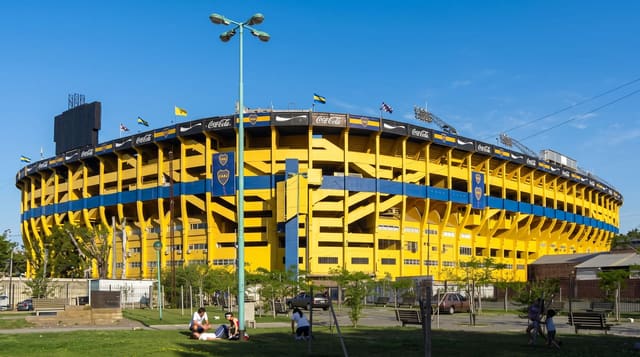
Wembley Stadium
England's national stadium, rebuilt in 2007 with a 133-metre arch that replaced the twin towers of the 1923 ground.
Updated 20 October 2026

AI illustration
The original Wembley opened in 1923 for the British Empire Exhibition and became known for its twin towers; its first event, the FA Cup final of that year, drew a crowd estimated at up to three hundred thousand into a ground with an official capacity of 127,000, and a policeman on a white horse clearing the pitch gave the match its name. It hosted the 1948 Olympics and the 1966 World Cup final. Demolition began in 2002, and the replacement opened in 2007 with ninety thousand seats, the largest in the country and the second largest in Europe, and a steel arch 133 metres high spanning the roof, which carries all the weight of the northern roof and removed the need for internal pillars. Tours cover the dressing rooms, the tunnel and the royal box.
The main sights
- The arch - 133 metres high with a 315-metre span, carrying the roof and visible across London.
- The players' tunnel - the walk out to the pitch on the tour route.
- The royal box - the presentation area with the trophy steps.
- The 1923 history - the white horse final and the twin towers explained.
When to go
Year-round for tours, which do not run on event days or often the day before. Football and concert schedules are published well ahead and should be checked before booking.
Practical notes
Tours are cancelled around events, which are frequent. Nothing of the 1923 stadium survives beyond artefacts. Wembley is a long way from central London and the surrounding area is a retail development.
Nearby
Wembley Arena and the outlet designer village are alongside; central London is thirty minutes by tube.
Key facts
Source: Wikidata, item Q128468, read on 18 October 2026.
What to pack for Wembley Stadium
Chosen from what this place is for. Tap a kit for the full checklist.
- Comfortable walking shoes - Sightseeing means kilometres of pavement and cobbles daily. Find on Amazon
- A slim anti-theft daypack - Zips that close properly; keep it in front in crowds and on transit. Find on Amazon
- A refillable water bottle - Many cities have public fountains; save money and plastic. Find on Amazon
- A light layer + compact umbrella - For museum air-con and a sudden shower. Find on Amazon
Some links on this page are Amazon affiliate links - if you buy through them we may earn a small commission at no extra cost to you.
All packing kitsPlan your trip
Where to start if Wembley Stadium is going on the list.
Booking links on this page are affiliate links - if you book through them we may earn a small commission at no extra cost to you. It never changes what we write about a place.
Opening times, ticket prices and seasonal closures change - check the official source before you go: official site.