Kynance Cove
Serpentine stacks and white shell sand on the Lizard, a Victorian tourist draw that Tennyson and Victoria both came to see.
Updated 21 October 2026
AI illustration
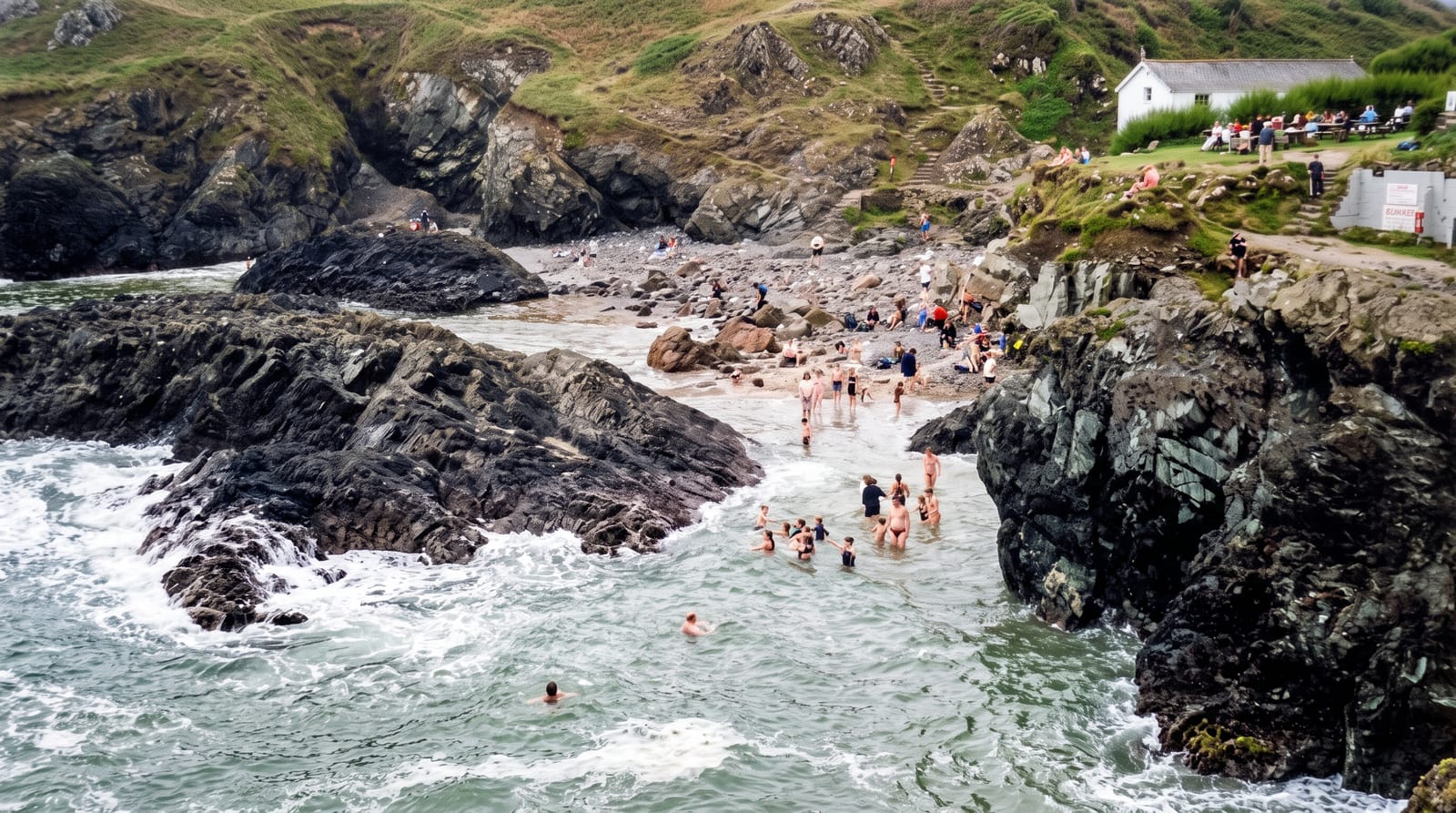
Kynance is a cove of white sand between islands and stacks of serpentine, the green, red and purple mantle rock of the Lizard peninsula, which polishes to a shine when wet and which Victorian visitors came specifically to see; Tennyson visited in 1848 and Victoria and Albert in 1846, and the cove was a fixture of nineteenth-century Cornish tourism before most of the coast had any. The sand is largely crushed shell, which gives it the pale colour that makes the water look tropical in sunshine. At low tide the stacks can be walked to and caves entered, including one called the Devil's Bellows that blows spray through a blowhole on a rising tide; at high water most of the beach disappears. Cornish heath grows on the cliffs above.
What's there
- The serpentine stacks - green and red mantle rock islands in the cove.
- The shell sand - pale beach that turns the shallows turquoise in sun.
- The tidal caves - passages and a blowhole accessible only at low water.
- The Victorian association - a cove visited by Tennyson and Queen Victoria.
When to go
May to September, and specifically at low tide, since most of the beach and all the caves are underwater at high water; tide tables matter more than the season. Summer weekends fill the car park by mid-morning.
What to expect
The path down is steep and about ten minutes each way, with a harder climb back. The tide comes in fast and cuts off the stacks and caves. There is one seasonal cafe and nothing else.
Nearby
Lizard Point is a walk south along the coast; Helston and the Helford lie north.
Key facts
Source: Wikidata, item Q3817686, read on 18 October 2026.
What to pack for Kynance Cove
Chosen from what this place is for. Tap a kit for the full checklist.
- Broken-in walking shoes or boots - Grip and ankle support matter more than looks; never hike in brand-new boots. Find on Amazon
- Reef-safe sunscreen - High SPF that will not bleach the coral you are swimming over. Find on Amazon
- Head torch + spare batteries - Hands-free light is essential; caves are truly dark. Find on Amazon
- Layers + a waterproof shell - Mountain weather turns fast; a packable rain jacket saves the day. Find on Amazon
Some links on this page are Amazon affiliate links - if you buy through them we may earn a small commission at no extra cost to you.
All packing kitsPlan your trip
Where to start if Kynance Cove is going on the list.
Booking links on this page are affiliate links - if you book through them we may earn a small commission at no extra cost to you. It never changes what we write about a place.
Opening times, ticket prices and seasonal closures change - check the official source before you go: official site.