Trebah Garden
A ravine garden of tree ferns and giant rhubarb running down to its own beach on the Helford River.
Updated 20 October 2026
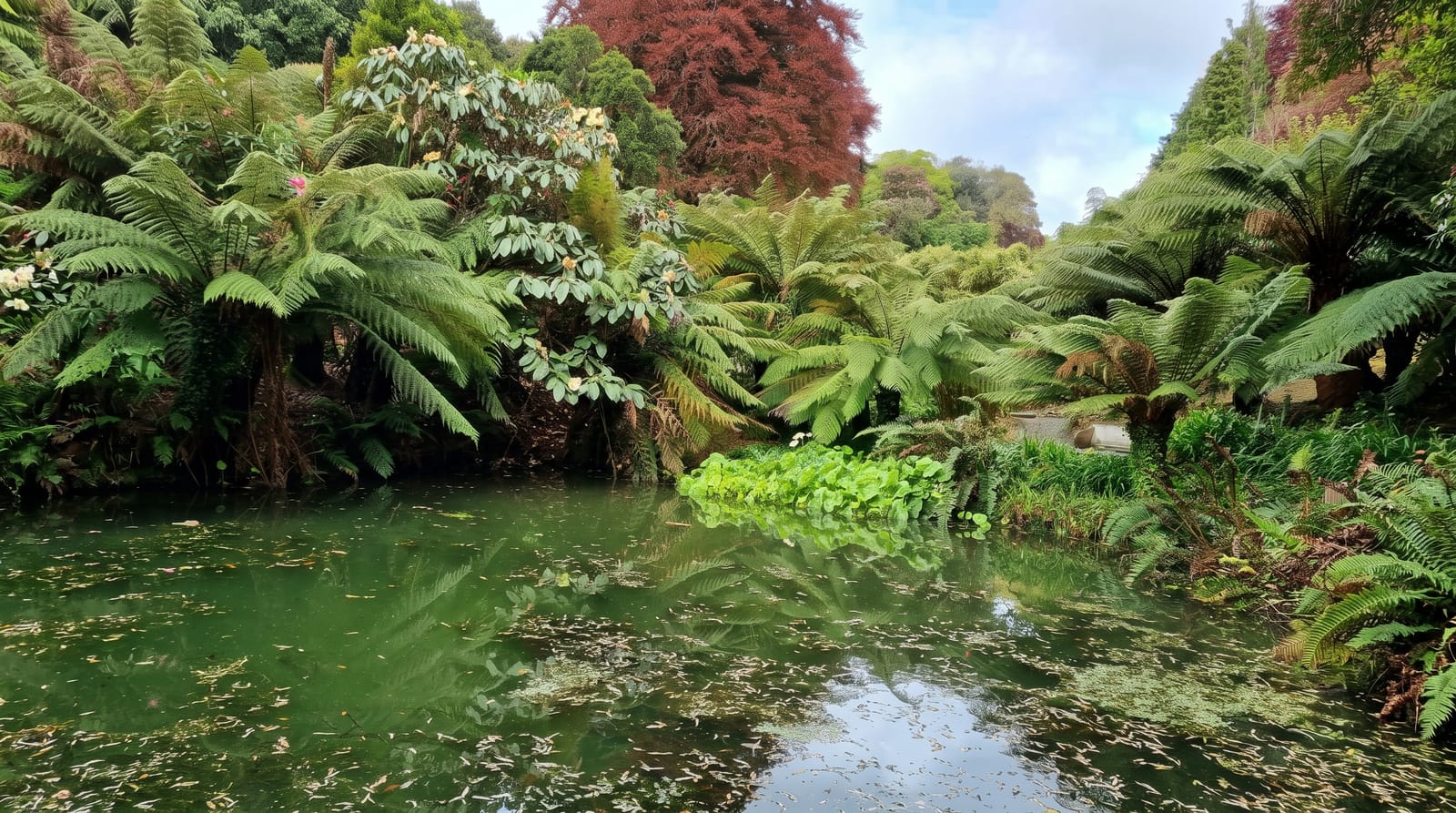
AI illustration
Trebah occupies a steep ravine dropping to the Helford River, and the shelter and the Cornish climate let it grow things that should not survive in Britain: tree ferns in a shaded gully, gunnera whose leaves reach over two metres across so that paths run underneath them, and a hydrangea valley in flower in late summer. Charles Fox laid it out after his family acquired Trebah in 1831; it declined from 1939, and Tony and Eira Hibbert restored it from 1981 and opened it to the public in 1987. At the bottom is Polgwidden Cove, a small beach that keeps some concrete structures from its wartime use.
The landscape
- The gunnera tunnel - paths running beneath giant rhubarb leaves.
- The tree fern gully - Dicksonia planted in a shaded ravine.
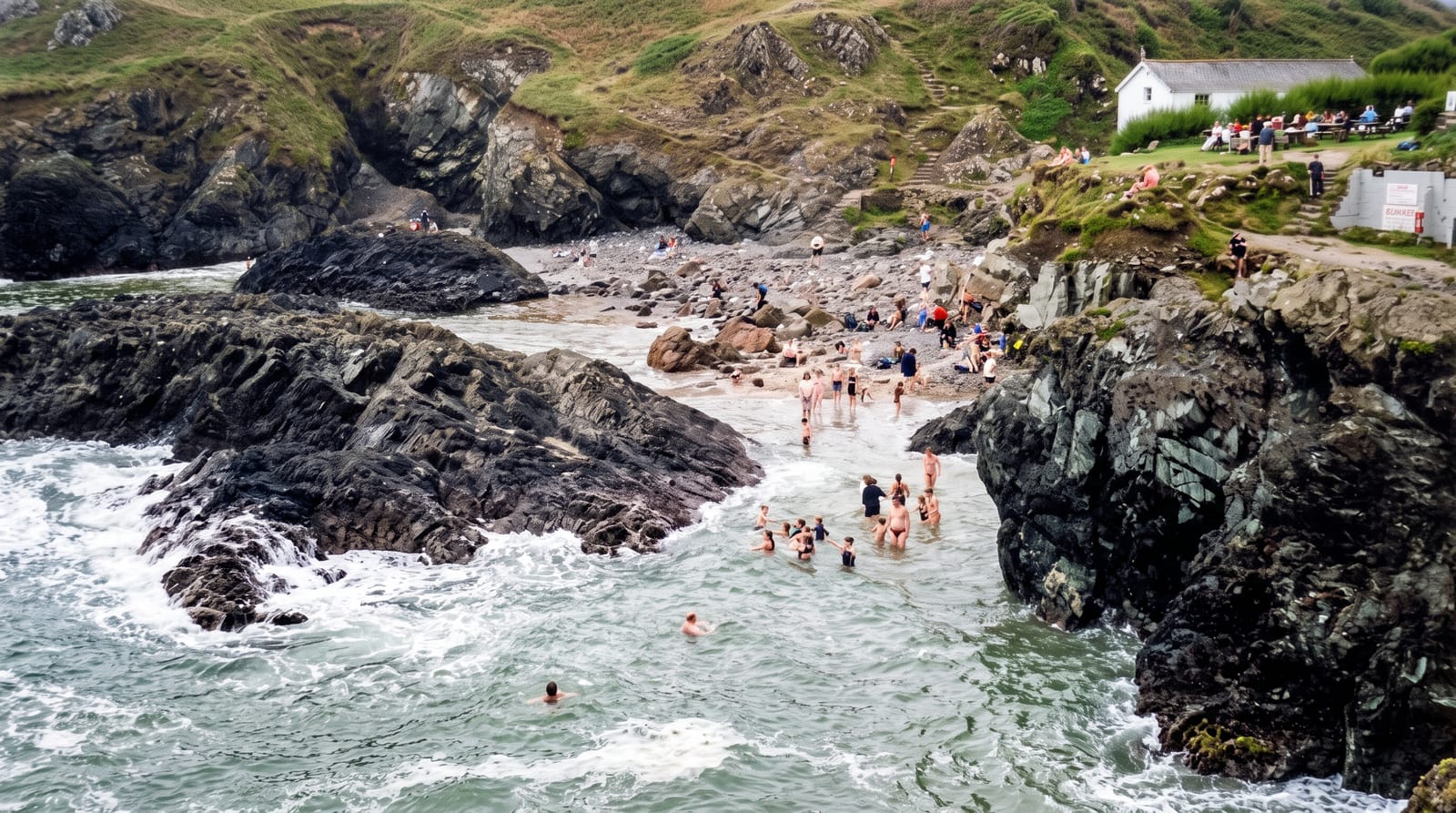
- Polgwidden Cove - the garden's own beach on the Helford River.
- The hydrangea valley - a valley of hydrangeas in flower in late summer.
When to go
March to October; magnolias and rhododendrons in spring, gunnera at full size by midsummer, hydrangeas in August and September. The garden opens year-round with reduced winter planting.
Before you go
The garden is a steep ravine and the walk back up from the beach is a serious climb, though a shuttle runs for those who need it. Paths are narrow and muddy after rain. The beach is small and shingle.
Nearby
Glendurgan garden adjoins; Falmouth and the Helford River lie either side.
Key facts
Source: Wikidata, item Q476407, read on 18 October 2026.
What to pack for Trebah Garden
Chosen from what this place is for. Tap a kit for the full checklist.
- Broken-in walking shoes or boots - Grip and ankle support matter more than looks; never hike in brand-new boots. Find on Amazon
- Layers + a waterproof shell - Mountain weather turns fast; a packable rain jacket saves the day. Find on Amazon
- Daypack with rain cover - 20-30 litres holds water, snacks, layers and a first-aid kit. Find on Amazon
- Offline maps + a power bank - Download the trail before you lose signal; carry backup charge. Find on Amazon
Some links on this page are Amazon affiliate links - if you buy through them we may earn a small commission at no extra cost to you.
All packing kitsPlan your trip
Where to start if Trebah Garden is going on the list.
Booking links on this page are affiliate links - if you book through them we may earn a small commission at no extra cost to you. It never changes what we write about a place.
Opening times, ticket prices and seasonal closures change - check the official source before you go: official site.