Humber Bridge
A single-span suspension bridge whose towers lean apart to account for the curve of the earth, walkable on both sides.
Updated 20 October 2026
AI illustration
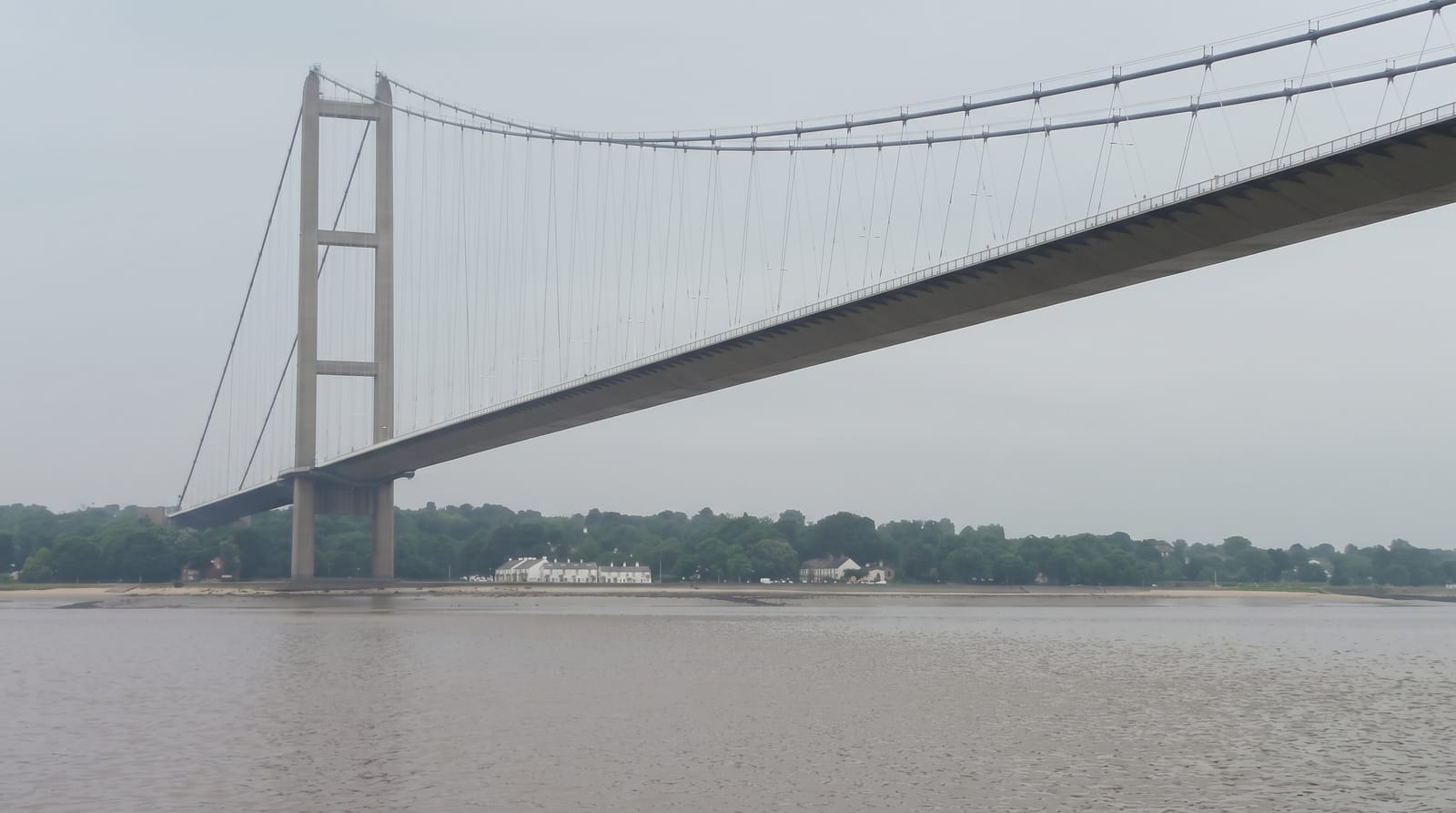
Opened in 1981, the bridge has a main span of 1,410 metres and was the longest single-span suspension bridge in the world until 1998. The towers are 155 metres tall and are 36 millimetres further apart at the top than at the base, because they are vertical and the earth curves between them. The deck is a hollow steel box designed to be aerodynamic, and it moves: it can flex more than three metres in high wind, and walkers on the footway feel it. There was little traffic to justify it when built and the debt was a long-running local grievance until it was restructured and tolls cut in 2012. Footways run along both sides, and the Country Park below, a former chalk quarry, gives the standard view up at the span.
The main sights
- The leaning towers - 155 metres tall and 36 millimetres further apart at the top.
- The 1,410-metre span - the world's longest from 1981 until 1998.
- The moving deck - a box girder that flexes several metres in wind.
- The Country Park - a former chalk quarry beneath the northern approach.
When to go
Year-round; the footway is open at all times and free. Clear days give the best view down the estuary, and the bridge is lit at night. Strong winds make the walk unpleasant and the deck movement noticeable.
Practical notes
The walk across and back is about five kilometres alongside constant traffic and is loud. The footway is exposed with no shelter. The bridge has a long association with suicide and there are Samaritans signs and patrols along it.
Nearby
Hull lies east; Barton-upon-Humber and its Anglo-Saxon church are at the south end.
Key facts
Source: Wikidata, item Q1141014, read on 18 October 2026.
What to pack for Humber Bridge
Chosen from what this place is for. Tap a kit for the full checklist.
- Comfortable walking shoes - Sightseeing means kilometres of pavement and cobbles daily. Find on Amazon
- A slim anti-theft daypack - Zips that close properly; keep it in front in crowds and on transit. Find on Amazon
- A refillable water bottle - Many cities have public fountains; save money and plastic. Find on Amazon
- A light layer + compact umbrella - For museum air-con and a sudden shower. Find on Amazon
Some links on this page are Amazon affiliate links - if you buy through them we may earn a small commission at no extra cost to you.
All packing kitsPlan your trip
Where to start if Humber Bridge is going on the list.
Booking links on this page are affiliate links - if you book through them we may earn a small commission at no extra cost to you. It never changes what we write about a place.
Opening times, ticket prices and seasonal closures change - check the official source before you go: official site.