Bempton Cliffs
Chalk cliffs holding around half a million seabirds in summer, and the only mainland gannet colony in England.
Updated 4 September 2026
AI illustration
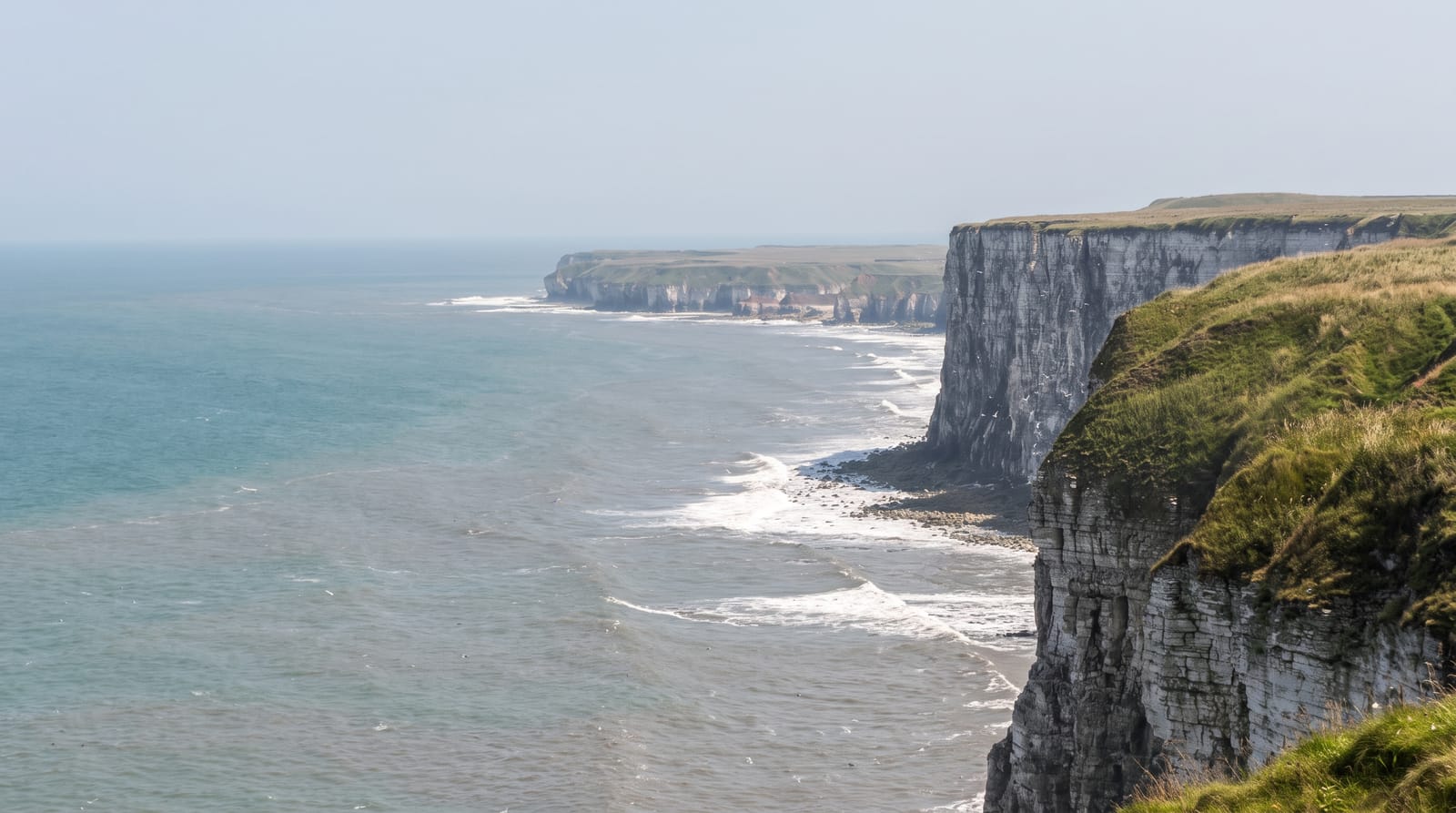
Around five kilometres of chalk cliff up to a hundred metres high hold one of the largest seabird colonies in Britain, with roughly half a million birds between March and August: guillemots and razorbills packed on ledges, kittiwakes, fulmars, puffins in burrows and crevices, and gannets. The gannetry is the only one on the English mainland, all others being on islands, and has grown from a handful of pairs in the 1920s to over thirteen thousand. Six viewing platforms project from the clifftop path so birds can be watched at close range without disturbance. Until 1954 the cliffs were worked by climmers, men lowered on ropes to collect eggs commercially, a trade ended by law. Boat trips from Bridlington give the colony from below.
Highlights
- The gannetry - England's only mainland colony, over thirteen thousand pairs.
- The packed ledges - guillemots and razorbills at close range from platforms.
- The puffins - present in smaller numbers from April to July.
- The chalk cliffs - a hundred metres high over five kilometres.
When to go
April to August for the full colony; puffins leave first, from mid-July, and most birds are gone by the end of August. May and June are the peak. The cliffs are quiet and largely empty of birds in winter.
Before you go
The smell and noise of the colony are considerable and surprise first-time visitors. The clifftop is exposed with strong wind and no shelter along the path. Puffins are far fewer than at island colonies and are not guaranteed. Sea fog can close the view entirely.
Nearby
Flamborough Head and its lighthouse are south; Bridlington lies beyond.
Key facts
Source: Wikidata, item Q4885137, read on 18 October 2026.
What to pack for Bempton Cliffs
Chosen from what this place is for. Tap a kit for the full checklist.
- Broken-in walking shoes or boots - Grip and ankle support matter more than looks; never hike in brand-new boots. Find on Amazon
- Layers + a waterproof shell - Mountain weather turns fast; a packable rain jacket saves the day. Find on Amazon
- Daypack with rain cover - 20-30 litres holds water, snacks, layers and a first-aid kit. Find on Amazon
- Offline maps + a power bank - Download the trail before you lose signal; carry backup charge. Find on Amazon
Some links on this page are Amazon affiliate links - if you buy through them we may earn a small commission at no extra cost to you.
All packing kitsPlan your trip
Where to start if Bempton Cliffs is going on the list.
Booking links on this page are affiliate links - if you book through them we may earn a small commission at no extra cost to you. It never changes what we write about a place.
Opening times, ticket prices and seasonal closures change - check the official source before you go: official site.