Turkish Carpet and Kilim Weaving
Knotted wool and silk from Usak, Hereke, Milas and Bergama, a village craft that became a court industry and a very hard sell.
Updated 4 September 2026
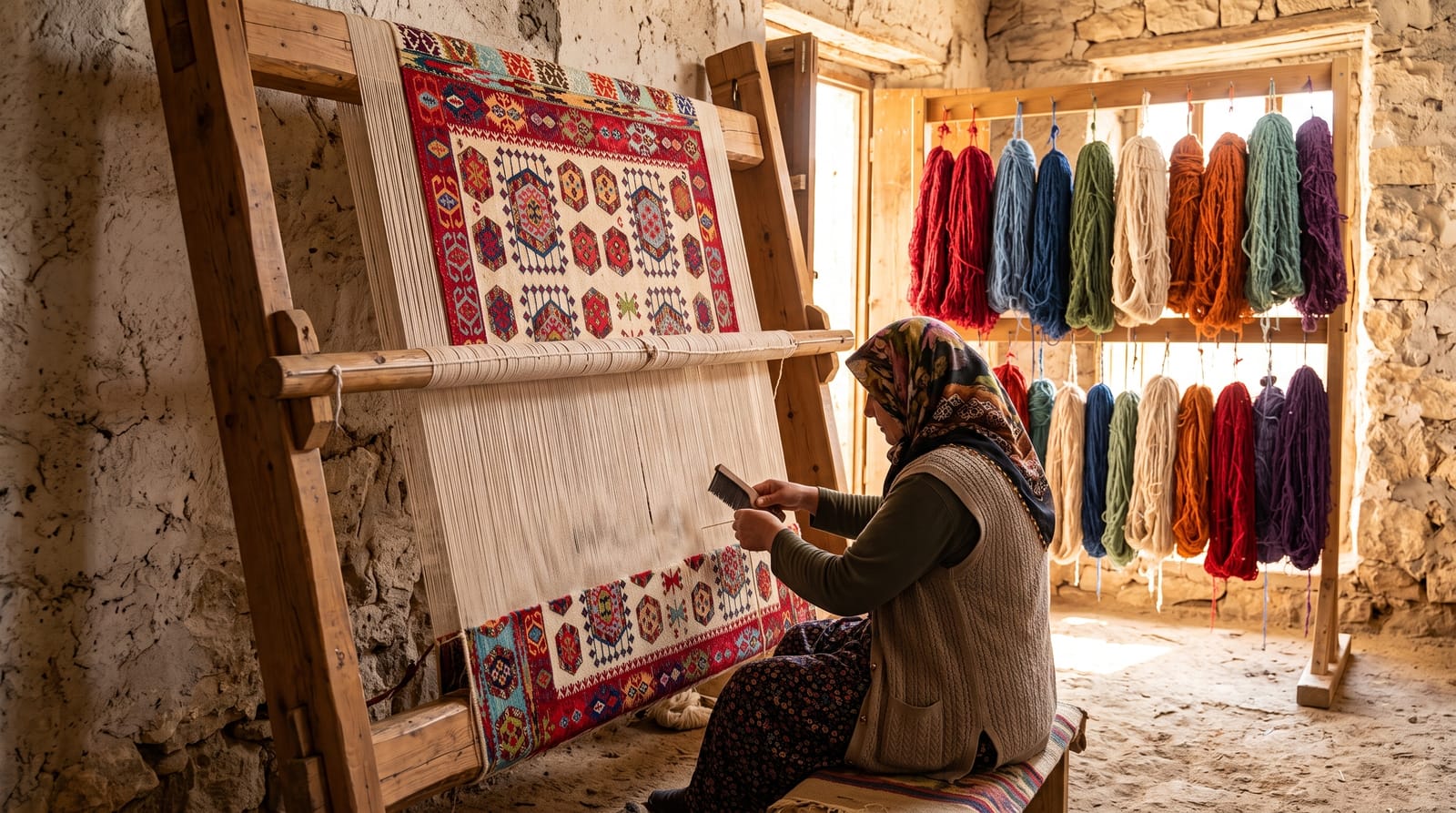
AI illustration
Turkish carpets are tied with the symmetrical knot looped around two warps, which gives a denser and slightly stiffer pile than the Persian single knot, and the regional differences become legible once you know what to look at. Usak wove large medallion and star carpets for mosques and for export to Europe from the fifteenth century. Hereke made very fine silk work for the palace after a factory opened there in the nineteenth century. Milas and Bergama kept to geometric wool, and flatwoven kilims came from villages across Anatolia. Wool came off local sheep, dyes were madder, indigo and weld, and until recently the loom was a household object rather than a workshop machine.
What you'll find
- The double knot - the symmetrical Turkish knot that sets both the pile and the price.
- Usak medallions - large-format designs that turn up as floor coverings in European painting.
- Hereke silk - very high knot counts, made for the court and still woven today.
- Kilims - flatwoven, no pile, geometric, historically made for the house rather than the market.
When to go
Any time of year, since looms are indoor work. Cooperatives and workshops in the weaving towns will show you the loom, the dye pots and the wool sorting without pressure if you arrive independently. Avoid the showroom stops built into coach itineraries, where the demonstration is a short preamble to several hours of selling.
Practical notes
Sales pressure is the real hazard: tea, flattery, a rolling stack of carpets and a price that halves the moment you stand up. Certificates of authenticity mean very little. Machine-made pieces get sold as hand-knotted and the word antique is elastic. Check the back for knot regularity, and never buy on a first afternoon.
Nearby
Izmir and the Aegean sites are within reach of the weaving towns, and Bergama has ruins of its own.
What to pack for Turkish Carpet and Kilim Weaving
Chosen from what this place is for. Tap a kit for the full checklist.
- Comfortable walking shoes - Sightseeing means kilometres of pavement and cobbles daily. Find on Amazon
- Modest clothing - Shoulders and knees covered - the single most common requirement. Find on Amazon
- A slim anti-theft daypack - Zips that close properly; keep it in front in crowds and on transit. Find on Amazon
- A scarf or shawl - To cover the head or shoulders on entry; women especially at mosques. Find on Amazon
Some links on this page are Amazon affiliate links - if you buy through them we may earn a small commission at no extra cost to you.
All packing kitsPlan your trip
Where to start if Turkish Carpet and Kilim Weaving is going on the list.
Booking links on this page are affiliate links - if you book through them we may earn a small commission at no extra cost to you. It never changes what we write about a place.
Opening times, ticket prices and seasonal closures change - check the official source before you go: official site.