Pamukkale
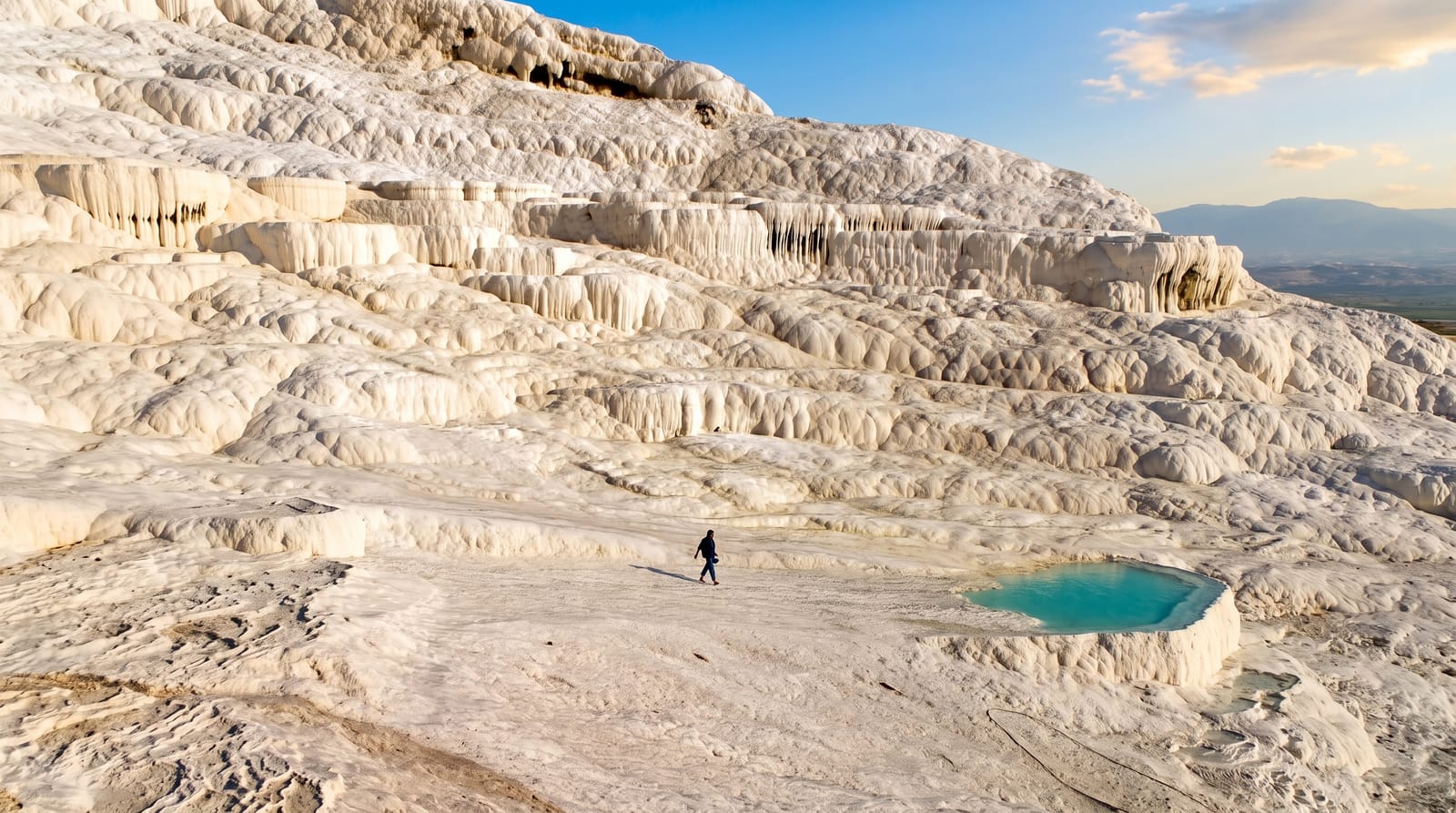
The Cotton Castle of Turkey - dazzling white terraces of mineral pools cascading down a hillside, above the ruins of the Roman spa city of Hierapolis, a UNESCO site.
Updated 18 October 2026
AI illustration
UNESCO World Heritage
Pamukkale, meaning Cotton Castle, is one of Turkey's most extraordinary sights, a hillside cascading with dazzling white terraces of travertine, formed over millennia by mineral-rich thermal springs depositing calcium into pools of turquoise water. Above the terraces spread the extensive ruins of Hierapolis, the Roman and Byzantine spa city, whose theatre and ancient pool make this a UNESCO wonder of nature and history.
History
The Phrygians built a temple here, probably in the first half of the 7th century BC, which later became the centre of Hierapolis, founded as a thermal spa early in the 2nd century BC within the Seleucid sphere, where doctors used the springs to treat their patients. It passed to Rome in 133 BC with the bequest of Attalus III, an earthquake in AD 17 wrecked the city, and it became an important Christian centre: the apostle Philip spent his last years here, a martyrium was said to stand where he was killed, Christians filled the Plutonium with stones in the 4th century, and in 531 Justinian made its bishop a metropolitan (Wikipedia, Pamukkale).
What's there
- The white travertine terraces - the dazzling pools cascading down the hillside.
- The thermal pools - the warm turquoise water you can wade in barefoot.
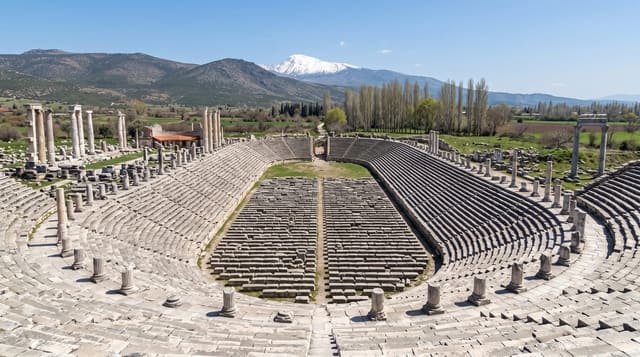
- Hierapolis - the Roman spa city ruins and its great theatre.
- The Antique Pool - the thermal pool scattered with ancient columns.
When to go
Spring and autumn for mild weather and the fullest terraces; summer is very hot on the shadeless white slope, and water flow varies with conservation controls. Late afternoon light turns the terraces golden, and the crowds thin.
Before you go
To protect the terraces, you walk barefoot and only in certain pools, and water is rotated, so some terraces may be dry; it is not the endless turquoise cascade some photos suggest. It is busy with tour groups midday, and the white surface is dazzling and hot. Hierapolis above adds real depth.
Nearby
Ephesus and the Aegean coast are within reach; the ruins of Aphrodisias are nearby.
Key facts
Source: Wikidata, item Q105893254, read on 18 October 2026.
What to pack for Pamukkale
Chosen from what this place is for. Tap a kit for the full checklist.
- Reef-safe sunscreen - High SPF that will not bleach the coral you are swimming over. Find on Amazon
- Modest clothing - Shoulders and knees covered - the single most common requirement. Find on Amazon
- Swimwear - Needed at most public thermal pools; some traditional baths are nude and single-sex. Find on Amazon
- Quick-dry towel - A microfibre towel packs small and dries in minutes. Find on Amazon
Some links on this page are Amazon affiliate links - if you buy through them we may earn a small commission at no extra cost to you.
All packing kitsPlan your trip
Where to start if Pamukkale is going on the list.
Booking links on this page are affiliate links - if you book through them we may earn a small commission at no extra cost to you. It never changes what we write about a place.
Opening times, ticket prices and seasonal closures change - check the official source before you go: official site.