Bath Fountain
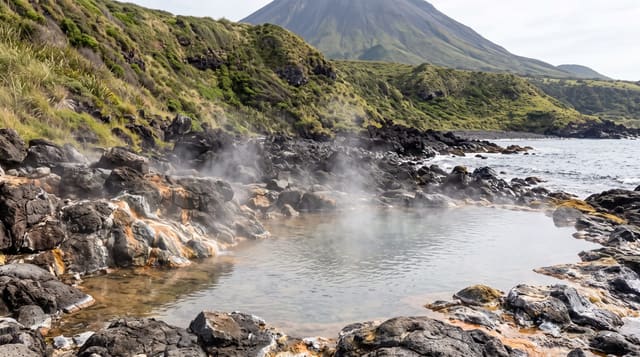
Mineral springs in the eastern hills known since the 1690s, with a spa hotel and a free open pool in the river below.
Updated 2 September 2026
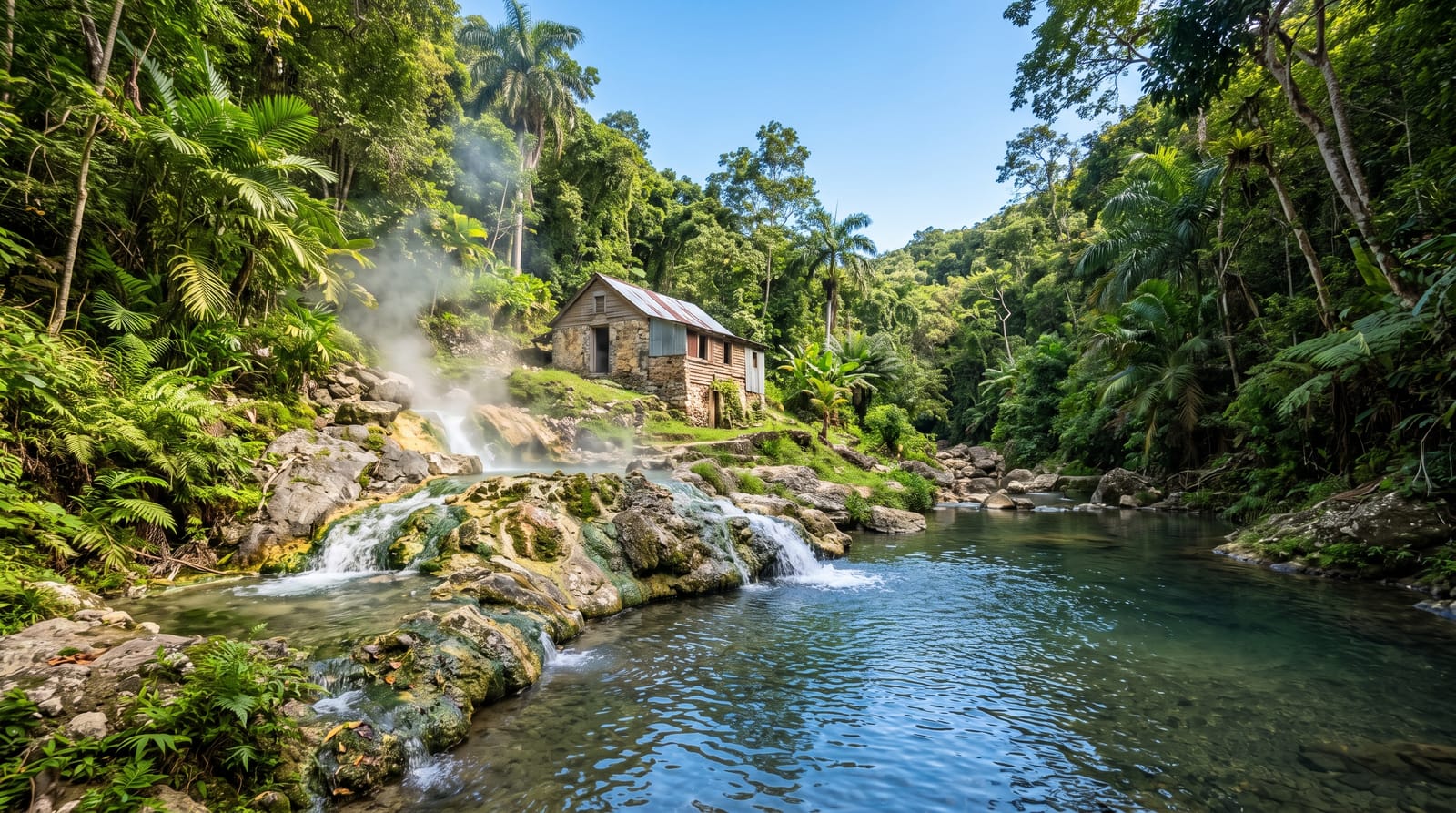
AI illustration
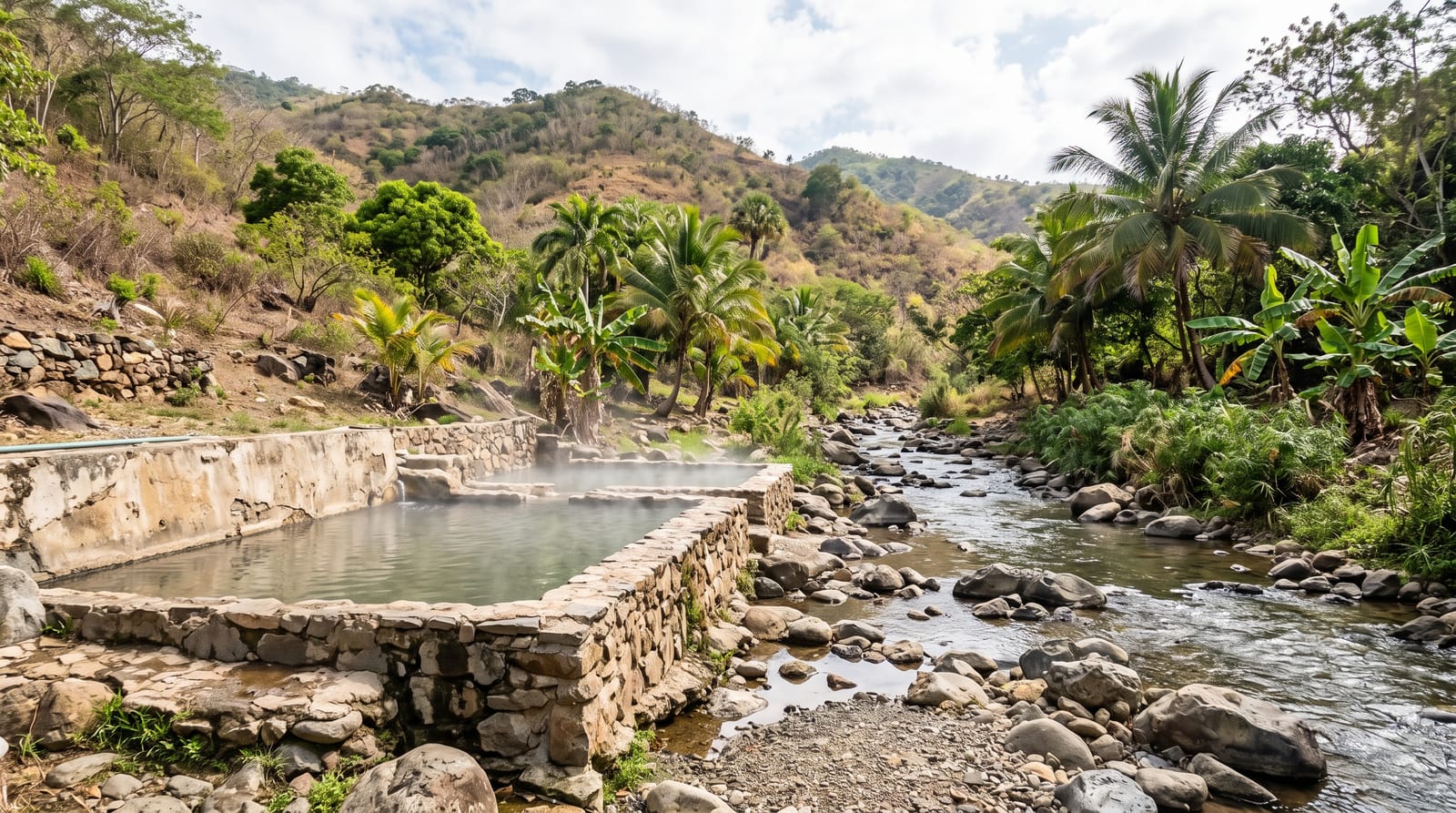
The springs above Bath were reportedly found in the 1690s by a man who had escaped enslavement and used the water to heal his wounds, and by the middle of the eighteenth century the colonial government had bought the land and built a spa; the small hotel that stands there now is descended from it and claims to be among the oldest in the western hemisphere. Two springs emerge side by side, one hot and one cold, and the hot one runs at temperatures high enough to need mixing. The hotel has private tiled baths; below it, where the hot water meets the river, people have built rock pools that anyone can use for nothing.
What you'll find
- The private baths - tiled tubs at the hotel, filled to your chosen temperature.
- The river pools - free rock pools where hot water meets cold river.
- The two springs - hot and cold emerging beside each other.
- The botanical garden - one of the oldest in the western hemisphere, in the village.
When to go
December to April is drier and the road better. The hotel baths are open through the day. The river pools are busiest at weekends. St Thomas is the least visited parish and the roads are poor, so allow time.
What to expect
The spa hotel is faded and the standard is well below what the price suggests. At the free river pools you will be approached by masseurs and guides offering services, sometimes persistently, and it is worth agreeing terms or declining clearly at the start. The water is genuinely hot and the unmixed source can scald. The road east is slow.
Nearby
Bath village and its botanical garden are below; Morant Bay is half an hour south.
What to pack for Bath Fountain
Chosen from what this place is for. Tap a kit for the full checklist.
- Swimwear - Needed at most public thermal pools; some traditional baths are nude and single-sex. Find on Amazon
- Quick-dry towel + flip-flops - For wet changing areas and hot poolside stone. Find on Amazon
- A dry bag or waterproof pouch - Somewhere safe for phone and valuables while you soak. Find on Amazon
- Water to drink - Hot soaking is dehydrating; sip between dips. Find on Amazon
Some links on this page are Amazon affiliate links - if you buy through them we may earn a small commission at no extra cost to you.
All packing kitsPlan your trip
Where to start if Bath Fountain is going on the list.
Booking links on this page are affiliate links - if you book through them we may earn a small commission at no extra cost to you. It never changes what we write about a place.
Opening times, ticket prices and seasonal closures change - check the official source before you go: official site.