Kaklık Cave
A collapsed cave near Honaz holding travertine basins fed by warm mineral water - Pamukkale in miniature, underground and almost empty.
Updated 21 October 2026
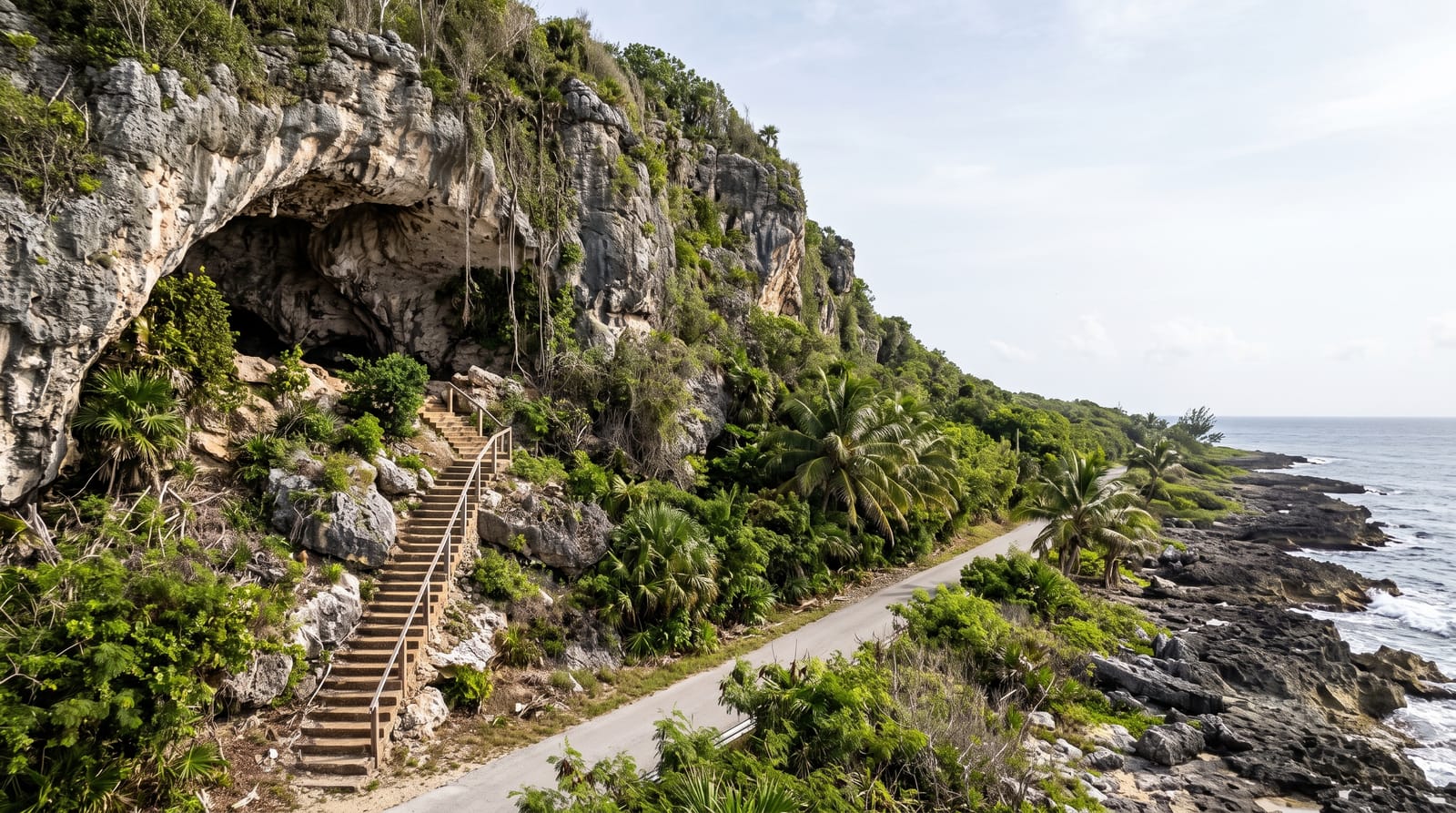
Kaklık is a cave whose roof has partly collapsed, so daylight falls into it through a large opening, and inside the same chemistry that built Pamukkale is at work on a small scale: warm sulphurous water rises through the floor, deposits calcium carbonate as it cools and flows, and has formed white terraced basins, flowstone and stalactites over the chamber. The travertine here is whiter and the pools smaller and more intricate than the famous terraces up the road, and the sulphur smell is noticeable. A walkway runs round and through the cave. Outside, the same spring water has been channelled into open-air pools that local people bathe in, with changing facilities and a picnic area, and the site is run as a modest municipal park. Opened to visitors in 2002 and known locally as little Pamukkale, it lies about thirty kilometres from Denizli and gets a tiny fraction of the visitors, which is the reason to make the detour.
What's there
- The travertine basins - white terraced pools inside the cave.
- The collapsed roof - daylight falling into the chamber.
- The flowstone and stalactites - formations round the walls.
- The outdoor pools - spring water channelled for bathing.
When to go
Year-round - the cave is sheltered and works in any weather. Midday gives the best light through the opening. Weekdays are near-empty.
Practical notes
It is small - an hour covers it. The sulphur smell is strong and walkways are wet and slippery. It is a municipal facility, not a polished attraction, and a car is needed.
Nearby
Pamukkale and Hierapolis are about 30 km west; Laodicea is on the way.
Key facts
Source: Wikidata, item Q69048047, read on 18 October 2026.
What to pack for Kaklık Cave
Chosen from what this place is for. Tap a kit for the full checklist.
- Head torch + spare batteries - Hands-free light is essential; caves are truly dark. Find on Amazon
- Grippy closed shoes - Cave floors are wet, muddy and slick with formations. Find on Amazon
- A warm layer - Many caves sit near 10°C year-round, even in a hot country. Find on Amazon
- Gloves - Protect your hands on rough rock and cold metal handrails. Find on Amazon
Some links on this page are Amazon affiliate links - if you buy through them we may earn a small commission at no extra cost to you.
All packing kitsPlan your trip
Where to start if Kaklık Cave is going on the list.
Booking links on this page are affiliate links - if you book through them we may earn a small commission at no extra cost to you. It never changes what we write about a place.
Opening times, ticket prices and seasonal closures change - check the official source before you go: official site.