Magnesia on the Maeander
The city of the architect Hermogenes near Germencik, with his Temple of Artemis, a stadium dug out of the silt and very few visitors.
Updated 21 October 2026
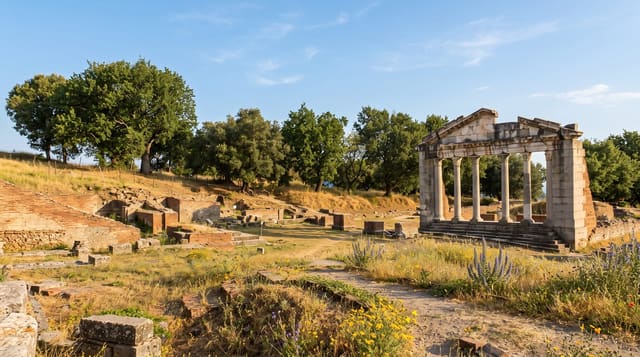
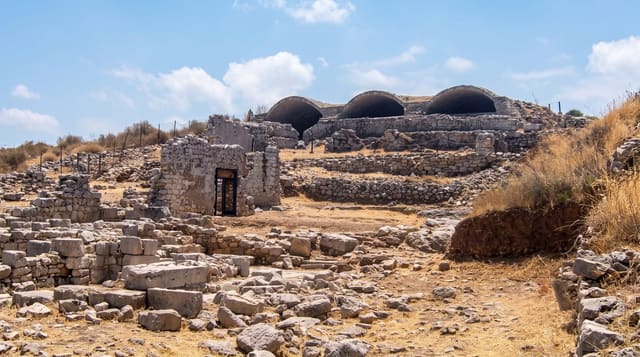
Magnesia took its name from the Magnetes of Thessaly who settled here with some Cretans, on the earlier site of Leucophrys, but its claim is architectural. Hermogenes, working here in the second century BCE, built the Temple of Artemis Leukophryene and wrote about what he was doing, and his treatises - lost, but summarised by Vitruvius - shaped Roman temple design and, through Vitruvius, Renaissance architecture. The temple was pseudodipteral, with a single ring of columns set at the distance of a double one, giving a broad covered walkway around the cella, and it became the textbook example of the type. The site also has a large agora, a theatre, a gymnasium and a stadium that was buried under Meander silt for centuries and has been excavated in recent decades, with its seating rows and vaulted entrances emerging substantially intact. Excavation is ongoing and the site changes year to year. It sits in flat farmland beside a main road, is barely signposted, and gets a fraction of the visitors of Ephesus an hour away.
What you'll find
- The Artemis temple - Hermogenes' pseudodipteral plan on the ground.
- The stadium - seating rows dug out of the river silt.
- The agora and theatre - the civic centre in the fields.
- The ongoing dig - new areas opened each season.
When to go
April to June and September to October. Mornings; the site is flat, open and offers no shade at all.
Practical notes
Much is at foundation level and parts flood after rain. Interpretation is minimal and signage poor. Active excavation fences off areas. A car is required.
Nearby
Aydın's fig orchards fill the valley; Ephesus and Selçuk are about an hour north-west.
Key facts
Source: Wikidata, item Q1432674, read on 18 October 2026.
What to pack for Magnesia on the Maeander
Chosen from what this place is for. Tap a kit for the full checklist.
- Comfortable walking shoes - Sightseeing means kilometres of pavement and cobbles daily. Find on Amazon
- Modest clothing - Shoulders and knees covered - the single most common requirement. Find on Amazon
- A slim anti-theft daypack - Zips that close properly; keep it in front in crowds and on transit. Find on Amazon
- A scarf or shawl - To cover the head or shoulders on entry; women especially at mosques. Find on Amazon
Some links on this page are Amazon affiliate links - if you buy through them we may earn a small commission at no extra cost to you.
All packing kitsPlan your trip
Where to start if Magnesia on the Maeander is going on the list.
Booking links on this page are affiliate links - if you book through them we may earn a small commission at no extra cost to you. It never changes what we write about a place.
Opening times, ticket prices and seasonal closures change - check the official source before you go: official site.