Anuradhapura
A capital that ran for more than a thousand years, with brick stupas that were among the tallest structures on earth when built.
Updated 18 October 2026
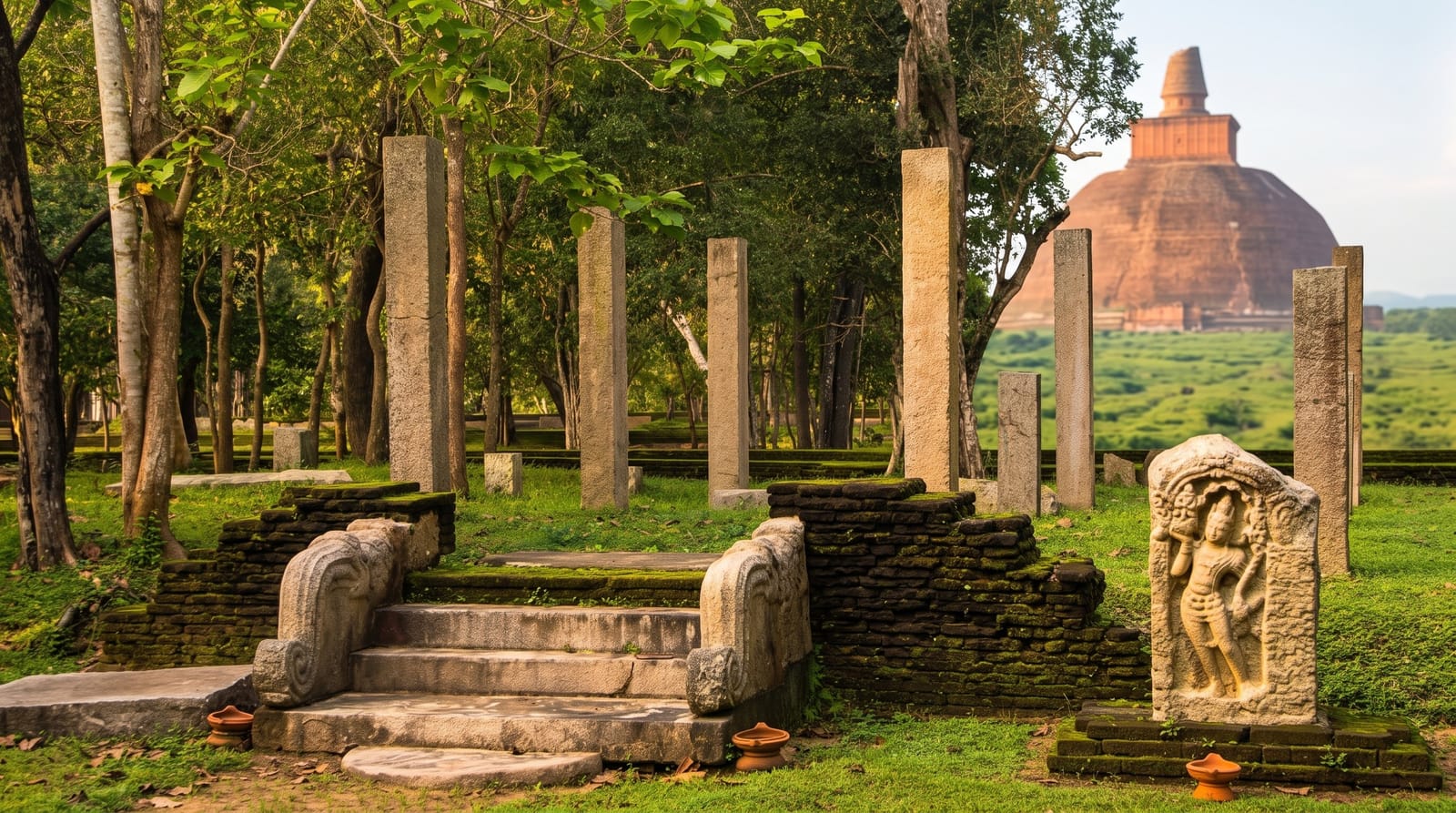
AI illustration
UNESCO World Heritage
Anuradhapura was the seat of Sinhalese kings for well over a millennium, and the scale of what survives is hard to take in on one visit. Its great brick stupas, Jetavanaramaya and Abhayagiri among them, were built to heights that put them among the tallest structures in the ancient world, and they still dominate the plain. The Sri Maha Bodhi is a sacred fig grown from a cutting of the tree under which the Buddha is said to have attained enlightenment, brought here in the third century BC and tended continuously since, which makes it one of the oldest documented planted trees anywhere. Around them lie monastery complexes, moonstones carved at the foot of stairways, bathing tanks and the vast reservoirs that made the whole civilisation possible.
History
The Mahāvaṃsa says that Anuradha, a minister of Prince Vijaya, founded a village here, which King Pandukabhaya laid out as his capital in 377 BC, but excavations of the citadel show settlement back to the 10th century BC, with iron, pottery, horses, cattle and rice farming from about 900 to 600 BC and a town of at least 50 hectares by 700-600 BC. Planned with gates and traders' quarters, it covered about a square kilometre, among the largest cities in Asia at the time, and Ptolemy probably recorded it in the 2nd century AD as Anourogrammoi; it remained the capital of the Sinhalese kings for about 1,500 years, until the Chola invasions of 993 and 1014 left it largely deserted. Later visitors such as Robert Knox found people still living there, and Vijayabahu IV restored some of its great monuments in the late 13th century (Wikipedia, Anuradhapura).
What to look for
- Sri Maha Bodhi - the sacred fig, tended without interruption for over two thousand years.
- Jetavanaramaya and Ruwanwelisaya - colossal brick stupas, one restored to brilliant white.
- Abhayagiri monastery - a huge monastic complex with the finest carved moonstone.
- Isurumuniya - a rock temple with the celebrated Lovers relief.
When to go
May to September, when the north and centre are dry. Poya full-moon days bring huge numbers of white-clad pilgrims, which is atmospheric but crowded. Start at dawn; the site is enormous and shadeless by ten.
What to expect
The site is spread over many square kilometres, so a bicycle or a tuk-tuk for the day is essential rather than optional. This is an active place of worship: shoes and hats come off at every sacred precinct, and the ground gets painfully hot underfoot, so socks are a genuinely useful tip. Ticketing can be inconsistent about which sites are included.
Nearby
Mihintale's monastery hill is nearby; Polonnaruwa and Sigiriya lie southeast.
Key facts
Source: Wikidata, item Q5724, read on 18 October 2026.
What to pack for Anuradhapura
Chosen from what this place is for. Tap a kit for the full checklist.
- Padded shorts - The one thing that makes a full day in the saddle bearable. Find on Amazon
- Comfortable walking shoes - Sightseeing means kilometres of pavement and cobbles daily. Find on Amazon
- Modest clothing - Shoulders and knees covered - the single most common requirement. Find on Amazon
- Helmet - Bring your own if you have a good one; rentals vary wildly. Find on Amazon
Some links on this page are Amazon affiliate links - if you buy through them we may earn a small commission at no extra cost to you.
All packing kitsPlan your trip
Where to start if Anuradhapura is going on the list.
Booking links on this page are affiliate links - if you book through them we may earn a small commission at no extra cost to you. It never changes what we write about a place.
Opening times, ticket prices and seasonal closures change - check the official source before you go: official site.