The Valley of the Kings
The royal necropolis of ancient Egypt - the hidden desert valley where pharaohs including Tutankhamun were buried in deep, vividly painted rock-cut tombs, a UNESCO site.
Updated 18 October 2026
AI illustration
UNESCO World Heritage
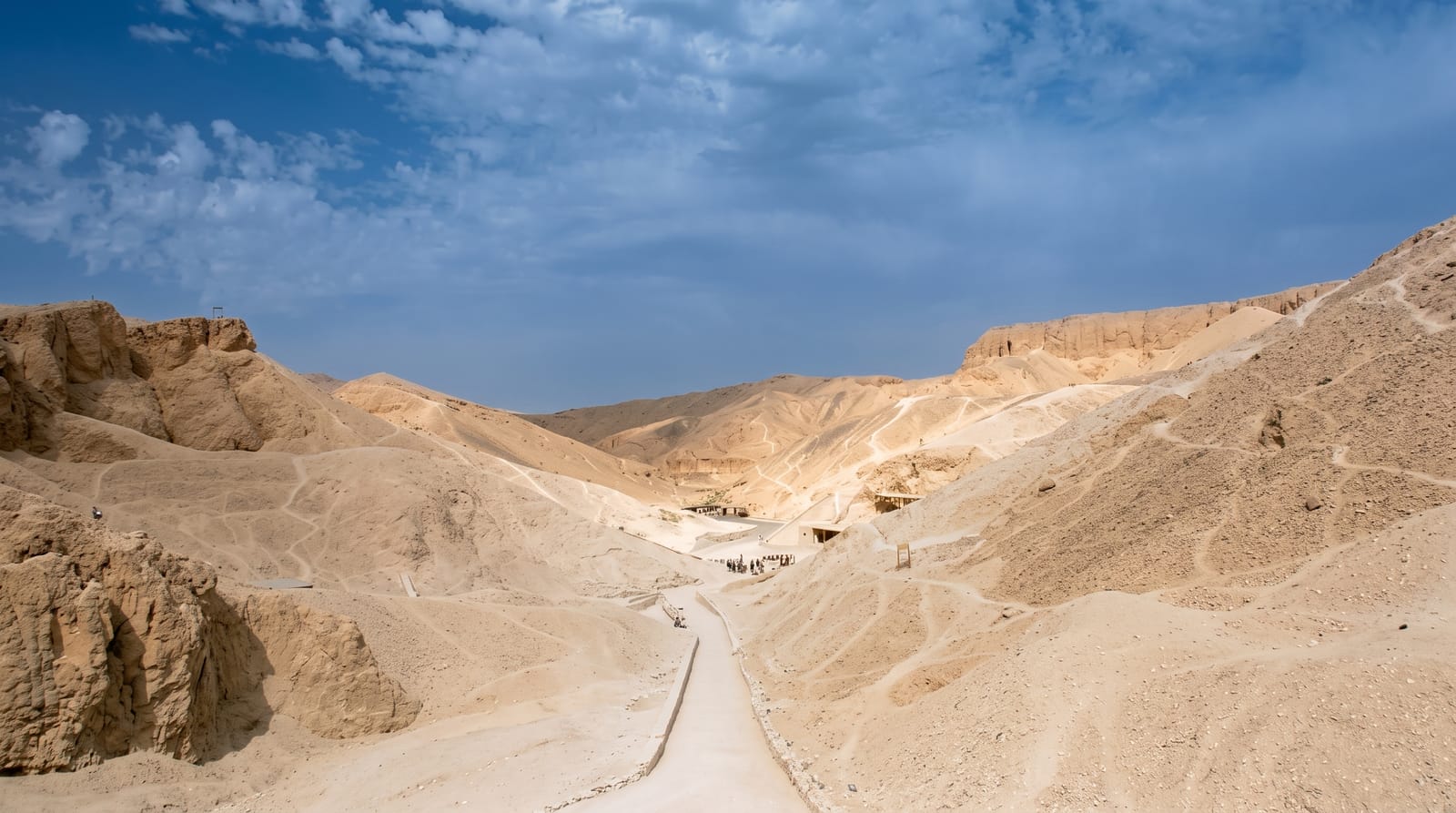
The Valley of the Kings is the royal necropolis of the New Kingdom pharaohs, a barren desert valley on the west bank of the Nile at Luxor where, for some five centuries, kings including Tutankhamun and Ramesses the Great were buried in deep, hidden rock-cut tombs. Their walls blaze with vivid painted scenes and hieroglyphs to guide the dead, a UNESCO wonder of the ancient world.
History
After Ahmose I drove out the Hyksos and reunited Egypt, the Theban kings began to build ever grander tombs, and the first royal tombs in the valley were probably those of Thutmose I, whose adviser Ineni wrote that he dug the king's rock tomb alone, no one seeing, no one hearing, and perhaps Amenhotep I. The valley, overlooked by the pyramid-shaped peak of al-Qurn and guarded by the Medjay tomb police, was used for primary burials from about 1539 to 1075 BC, ending with Ramesses X or XI, and only about twenty of its tombs actually held kings; with discoveries in 2005 and 2008 it is now known to contain 65 tombs and chambers, from the simple pit KV54 to KV5, which alone has more than 120 chambers for the sons of Ramesses II (Wikipedia, Valley of the Kings).
What to look for
- The painted tombs - the deep rock-cut tombs of vivid painted scenes.
- Tutankhamun's tomb - the small tomb of the boy-king (extra ticket).
- The tomb of Ramesses - the grand tombs of the great pharaohs.
- The desert valley - the barren hills hiding the royal necropolis.
When to go
October to April for cooler weather, as the desert valley is fiercely hot; go early to beat the heat and crowds. A standard ticket covers a choice of tombs, with the finest, like Seti I and Tutankhamun, needing extra tickets.
Things to know
The standard ticket lets you enter only a few of the many tombs, and the finest need separate tickets, so plan which to see. It is intensely hot and the tombs can be stuffy and crowded. Photography rules vary and often cost extra. The colours, though, are astonishing.
Nearby
The temple of Hatshepsut, the Colossi of Memnon and Karnak are close on the Luxor west and east banks.
Key facts
Source: Wikidata, item Q133423, read on 18 October 2026.
What to pack for The Valley of the Kings
Chosen from what this place is for. Tap a kit for the full checklist.
- Loose, light, long clothing - Covering up beats bare skin in the desert - and locals dress this way for a reason. Find on Amazon
- Comfortable walking shoes - Sightseeing means kilometres of pavement and cobbles daily. Find on Amazon
- Modest clothing - Shoulders and knees covered - the single most common requirement. Find on Amazon
- A wide-brim hat + sunglasses - Shade for your face and eyes where there is none overhead. Find on Amazon
Some links on this page are Amazon affiliate links - if you buy through them we may earn a small commission at no extra cost to you.
All packing kitsPlan your trip
Where to start if The Valley of the Kings is going on the list.
Booking links on this page are affiliate links - if you book through them we may earn a small commission at no extra cost to you. It never changes what we write about a place.
Opening times, ticket prices and seasonal closures change - check the official source before you go: official site.