Lumbini
The birthplace of the Buddha - a serene UNESCO pilgrimage site in the plains of southern Nepal where Siddhartha Gautama was born, marked by an ancient temple, a sacred garden and monasteries from around the world.
Updated 5 August 2026
AI illustration
UNESCO World Heritage
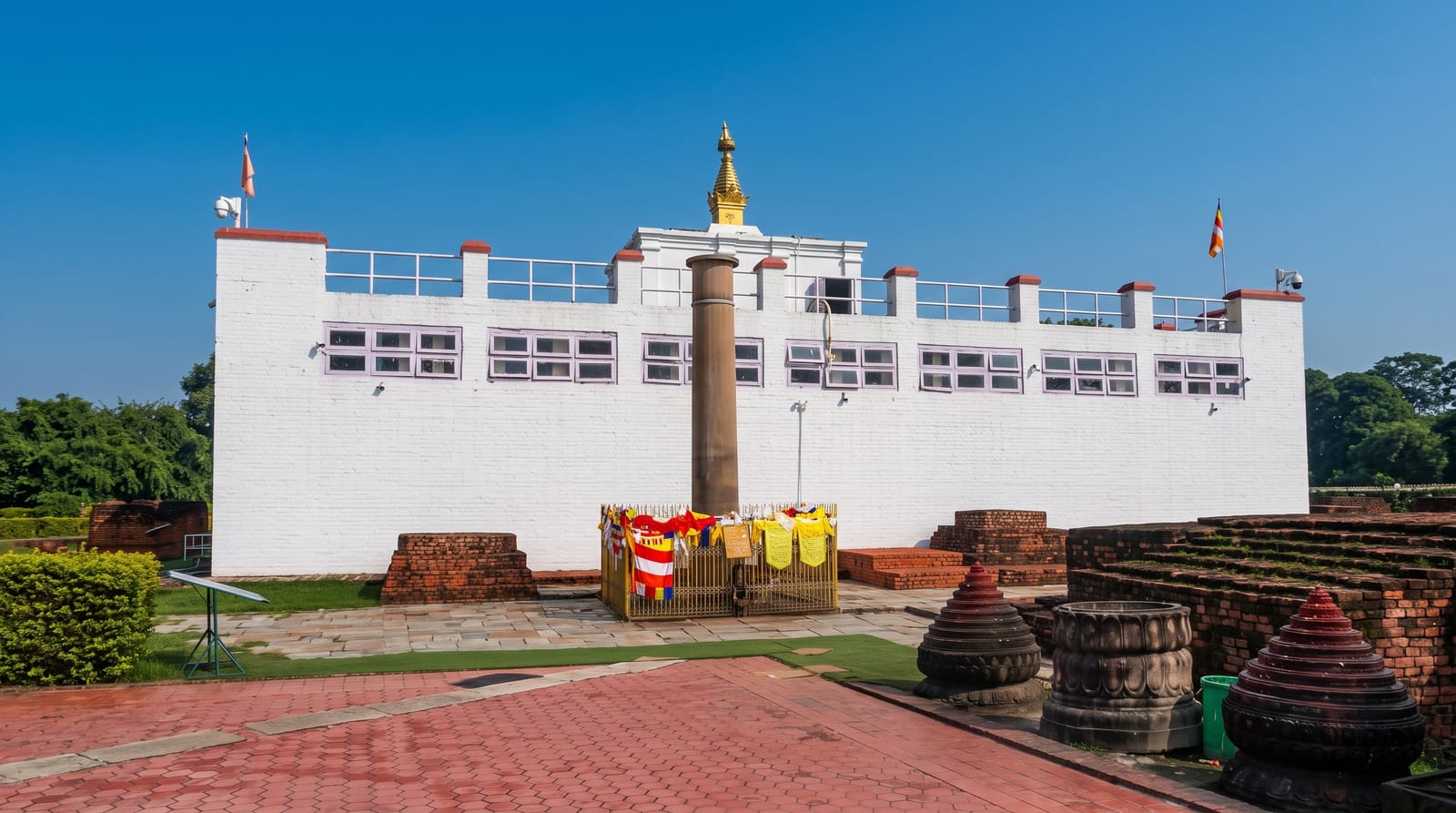
Lumbini, in the plains of southern Nepal, is one of the holiest sites in Buddhism, the birthplace of Siddhartha Gautama, the Buddha, around the sixth century BC. A serene UNESCO pilgrimage site, its sacred heart is the Maya Devi Temple, marking the exact spot of the birth, beside an ancient pillar, a sacred pool and bodhi tree. Around it spreads a vast monastic zone where countries from across the Buddhist world have built beautiful monasteries in their own national styles.
What you'll find
- The Maya Devi Temple - the shrine marking the Buddha's birthplace.
- The Ashoka Pillar - the ancient pillar recording the sacred site.
- The sacred pool and bodhi tree - the serene garden of pilgrimage.
- The monastic zone - the monasteries built by nations worldwide.
When to go
October to March, the cool dry season, is the most comfortable, as the lowland Terai is very hot much of the year. The Buddha's birthday, usually in May, brings pilgrims and celebration, though it falls in the heat.
Things to know
It is a serene pilgrimage site rather than a spectacular one, so it appeals most to those interested in Buddhism or seeking a peaceful, reflective visit; the sacred core is modest, the vast monastic zone spread out and best toured by bicycle or rickshaw. It is remote in the hot lowlands, a long way from the mountains, and often combined with Chitwan or a border crossing to India.
Nearby
Chitwan National Park is within reach; the Indian border and Buddhist sites lie beyond.
What to pack for Lumbini
Chosen from what this place is for. Tap a kit for the full checklist.
- Padded shorts - The one thing that makes a full day in the saddle bearable. Find on Amazon
- Comfortable walking shoes - Sightseeing means kilometres of pavement and cobbles daily. Find on Amazon
- Modest clothing - Shoulders and knees covered - the single most common requirement. Find on Amazon
- Helmet - Bring your own if you have a good one; rentals vary wildly. Find on Amazon
Some links on this page are Amazon affiliate links - if you buy through them we may earn a small commission at no extra cost to you.
All packing kitsPlan your trip
Where to start if Lumbini is going on the list.
Booking links on this page are affiliate links - if you book through them we may earn a small commission at no extra cost to you. It never changes what we write about a place.
Opening times, ticket prices and seasonal closures change - check the official source before you go: official site.