Utica
One of the oldest Phoenician foundations in North Africa, now stranded inland as the coast silted up.
Updated 2 September 2026
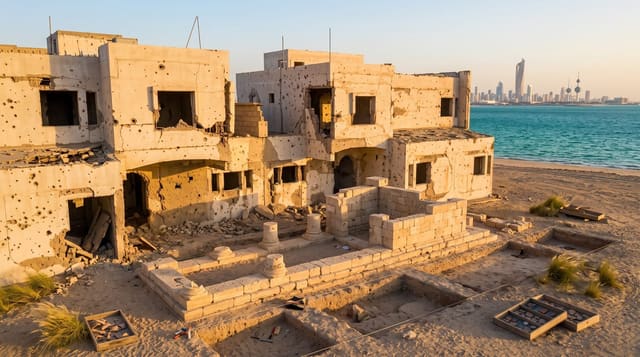
Utica was founded by Phoenicians from Tyre and tradition puts it earlier than Carthage, which would make it among the oldest such settlements in North Africa. It was a major port, and after Carthage fell it became the Roman capital of the province. The sea has since retreated as the Medjerda river silted the bay, leaving the site about ten kilometres inland. What survives is mainly Roman: the House of the Cascade with its mosaics, baths and a Punic necropolis.
What you'll find
- The House of the Cascade - a large Roman villa with mosaic floors in place.
- The Punic necropolis - graves from the Phoenician phase of the settlement.
- The stranded harbour - a port now some ten kilometres from the sea.
- The site museum - a small collection of finds beside the excavations.
When to go
October to April is comfortable. Mornings are best. The museum has shorter hours than the site.
Before you go
The Punic town lies mostly under later building and is barely visible. The site is small relative to its historical importance. There is little shade and minimal interpretation.
Nearby
Bizerte is north, and Tunis is southeast.
Key facts
Source: Wikidata, item Q166523, read on 18 October 2026.
What to pack for Utica
Chosen from what this place is for. Tap a kit for the full checklist.
- Comfortable walking shoes - Sightseeing means kilometres of pavement and cobbles daily. Find on Amazon
- A slim anti-theft daypack - Zips that close properly; keep it in front in crowds and on transit. Find on Amazon
- A refillable water bottle - Many cities have public fountains; save money and plastic. Find on Amazon
- A light layer + compact umbrella - For museum air-con and a sudden shower. Find on Amazon
Some links on this page are Amazon affiliate links - if you buy through them we may earn a small commission at no extra cost to you.
All packing kitsPlan your trip
Where to start if Utica is going on the list.
Booking links on this page are affiliate links - if you book through them we may earn a small commission at no extra cost to you. It never changes what we write about a place.
Opening times, ticket prices and seasonal closures change - check the official source before you go: official site.