Eretria
An ancient city whose theatre, mosaic house and temple lie scattered through a modern seaside town on Evia.
Updated 19 October 2026
AI illustration
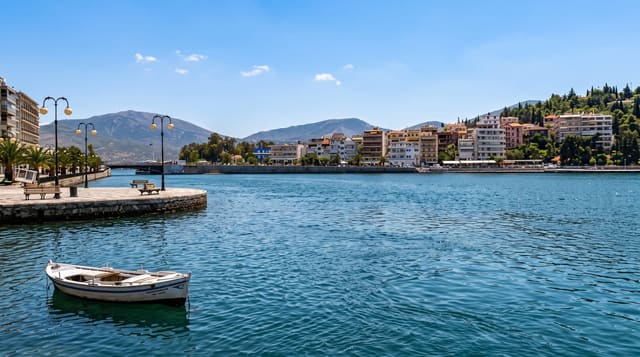
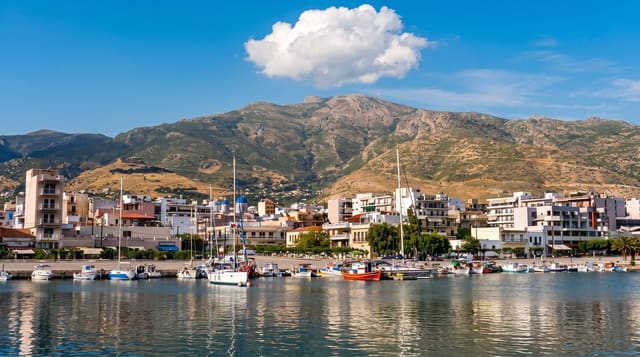
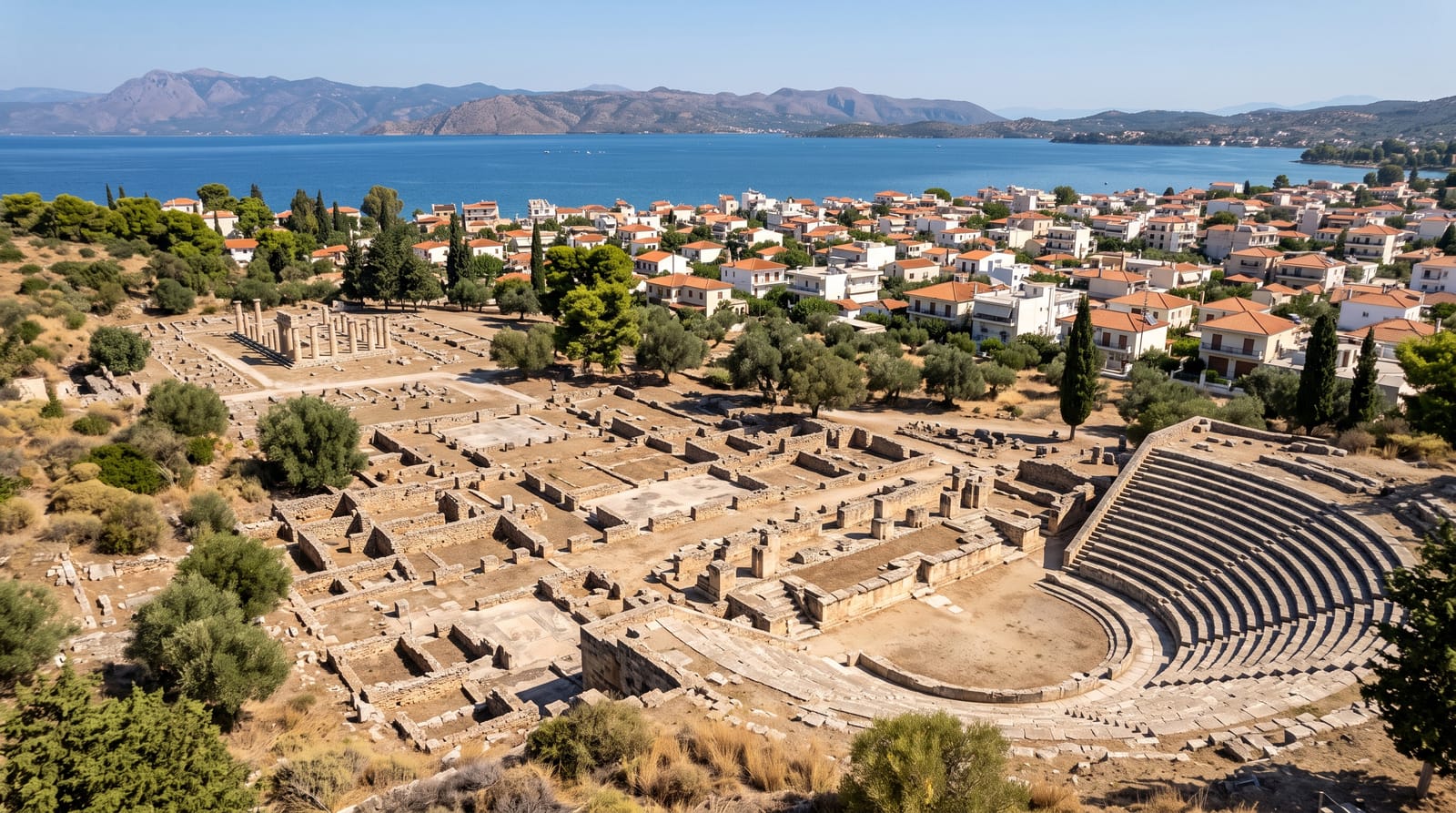
Eretria was one of the two great cities of Evia and a major coloniser in the eighth century BC, and its excavated remains sit inside the modern town in a way that is unusual and rather charming: you walk from a beachfront cafe to a theatre, then along a residential street to a Hellenistic villa. The theatre retains its orchestra and an underground passage used for the appearance of ghosts. The House of the Mosaics, from about 370 BC, preserves floors of black and white pebble mosaic showing panthers, nereids and a lion hunt, protected under a modern shelter. There is also the temple of Apollo Daphnephoros, a gymnasium, baths and the west gate. The museum, run with the Swiss School of Archaeology which has dug here since 1964, holds the finds.
History
The first traces of people are late Neolithic pottery and stone tools of 3500-3000 BC, and the first known settlement, of the Early Helladic period, 3000-2000 BC, lay on the plain with a granary and a pottery kiln; in the Middle Helladic period, 2000-1600 BC, it moved up to the acropolis because the lagoon flooded the plain, and in the Late Helladic period the population dwindled. Excavation began in the 1890s and since 1964 has been carried out by the Greek Archaeological Service and the Swiss School of Archaeology in Greece (Wikipedia, Eretria).
The main sights
- The theatre - orchestra, seating and the underground ghost passage.
- The House of the Mosaics - fourth-century BC pebble floors under cover.
- The temple of Apollo - foundations of the city's principal sanctuary.
- The museum - Swiss-run collection of finds, including painted terracottas.
When to go
Spring and autumn; the sites are open and hot in summer. The House of the Mosaics opens on a restricted schedule, often mornings only, so plan around it.
Practical notes
The remains are scattered across the town and several are fenced and visible only from the street. Opening hours differ site by site and can be frustrating. Modern Eretria is a summer resort with ordinary architecture.
Nearby
Chalkida and the Euripus strait lie north; the ferry to Oropos crosses to the mainland here.
What to pack for Eretria
Chosen from what this place is for. Tap a kit for the full checklist.
- Reef-safe sunscreen - High SPF that will not bleach the coral you are swimming over. Find on Amazon
- Head torch + spare batteries - Hands-free light is essential; caves are truly dark. Find on Amazon
- Comfortable walking shoes - Sightseeing means kilometres of pavement and cobbles daily. Find on Amazon
- Modest clothing - Shoulders and knees covered - the single most common requirement. Find on Amazon
Some links on this page are Amazon affiliate links - if you buy through them we may earn a small commission at no extra cost to you.
All packing kitsPlan your trip
Where to start if Eretria is going on the list.
Booking links on this page are affiliate links - if you book through them we may earn a small commission at no extra cost to you. It never changes what we write about a place.
Opening times, ticket prices and seasonal closures change - check the official source before you go: official site.