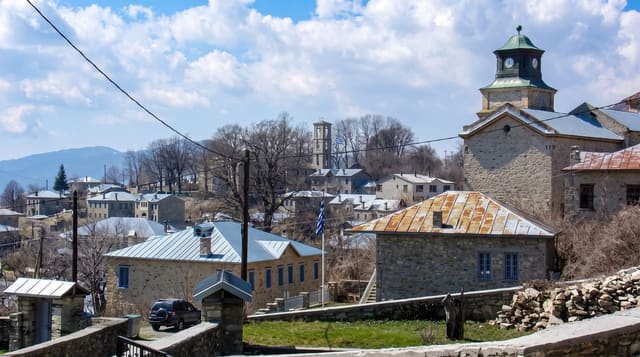
Djebba
A village on the slopes of Djebel Gorraa growing figs on hand-built terraces, a recognised heritage system.
Updated 2 September 2026
Djebba El Olia sits on the northern slope of Djebel Gorraa in northwestern Tunisia, where villagers have built stone terraces up the mountainside and grow figs on them in a system that also carries olives, pomegranates and cereals in the same plots. The Djebba fig has protected designation status in Tunisia and the whole farming system has been recognised internationally as a globally important agricultural heritage system. Rock carvings survive on the mountain above.
What you'll find
- The stone terraces - hand-built agricultural terraces climbing the mountainside.
- The Djebba figs - the protected local variety grown on the slopes.
- The mixed cropping - figs, olives, pomegranates and cereals in the same plots.
- The rock carvings - prehistoric engravings on the mountain above the village.
When to go
April to October is best for the terraces; the fig harvest runs from July into September. Winter in these hills is wet and cold. Mornings are best for walking.
Before you go
The terraces are private working farms and walking them needs permission or a local guide. There is no visitor infrastructure. The mountain road is narrow and steep.
Nearby
Testour is southeast, and Beja is northwest.
What to pack for Djebba
Chosen from what this place is for. Tap a kit for the full checklist.
- Broken-in walking shoes or boots - Grip and ankle support matter more than looks; never hike in brand-new boots. Find on Amazon
- Layers + a waterproof shell - Mountain weather turns fast; a packable rain jacket saves the day. Find on Amazon
- Daypack with rain cover - 20-30 litres holds water, snacks, layers and a first-aid kit. Find on Amazon
- Offline maps + a power bank - Download the trail before you lose signal; carry backup charge. Find on Amazon
Some links on this page are Amazon affiliate links - if you buy through them we may earn a small commission at no extra cost to you.
All packing kitsPlan your trip
Where to start if Djebba is going on the list.
Booking links on this page are affiliate links - if you book through them we may earn a small commission at no extra cost to you. It never changes what we write about a place.
Opening times, ticket prices and seasonal closures change - check the official source before you go: official site.