Ban Chiang
A prehistoric farming settlement in Isan, known for red-swirl pottery and burials left open where they were excavated.
Updated 18 October 2026
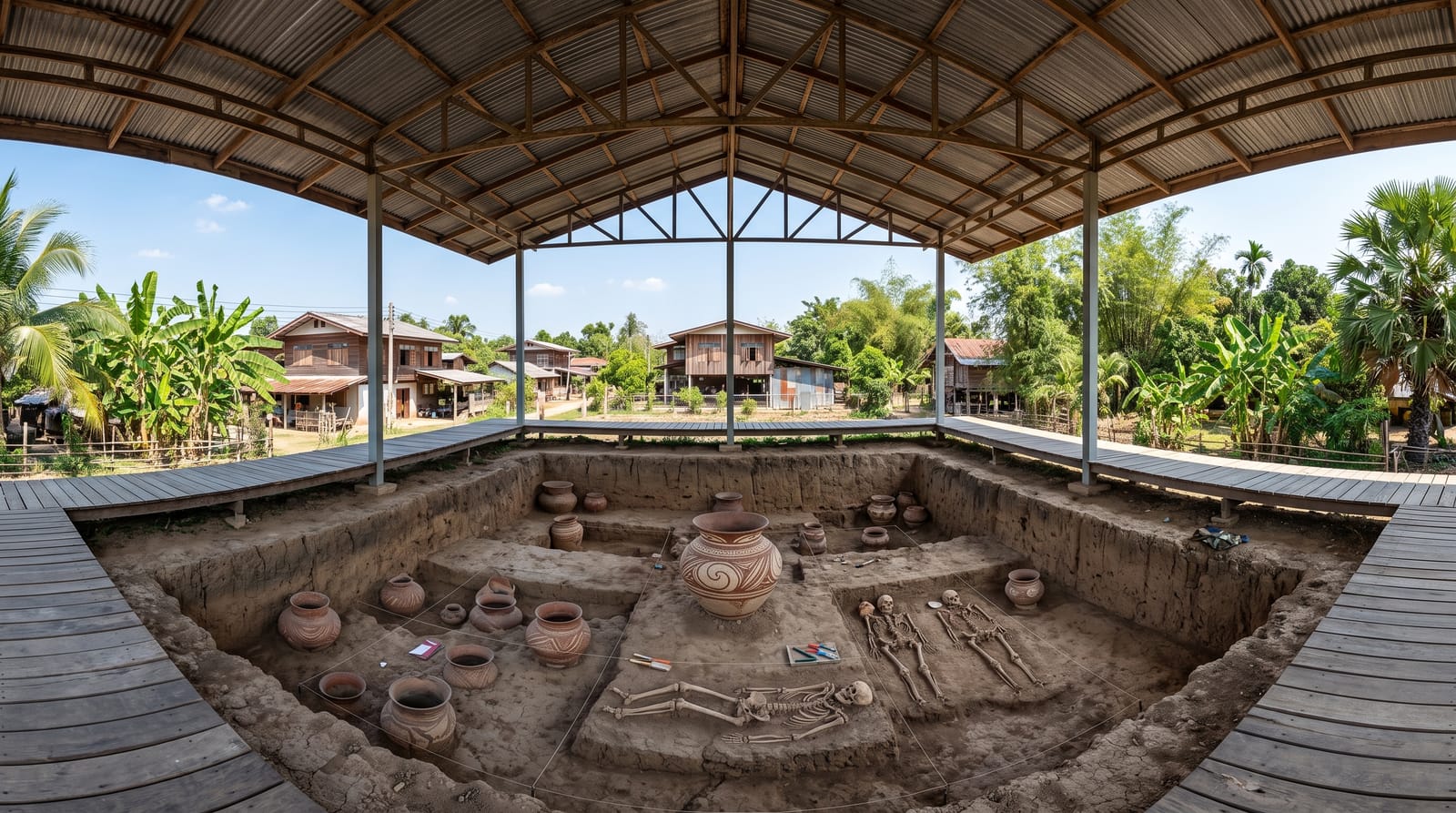
AI illustration
UNESCO World Heritage
Ban Chiang is an ordinary Isan village that happens to sit on one of Southeast Asia's most important prehistoric sites. Excavations here uncovered a long-occupied farming settlement with bronze and later iron working, and above all a distinctive pottery: buff vessels painted with looping red spirals, found in graves alongside the dead. The exact chronology has been argued over for decades and is still not settled, so treat any single date you are given with caution. Two things make the visit worthwhile. The national museum lays out the pottery and metalwork clearly and in English. And at Wat Pho Si Nai an excavation pit has been roofed and left open, with skeletons and their grave goods in place.
History
The site was discovered in 1966 and first drew attention for its red-painted pottery; excavations since have found evidence of early farming, locally made bronze and more than a hundred burials, from which the health and diet of the people have been studied. When metalworking began here is still disputed, with dates proposed from about 2000 to about 1000 BCE. Ban Chiang has been a World Heritage Site since 1992, and in 2008, after a five-year undercover investigation, the US Department of Justice raided several museums over trafficking in Ban Chiang antiquities (Wikipedia, Ban Chiang).
What to look for
- The open burial pit - skeletons and pots left in situ under a roof at Wat Pho Si Nai.
- The painted pottery - buff vessels with looping red spiral designs.
- The bronze and iron work - tools, bangles and casting evidence from the graves.
- The village itself - a working Isan settlement built over the site.
When to go
November to February is the cool dry season across the northeast. The museum keeps standard daytime hours and closes on some public holidays, so check before making the drive out from Udon Thani. Allow two to three hours between the museum and the burial pit, which sit a short distance apart at opposite ends of the village.
Before you go
This is a museum visit rather than a landscape one, and if unpainted potsherds do not interest you an hour will feel long. The famous dating claims have been substantially revised downward and disputed, so guides contradict each other. Reaching the village without a car is fiddly. Reproduction pottery is sold hard in the streets around the museum.
Nearby
Udon Thani city and the red lotus lake at Kumphawapi in the cool season.
Key facts
Source: Wikidata, item Q584125, read on 18 October 2026.
What to pack for Ban Chiang
Chosen from what this place is for. Tap a kit for the full checklist.
- Comfortable walking shoes - Sightseeing means kilometres of pavement and cobbles daily. Find on Amazon
- A slim anti-theft daypack - Zips that close properly; keep it in front in crowds and on transit. Find on Amazon
- A refillable water bottle - Many cities have public fountains; save money and plastic. Find on Amazon
- A light layer + compact umbrella - For museum air-con and a sudden shower. Find on Amazon
Some links on this page are Amazon affiliate links - if you buy through them we may earn a small commission at no extra cost to you.
All packing kitsPlan your trip
Where to start if Ban Chiang is going on the list.
Booking links on this page are affiliate links - if you book through them we may earn a small commission at no extra cost to you. It never changes what we write about a place.
Opening times, ticket prices and seasonal closures change - check the official source before you go: official site.