Ancient Stagira
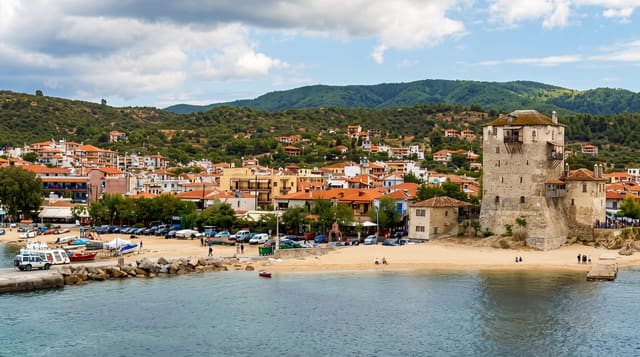
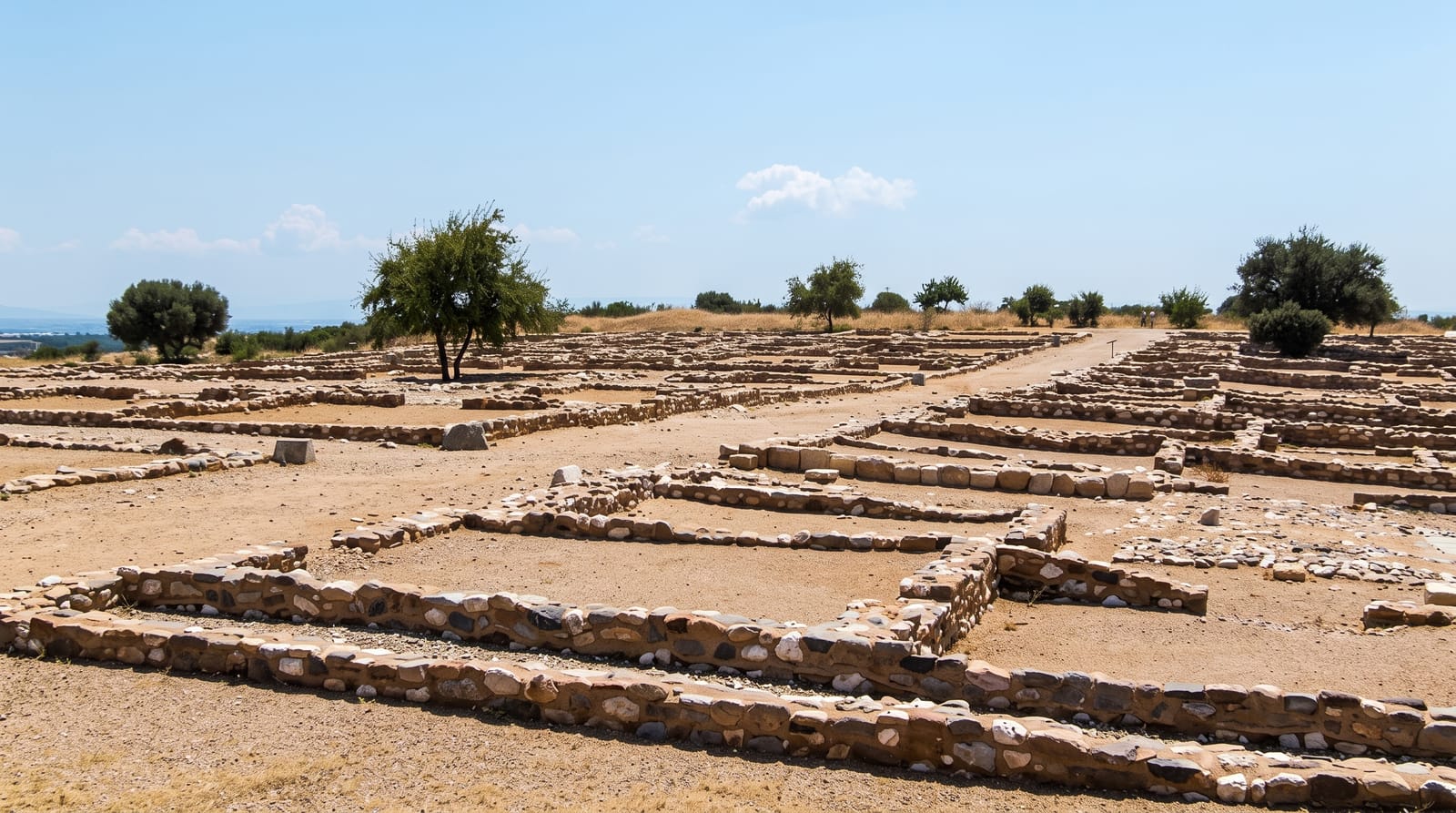
The coastal ruins of Aristotle's birthplace, on a wooded double headland with walls running down to the sea.
Updated 4 September 2026

AI illustration
Stagira was founded in the seventh century BC on a small peninsula of two hills joined by a saddle, and Aristotle was born here in 384 BC; Alexander later rebuilt the town in his tutor's honour. The site is unusually pleasant to walk: paths lead through pine and oleander past the classical fortification wall, an archaic temple, the agora with its stoa foundations, houses and cisterns, and out to the tip of the headland where the walls meet the water and the sea is clear enough to swim from the rocks. Signage explains the layout well. Nearby in the modern village of Stagira stands a park with a bust of Aristotle and a set of physics instruments that demonstrate optical and acoustic principles, popular with children.
Highlights
- The headland walls - classical fortifications running down to the sea.
- The agora and stoa - the civic centre of the ancient town.
- The shoreline - rocks and clear water at the foot of the site.
- The Aristotle park - a nearby hilltop park with working physics exhibits.
When to go
Spring and autumn for walking the paths comfortably; the site is partly shaded by pines, which helps in summer, and swimming from the rocks is a bonus in warm months.
Good to know
The remains are foundations and wall stretches rather than standing buildings, and there is no museum on site. Access is by a short walk from a small car park. There is no shop or cafe at the ruins.
Nearby
Olympiada village and its beach are minutes away; Ouranoupoli and the Athos coast lie east.
What to pack for Ancient Stagira
Chosen from what this place is for. Tap a kit for the full checklist.
- Reef-safe sunscreen - High SPF that will not bleach the coral you are swimming over. Find on Amazon
- Comfortable walking shoes - Sightseeing means kilometres of pavement and cobbles daily. Find on Amazon
- Modest clothing - Shoulders and knees covered - the single most common requirement. Find on Amazon
- Quick-dry towel - A microfibre towel packs small and dries in minutes. Find on Amazon
Some links on this page are Amazon affiliate links - if you buy through them we may earn a small commission at no extra cost to you.
All packing kitsPlan your trip
Where to start if Ancient Stagira is going on the list.
Booking links on this page are affiliate links - if you book through them we may earn a small commission at no extra cost to you. It never changes what we write about a place.
Opening times, ticket prices and seasonal closures change - check the official source before you go: official site.