Ebla
A Bronze Age city mound whose palace archive rewrote early Near Eastern history.
Updated 16 October 2026
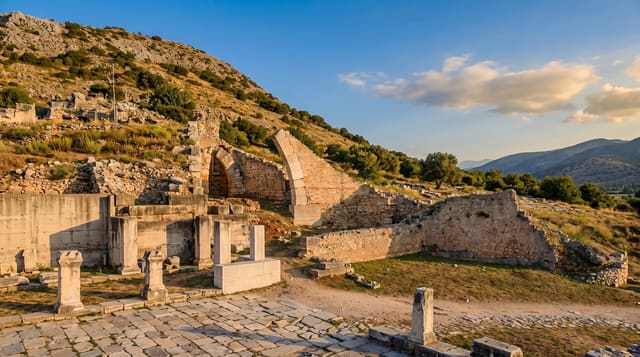
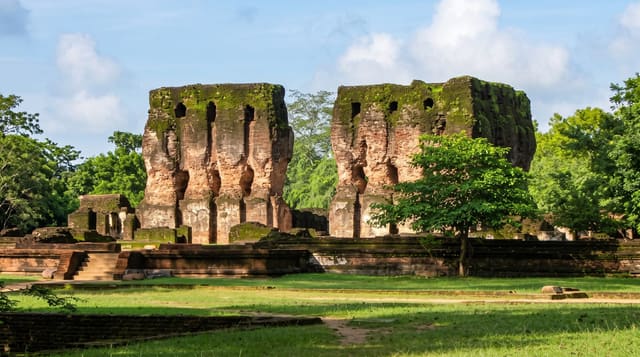
Ebla, the mound of Tell Mardikh, was a major city of the third millennium BC, and the discovery of its palace archive in 1974 was one of the great archaeological finds of the century: more than seventeen thousand cuneiform tablets and fragments recording trade, treaties, rations and letters, in a previously unknown Semitic language now called Eblaite. The tablets pushed the written history of Syria back a thousand years. What stands is the mound itself, with the palace stairs, mudbrick walls and city gates excavated into it.
Background
The ruins form a tell close to the village of Mardikh, some 55 kilometres to the southwest of Aleppo. Ebla began as a small settlement around 3500 BC, supported by many satellite farming villages, and it remained an important centre for the whole 3rd millennium BC and the first half of the 2nd. Its trade reached so widely that objects from Sumer, Cyprus, Egypt and even Afghanistan have turned up in its palaces. Excavation started in 1964. The tablet archive, dated to 2500-2350 BC and written in Sumerian and Eblaite, has deepened knowledge of the Sumerian language. The finds showed the Levant to have been a centre of early civilization on a par with Egypt and Mesopotamia.
Source: Wikipedia, "Ebla"
What you'll find
- The royal palace - the excavated stairways and audience court of Palace G.
- The archive room - where the seventeen thousand tablets were found.
- The city ramparts - the great earthen ring around the mound.
- The gates - the excavated entrances through the rampart.
When to go
March to May and October to November are mild. Summer is hot on the exposed mound. After rain the mudbrick reads best in low light.
Practical notes
Mudbrick architecture is hard to read without a guide and much is weathered or backfilled. The site saw damage and digging in the 2010s. The tablets themselves are in museums, not here.
Nearby
Idlib is north, and the Aleppo-Hama highway is east.
Key facts
Source: Wikidata, item Q5743, read on 18 October 2026.
What to pack for Ebla
Chosen from what this place is for. Tap a kit for the full checklist.
- Comfortable walking shoes - Sightseeing means kilometres of pavement and cobbles daily. Find on Amazon
- A slim anti-theft daypack - Zips that close properly; keep it in front in crowds and on transit. Find on Amazon
- A refillable water bottle - Many cities have public fountains; save money and plastic. Find on Amazon
- A light layer + compact umbrella - For museum air-con and a sudden shower. Find on Amazon
Some links on this page are Amazon affiliate links - if you buy through them we may earn a small commission at no extra cost to you.
All packing kitsPlan your trip
Where to start if Ebla is going on the list.
Booking links on this page are affiliate links - if you book through them we may earn a small commission at no extra cost to you. It never changes what we write about a place.
Opening times, ticket prices and seasonal closures change - check the official source before you go: official site.