Polonnaruwa
A magnificent medieval capital in ruins - the well-preserved remains of a great royal city of palaces, temples and serene rock-carved Buddhas, best explored by bicycle, a UNESCO site.
Updated 18 October 2026
AI illustration
UNESCO World Heritage
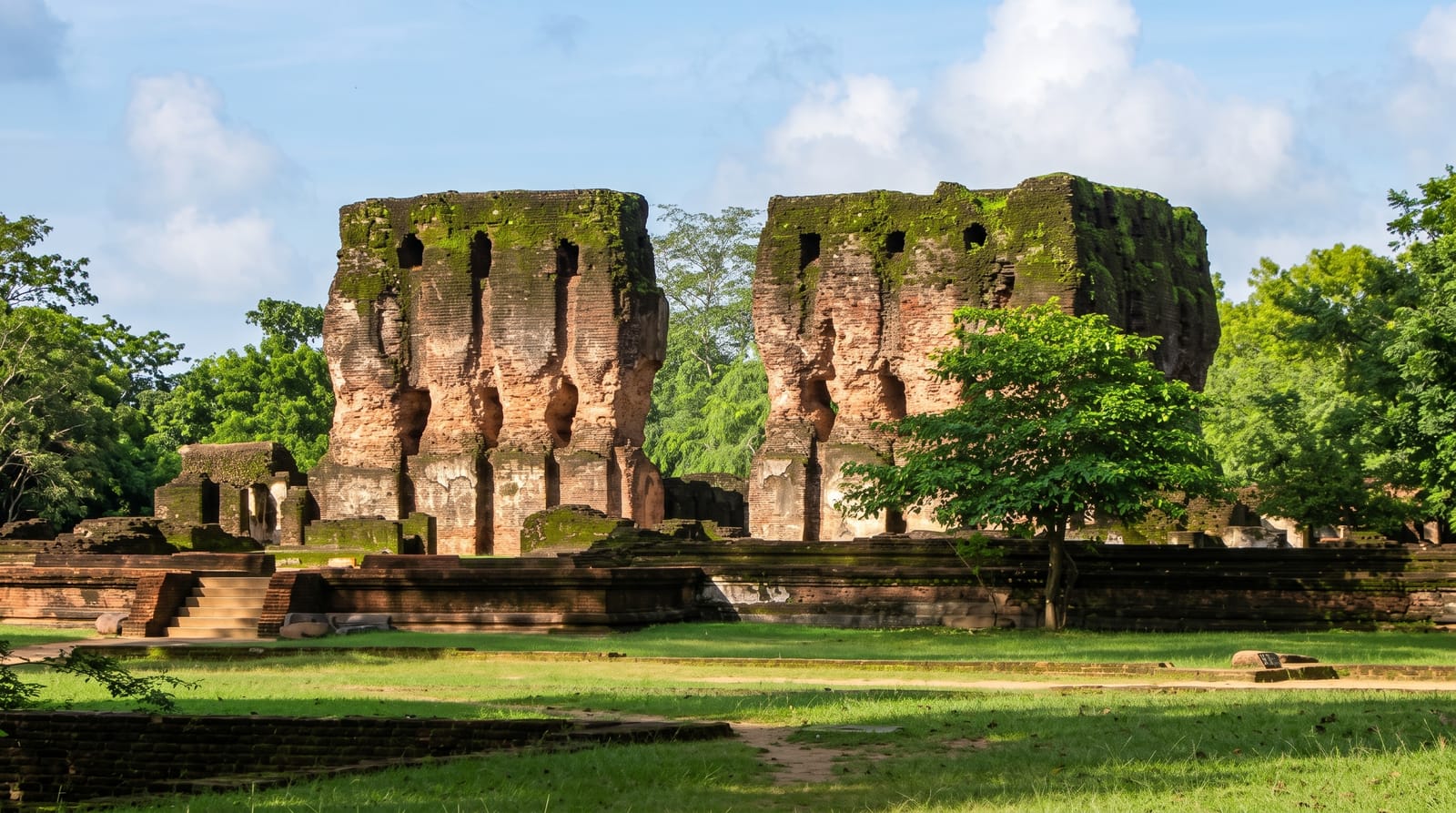
Polonnaruwa was the magnificent second capital of ancient Sri Lanka, a great royal city that flourished in the eleventh and twelfth centuries, and its compact, well-preserved ruins are among the finest on the island. A UNESCO site set among lakes and greenery, it holds the remains of royal palaces, ornate temples, huge stupas and, most beautifully, the Gal Vihara, a set of serene giant Buddha figures carved from a single granite wall, best explored at a gentle pace by bicycle.
History
First a military post of the Sinhalese kingdom, Polonnaruwa was renamed Jananathamangalam by the Cholas after they took Anuradhapura in the 10th century, and Rajaraja I built a Shiva temple here named after his queen, now known as Siva Devale, while the north and centre of the island were governed as a Chola province. Vijayabahu I sent three armies against the city and took it after a siege of seven months, ruling from it from 1070, and under his grandson Parakramabahu the Great, who insisted that not a drop of rain should go to waste, trade and agriculture flourished and the irrigation works surpassed those of the Anuradhapura period. The ancient city is a World Heritage Site (Wikipedia, Polonnaruwa).
Highlights
- The Gal Vihara - the serene giant Buddhas carved from a granite wall.
- The royal palace ruins - the remains of the king's palace and council chamber.
- The Quadrangle - the cluster of ornate sacred buildings.
- The site by bicycle - the compact ruins explored on two wheels.
When to go
This region is drier around May to September, though it can be visited much of the year; go early to explore by bicycle before the midday heat, which is fierce on the exposed site. It is more compact and manageable than the older capital of Anuradhapura.
Before you go
It is hot and largely shadeless, so an early start and a bicycle make it far more enjoyable than walking in the midday sun. It is more compact and better preserved than the rival ancient city of Anuradhapura, so a good choice if seeing only one. A modest dress code applies at the sacred areas. A guide helps bring the history alive.
Nearby
Sigiriya, Dambulla and the Minneriya elephant gathering are within the Cultural Triangle.
What to pack for Polonnaruwa
Chosen from what this place is for. Tap a kit for the full checklist.
- Padded shorts - The one thing that makes a full day in the saddle bearable. Find on Amazon
- Comfortable walking shoes - Sightseeing means kilometres of pavement and cobbles daily. Find on Amazon
- Modest clothing - Shoulders and knees covered - the single most common requirement. Find on Amazon
- Helmet - Bring your own if you have a good one; rentals vary wildly. Find on Amazon
Some links on this page are Amazon affiliate links - if you buy through them we may earn a small commission at no extra cost to you.
All packing kitsPlan your trip
Where to start if Polonnaruwa is going on the list.
Booking links on this page are affiliate links - if you book through them we may earn a small commission at no extra cost to you. It never changes what we write about a place.
Opening times, ticket prices and seasonal closures change - check the official source before you go: official site.