Sierra Espuna
A pine-forested range in inland Murcia, reforested from bare hillside in the nineteenth century, with old snow wells.
Updated 21 October 2026
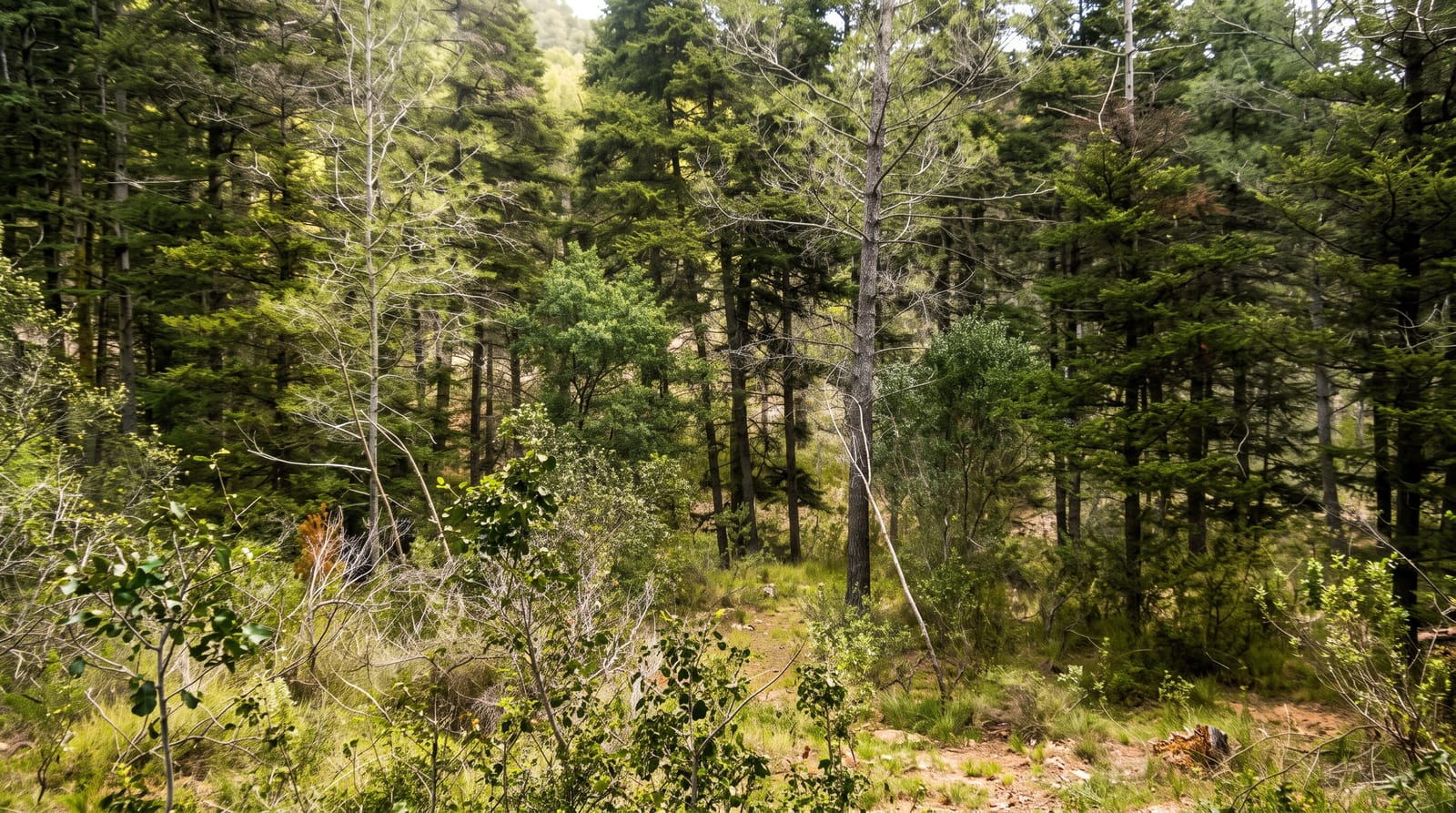
AI illustration
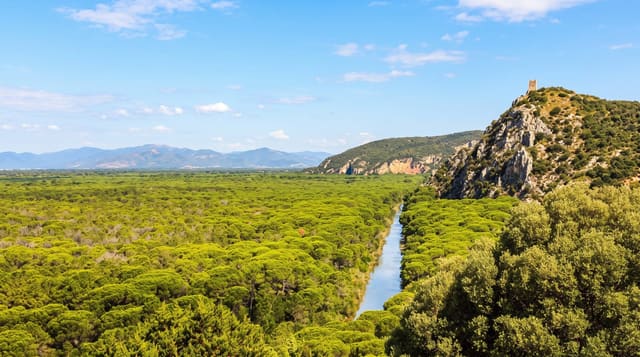
Sierra Espuna rises to 1,585 metres in inland Murcia, and its forest is not natural: by the nineteenth century the range had been stripped bare and flash floods off it were destroying farmland below, so from 1889 the engineer Ricardo Codorniu led a reforestation programme that planted millions of pines over decades, one of the earliest large-scale restoration projects in Europe. On the higher slopes stand the pozos de la nieve, twenty-five domed stone wells built over about 120 years from the late sixteenth century, holding up to 25,000 tonnes between them, in which snow was packed, insulated and stored, then cut and carried down to Murcia and Cartagena through the summer for cooling and medicine, a trade that lasted until industrial ice arrived. Barbary sheep, introduced in 1970, are now numerous. The area was declared a natural site of national interest in 1931 and a regional park, of about 178 square kilometres, in 1992.
What's there
- The snow wells - twenty-five domed stone structures for storing packed snow.
- The planted forest - pine woodland created from bare hillside after 1889.
- The Barbary sheep - an introduced population common on the slopes.
- The Valle de Leiva - a cliff-walled valley on the eastern side.
When to go
March to June and September to November for walking; summer in Murcia is extreme though the altitude gives some relief. Snow occasionally falls on the tops in winter, which is a local event.
Practical notes
The forest is a plantation, uniform in parts, rather than natural woodland. Barbary sheep are an introduced species with debated ecological effects. Facilities are limited to a few recreation areas and the visitor centre.
Nearby
Alhama de Murcia and Totana lie below; Murcia city is forty kilometres northeast.
Key facts
Source: Wikidata, item Q1799086, read on 18 October 2026.
What to pack for Sierra Espuna
Chosen from what this place is for. Tap a kit for the full checklist.
- Broken-in walking shoes or boots - Grip and ankle support matter more than looks; never hike in brand-new boots. Find on Amazon
- Warm base layers - Merino or synthetic against the skin - never cotton, which chills when damp. Find on Amazon
- Layers + a waterproof shell - Mountain weather turns fast; a packable rain jacket saves the day. Find on Amazon
- An insulated + windproof jacket - A down or synthetic layer under a hard shell handles most cold. Find on Amazon
Some links on this page are Amazon affiliate links - if you buy through them we may earn a small commission at no extra cost to you.
All packing kitsPlan your trip
Where to start if Sierra Espuna is going on the list.
Booking links on this page are affiliate links - if you book through them we may earn a small commission at no extra cost to you. It never changes what we write about a place.
Opening times, ticket prices and seasonal closures change - check the official source before you go: official site.