Marbella Old Town
A quarter of whitewashed lanes and orange-tree squares behind the resort front, with Moorish walls still standing.
Updated 4 September 2026
AI illustration
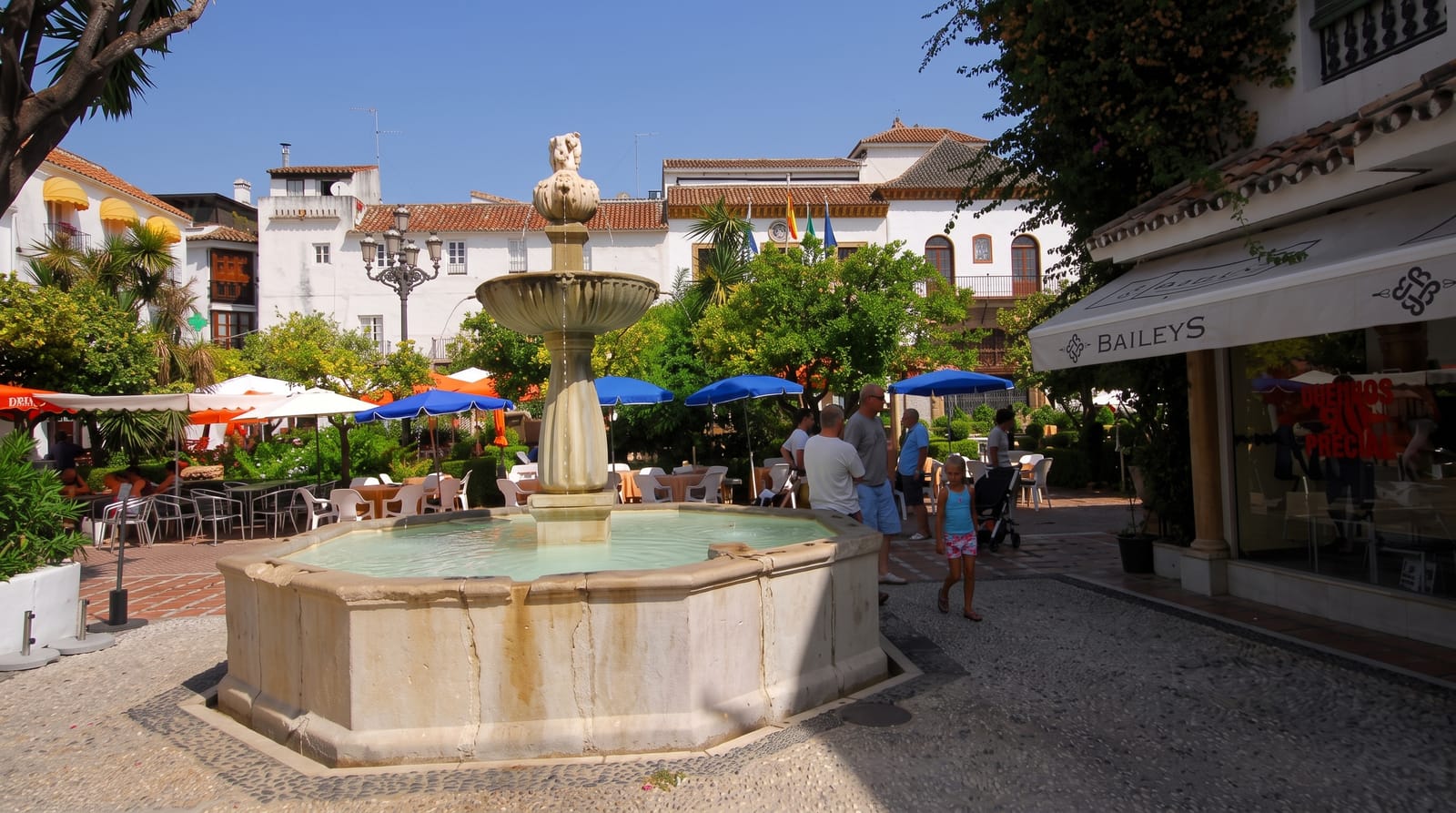
Behind the marinas and the reputation, Marbella keeps a compact old town of narrow whitewashed lanes, wrought-iron balconies and small squares that predates the resort entirely. Its centre is the Plaza de los Naranjos, laid out in 1485 after the Christian conquest and planted with orange trees, framed by the town hall, a chapel and a sixteenth-century house. Stretches of the Moorish castle walls survive along Calle Trinidad and Calle Salvador, and the church of Santa Maria de la Encarnacion dates from the sixteenth century. Beyond the walls the lanes hold small shops, tapas bars and a contemporary engraving museum in a Renaissance hospital building, and the Avenida del Mar leads to the sea past a set of Dali sculptures.
What's there
- Plaza de los Naranjos - a 1485 square planted with orange trees.
- The Moorish walls - surviving stretches of the castle enclosure.
- The whitewashed lanes - narrow streets of balconies and flowers.
- The Dali sculptures - bronzes along the Avenida del Mar to the beach.
When to go
Spring and autumn for the most comfortable walking; the square fills with restaurant tables through the evening in summer. Mornings are quiet, and the orange trees flower in spring with a strong scent.
Before you go
The Plaza de los Naranjos is entirely given over to restaurant terraces charging tourist prices. The quarter is small and walked in an hour. Parking in the centre is difficult and expensive.
Nearby
Puerto Banus is west along the coast; Mijas Pueblo and Estepona lie either side.
Key facts
Source: Wikidata, item Q97633722, read on 18 October 2026.
What to pack for Marbella Old Town
Chosen from what this place is for. Tap a kit for the full checklist.
- Comfortable walking shoes - Sightseeing means kilometres of pavement and cobbles daily. Find on Amazon
- A slim anti-theft daypack - Zips that close properly; keep it in front in crowds and on transit. Find on Amazon
- A refillable water bottle - Many cities have public fountains; save money and plastic. Find on Amazon
- A light layer + compact umbrella - For museum air-con and a sudden shower. Find on Amazon
Some links on this page are Amazon affiliate links - if you buy through them we may earn a small commission at no extra cost to you.
All packing kitsPlan your trip
Where to start if Marbella Old Town is going on the list.
Booking links on this page are affiliate links - if you book through them we may earn a small commission at no extra cost to you. It never changes what we write about a place.
Opening times, ticket prices and seasonal closures change - check the official source before you go: official site.