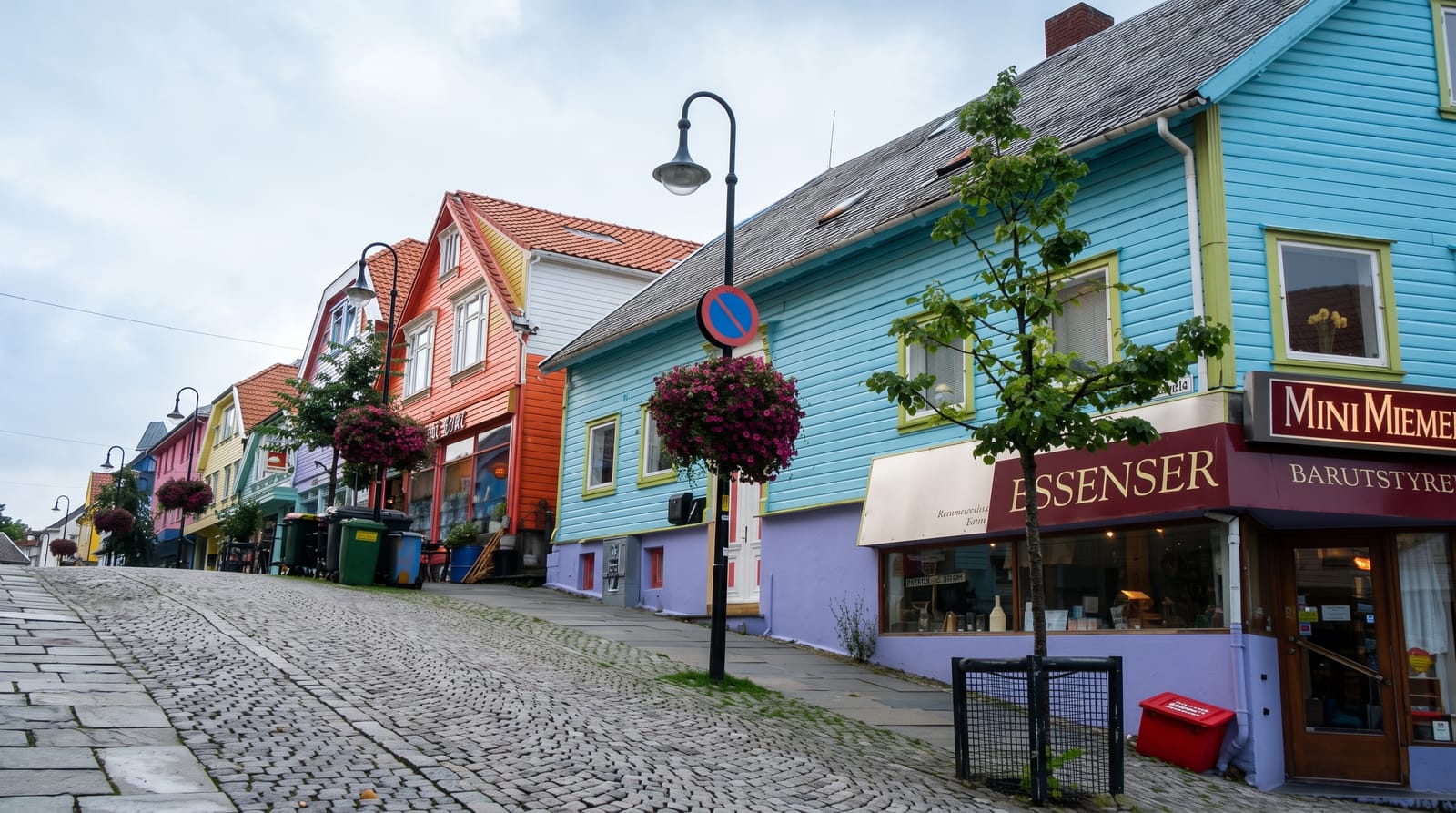
Gamle Stavanger
Around 170 white timber houses from the 1700s and 1800s on the western side of Stavanger harbour.
Updated 4 September 2026

AI illustration
Gamle Stavanger occupies the slope on the western side of the harbour and holds about 170 small white-painted timber houses, mostly built between the late 1700s and the 1860s for workers in the fishing and canning trades, along cobbled lanes with flowers and window boxes. The quarter was scheduled for demolition in the 1950s as slum housing and was saved by a conservation campaign led by the architect Einar Hedén, which became a model for similar rescues elsewhere in Norway. The Norwegian Canning Museum, in a former sardine factory in the quarter, covers the industry that employed most of the residents, with occasional demonstrations of smoking and packing fish.
The main sights
- The white timber houses - around 170 preserved workers' homes.
- The cobbled lanes - narrow streets with flowers along the fronts.
- The Canning Museum - a former sardine factory with working demonstrations.
- The harbour setting - the quarter climbing from the Vagen waterfront.
When to go
May to September, when the gardens are in flower and the museum runs demonstrations; the quarter is walkable year-round. Cruise calls at Stavanger fill the lanes on some days.
Things to know
The houses are lived in, so this is a residential street rather than a museum quarter, and photographing into windows is unwelcome. The walk takes an hour. Cruise passengers can crowd the narrow lanes in season.
Nearby
Stavanger cathedral and the harbour are across the water; Sverd i Fjell and the Lysefjord boats lie south.
Key facts
Source: Wikidata, item Q4566860, read on 18 October 2026.
What to pack for Gamle Stavanger
Chosen from what this place is for. Tap a kit for the full checklist.
- Travel rod + reel - A packable multi-piece rod fits in a case and covers most holiday fishing. Find on Amazon
- Comfortable walking shoes - Sightseeing means kilometres of pavement and cobbles daily. Find on Amazon
- Modest clothing - Shoulders and knees covered - the single most common requirement. Find on Amazon
- A small tackle selection - Hooks, weights, line and a few lures or flies suited to local waters. Find on Amazon
Some links on this page are Amazon affiliate links - if you buy through them we may earn a small commission at no extra cost to you.
All packing kitsPlan your trip
Where to start if Gamle Stavanger is going on the list.
Booking links on this page are affiliate links - if you book through them we may earn a small commission at no extra cost to you. It never changes what we write about a place.
Opening times, ticket prices and seasonal closures change - check the official source before you go: official site.