Fontainhas
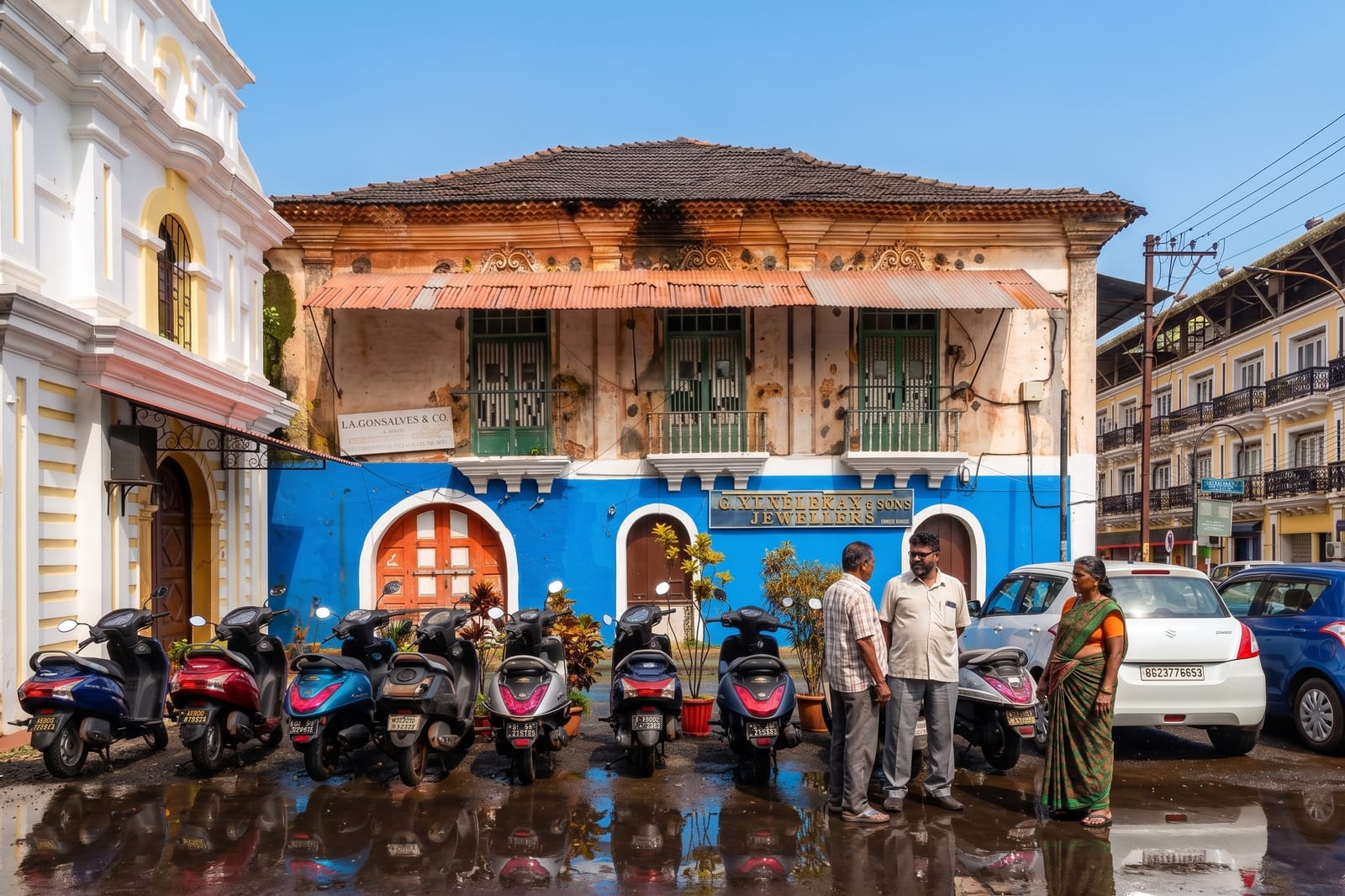
Panaji's Latin Quarter, where houses are repainted in strong colours every year after the monsoon.
Updated 19 October 2026
AI illustration
Fontainhas was laid out in the late eighteenth century by António João de Sequeira, a Goan who had made his fortune in Mozambique, and named after a spring at the foot of the hill, and it kept its shape: narrow lanes running between two-storey houses with overhanging balconies, projecting eaves, oyster-shell windows and internal courtyards, laid out on a slope below the Altinho hill. A local convention, dating from Portuguese rules on repainting after the rains, keeps the houses in strong yellows, greens, blues and reds with white trim, refreshed annually. The Chapel of St Sebastian stands at the centre, holding a crucifix brought from the Goa Inquisition. Bakeries, small bars and a few restored houses open as galleries.
History
Fontainhas was founded in the late eighteenth century by António João de Sequeira, a Goan nicknamed Mossmikar who had made his fortune in Mozambique, and named after a spring that began to flow at the foot of the hill around 1770; it was laid out on the pattern of Lisbon's Bairro Alto. In 1844 a government administrator built the Rua Nova d'Ourem along its seaward side and the Phenis fountain, and the writer William Dalrymple called the quarter "a small chunk of Portugal washed up on the shores of the Indian Ocean" (Wikipedia, Fontainhas (quarter)).
What you'll find
- The painted houses - lanes of strong colour with white trim, repainted yearly.
- The balconies and shell windows - Portuguese domestic details in the streets.
- St Sebastian chapel - the small church at the quarter's centre.
- The bakeries and bars - old family businesses in the lanes.
When to go
November to February; houses are freshly painted after the monsoon, so late in the year they look their best. The quarter is residential and quietest in the morning.
Practical notes
This is a lived-in neighbourhood, not a museum quarter, and photographing doorways and residents needs discretion. It is small and walked in an hour or two. Parking is impossible.
Nearby
Old Goa lies east; Miramar beach is west.
Key facts
Source: Wikidata, item Q5465121, read on 18 October 2026.
What to pack for Fontainhas
Chosen from what this place is for. Tap a kit for the full checklist.
- Strong insect repellent - DEET or picaridin; the jungle is where bites and disease risk are highest. Find on Amazon
- Comfortable walking shoes - Sightseeing means kilometres of pavement and cobbles daily. Find on Amazon
- Long, light, quick-dry clothing - Covers skin from insects and sun without cooking you in the humidity. Find on Amazon
- A slim anti-theft daypack - Zips that close properly; keep it in front in crowds and on transit. Find on Amazon
Some links on this page are Amazon affiliate links - if you buy through them we may earn a small commission at no extra cost to you.
All packing kitsPlan your trip
Where to start if Fontainhas is going on the list.
Booking links on this page are affiliate links - if you book through them we may earn a small commission at no extra cost to you. It never changes what we write about a place.
Opening times, ticket prices and seasonal closures change - check the official source before you go: official site.