Los Gigantes Cliffs
Cliffs rising up to six hundred metres straight from the Atlantic on Tenerife's western coast, best seen from a boat.
Updated 4 September 2026
AI illustration
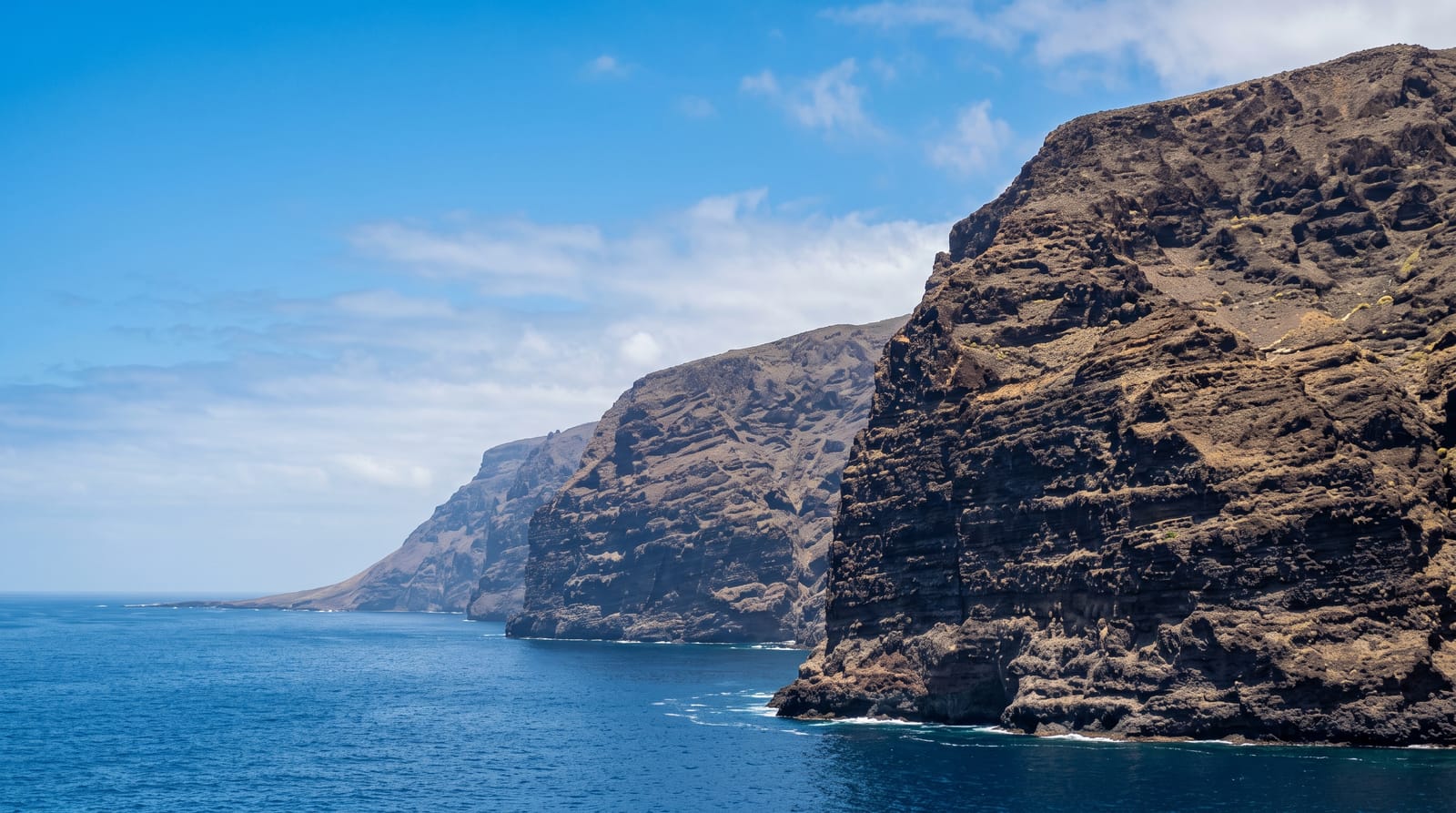
The Acantilados de los Gigantes form the western edge of the Teno massif, where lava flows built up over millions of years and the sea has cut them back into a wall running several kilometres and rising in places to about six hundred metres directly from deep water. The Guanches called the area the wall of hell and did not pass it. Because the cliffs drop straight into water hundreds of metres deep, boats can come close under them, and trips from the marina at Los Gigantes run beneath the wall and out to look for cetaceans: the strait between Tenerife and La Gomera holds resident short-finned pilot whales and bottlenose dolphins year-round, one of the most reliable whale-watching areas in Europe.
Highlights
- The cliff wall - six hundred metres of rock rising straight from deep water.
- The boat passage - trips running close under the face.
- The resident cetaceans - pilot whales and dolphins in the strait year-round.
- The Masca beach - the black cove at the gorge mouth, seen from the water.
When to go
Year-round; the strait's cetaceans are resident rather than migratory, so sightings are reliable in any month. Boats are cancelled in swell. Afternoon light suits the cliffs from the water.
Things to know
The cliffs are best seen from the sea, and the road viewpoints give only partial views. Boat operators vary in how closely they approach wildlife, and accredited operators carry a blue flag marking compliance with the code. Trips are cancelled in wind.
Nearby
Masca gorge lies north in the Teno massif; Costa Adeje and Siam Park are south.
What to pack for Los Gigantes Cliffs
Chosen from what this place is for. Tap a kit for the full checklist.
- Broken-in walking shoes or boots - Grip and ankle support matter more than looks; never hike in brand-new boots. Find on Amazon
- Binoculars - The single best wildlife tool - even a compact pair transforms a sighting. Find on Amazon
- Layers + a waterproof shell - Mountain weather turns fast; a packable rain jacket saves the day. Find on Amazon
- A zoom camera or long lens - Animals rarely come close; reach beats megapixels. Find on Amazon
Some links on this page are Amazon affiliate links - if you buy through them we may earn a small commission at no extra cost to you.
All packing kitsPlan your trip
Where to start if Los Gigantes Cliffs is going on the list.
Booking links on this page are affiliate links - if you book through them we may earn a small commission at no extra cost to you. It never changes what we write about a place.
Opening times, ticket prices and seasonal closures change - check the official source before you go: official site.