Guimar Pyramids
Six terraced stone structures in eastern Tenerife promoted by Thor Heyerdahl as ancient pyramids, and explained by others as field clearance.
Updated 18 October 2026
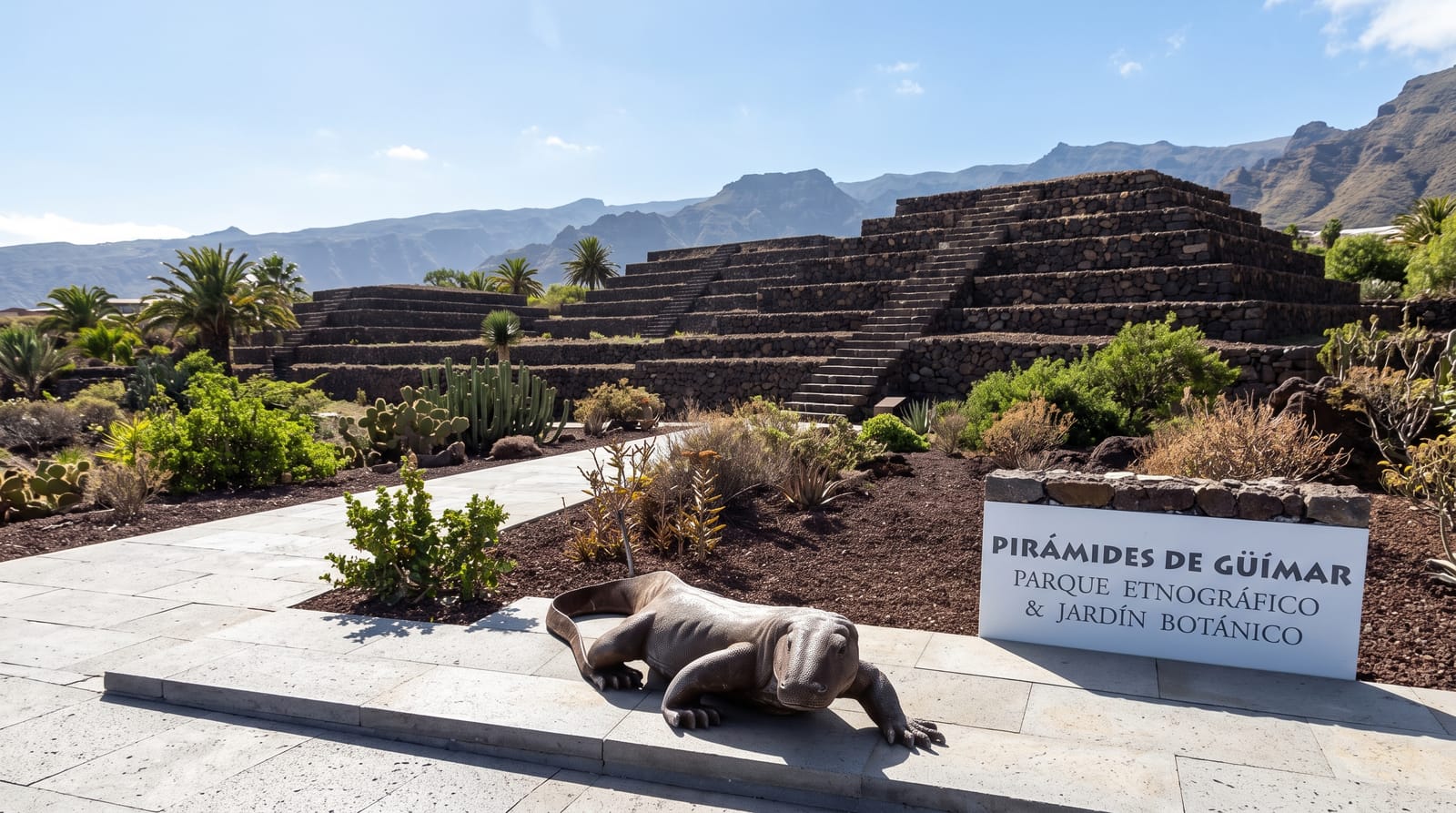
AI illustration
Six stepped structures of stacked lava stone stand on a terrace above Guimar, and their interpretation is disputed. Thor Heyerdahl, the Norwegian who sailed the Kon-Tiki, came in 1991, argued they were deliberate stepped pyramids with astronomical alignments linking Old World and New World cultures, and secured funding from a shipping magnate to create a park around them. Canarian archaeologists have consistently held that they are majanos, heaps of stone cleared from fields by nineteenth-century farmers and stacked in terraces, a practice documented across the islands. The park presents Heyerdahl's case and displays his boats along with an exhibition on transoceanic contact; the mainstream archaeological view is given far less space.
History
The terraces have been dated to the 19th century, built during the profitable boom in cochineal farming; Güímar once had nine of them, and six survive. Their fame began in 1990, when Thor Heyerdahl read an article by Francisco Padrón in the Tenerife paper Diario de Avisos about "real pyramids on the Canaries" and, seeing a possible stop on voyages between Egypt and the Maya, moved to the island. In 1991 astronomers of the Canary Institute of Astrophysics showed that some walls line up with the solstices - from the largest platform you can see a double sunset at midsummer - and excavations by the University of La Laguna between 1991 and 1998 produced the evidence for the dating. A 2005 book by two of the astronomers suggested the alignments may echo the Masonic symbolism of the landowner of the time, without changing the farming purpose (Wikipedia, Pyramids of Güímar).
The main sights
- The six structures - terraced stacks of lava stone on the hillside.
- The Heyerdahl exhibition - his case for transoceanic contact and his vessels.
- The garden - a planted area with Canarian and imported species.
- The disputed interpretation - pyramids or nineteenth-century field clearance.
When to go
Year-round; the site is outdoors with some shade in the garden. Guimar is on the drier eastern side of Tenerife and hot in summer. The park closes on some holidays.
Before you go
The pyramid interpretation is not accepted by Canarian archaeologists, who date the structures to the nineteenth century, and the park's presentation does not make that clear. Tickets are relatively expensive for what is on site.
Nearby
Guimar town lies below; the Teide national park road climbs inland to the west.
Key facts
Source: Wikidata, item Q619588, read on 18 October 2026.
What to pack for Guimar Pyramids
Chosen from what this place is for. Tap a kit for the full checklist.
- Comfortable walking shoes - Sightseeing means kilometres of pavement and cobbles daily. Find on Amazon
- A slim anti-theft daypack - Zips that close properly; keep it in front in crowds and on transit. Find on Amazon
- A refillable water bottle - Many cities have public fountains; save money and plastic. Find on Amazon
- A light layer + compact umbrella - For museum air-con and a sudden shower. Find on Amazon
Some links on this page are Amazon affiliate links - if you buy through them we may earn a small commission at no extra cost to you.
All packing kitsPlan your trip
Where to start if Guimar Pyramids is going on the list.
Booking links on this page are affiliate links - if you book through them we may earn a small commission at no extra cost to you. It never changes what we write about a place.
Opening times, ticket prices and seasonal closures change - check the official source before you go: official site.