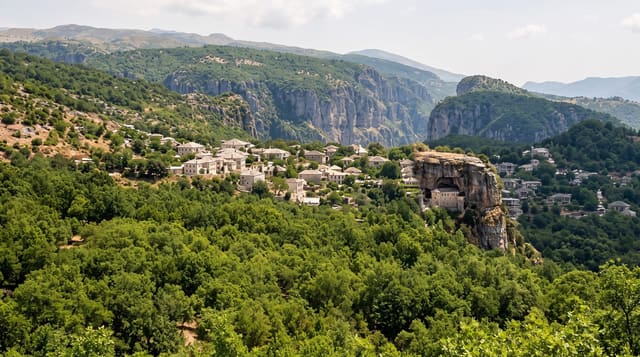
Las Alpujarras
White villages with flat clay roofs and covered passages on the southern slopes of the Sierra Nevada, Berber in layout.
Updated 14 October 2026

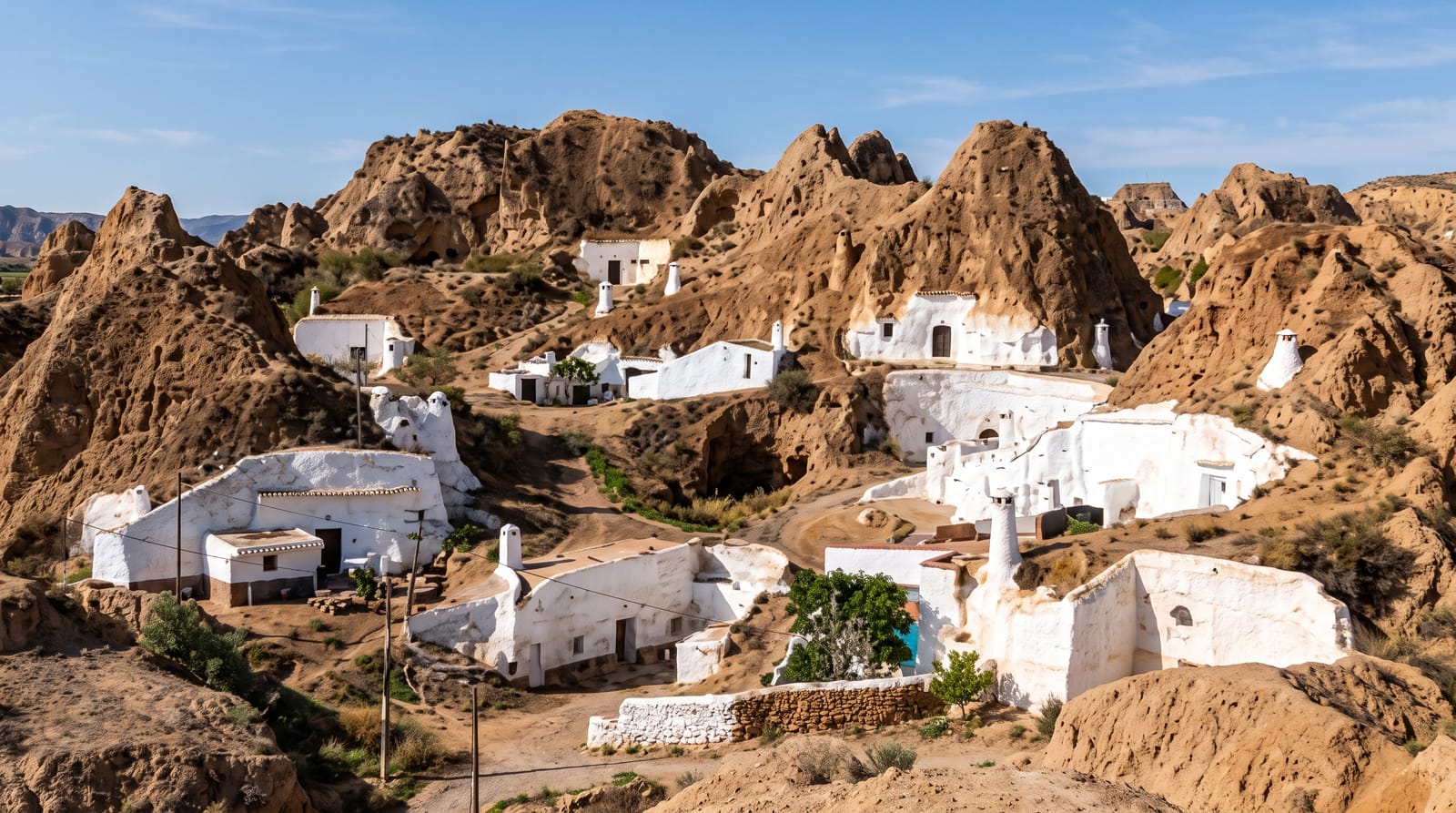
AI illustration
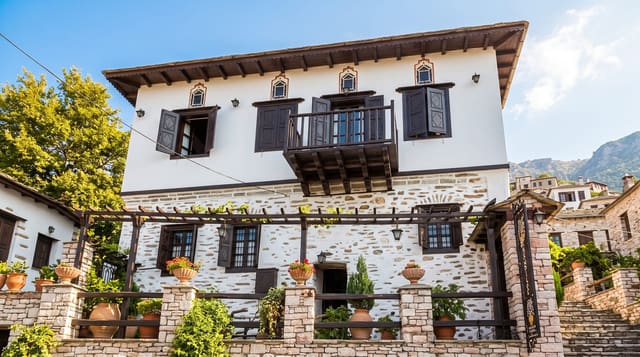
The Alpujarras are a series of valleys on the southern flank of the Sierra Nevada, terraced and irrigated by channels built under Muslim rule and still in use, and the villages there kept a building style found nowhere else in Spain: flat roofs of launa, a grey clay laid over beams, chimneys with squat caps, and tinaos, covered passages where an upper room bridges the street. The style is North African in origin, brought by Berber settlers. After the Morisco rebellion of 1568 the population was expelled and replaced with settlers from northern Spain, but the architecture stayed. Pampaneira, Bubion and Capileira in the Poqueira gorge are the most visited; Trevelez higher up is known for its cured ham.
The main sights
- The flat launa roofs - grey clay roofing unique to these valleys.
- The tinaos - covered street passages under upper rooms.
- The Poqueira villages - Pampaneira, Bubion and Capileira stacked up one gorge.
- The irrigation channels - acequias from the Muslim period still running.
When to go
April to June for flowers and snowmelt in the channels, September to November for clear air and the ham season; winter brings snow to the higher villages and closes some roads. August is crowded with Spanish holidaymakers.
Good to know
Roads are narrow, winding and slow, and driving between villages takes longer than the distances suggest. The Poqueira villages are heavily geared to visitors with souvenir shops on every corner. Parking is difficult and many streets are closed to cars.
Nearby
The Sierra Nevada peaks rise above; Granada lies northwest and the Costa Tropical south.
What to pack for Las Alpujarras
Chosen from what this place is for. Tap a kit for the full checklist.
- Warm base layers - Merino or synthetic against the skin - never cotton, which chills when damp. Find on Amazon
- Comfortable walking shoes - Sightseeing means kilometres of pavement and cobbles daily. Find on Amazon
- An insulated + windproof jacket - A down or synthetic layer under a hard shell handles most cold. Find on Amazon
- A slim anti-theft daypack - Zips that close properly; keep it in front in crowds and on transit. Find on Amazon
Some links on this page are Amazon affiliate links - if you buy through them we may earn a small commission at no extra cost to you.
All packing kitsPlan your trip
Where to start if Las Alpujarras is going on the list.
Booking links on this page are affiliate links - if you book through them we may earn a small commission at no extra cost to you. It never changes what we write about a place.
Opening times, ticket prices and seasonal closures change - check the official source before you go: official site.