Guadix Cave Houses
A district of Granada province where thousands still live in whitewashed houses dug into soft clay hillsides.
Updated 4 September 2026
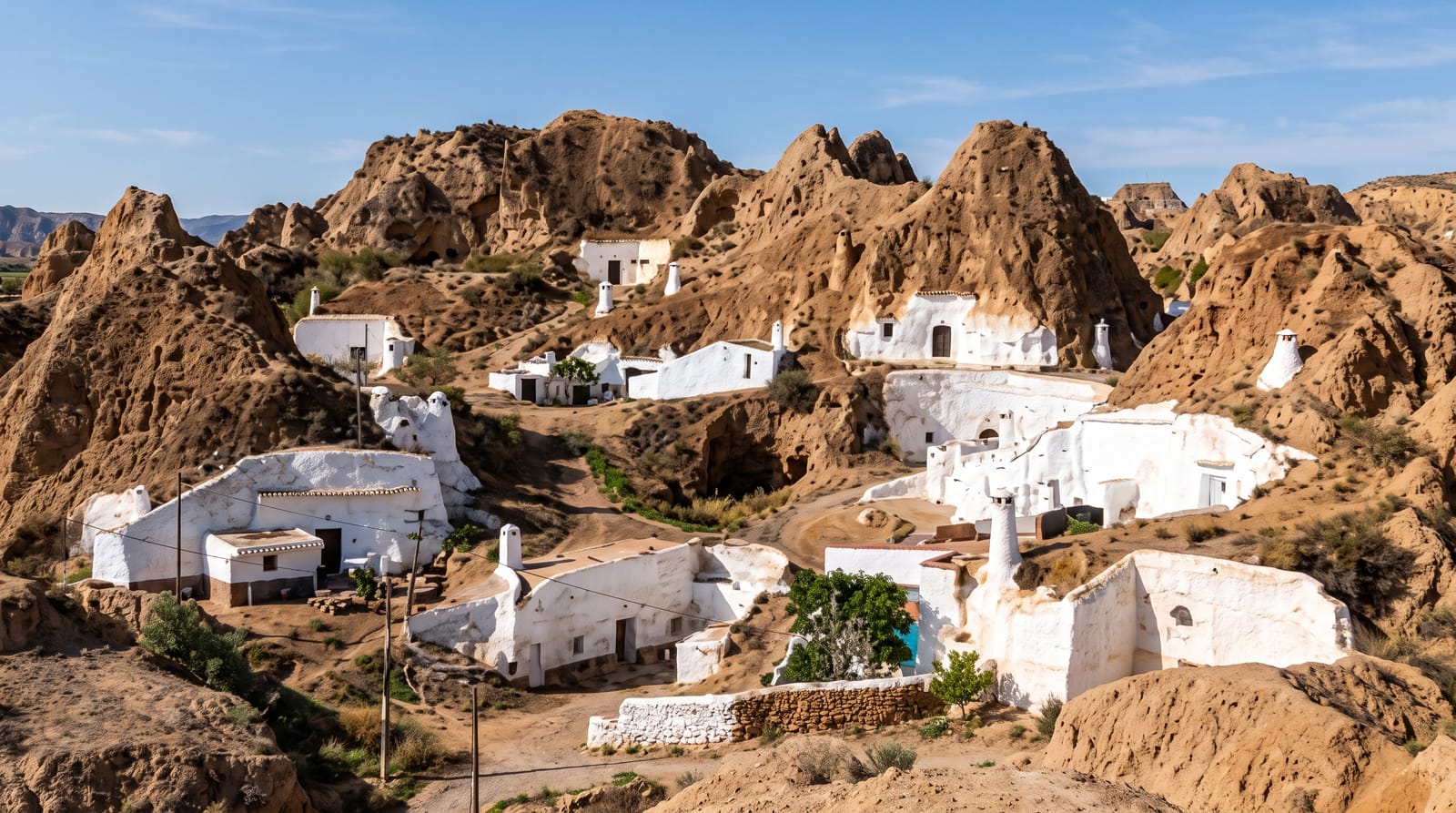
AI illustration
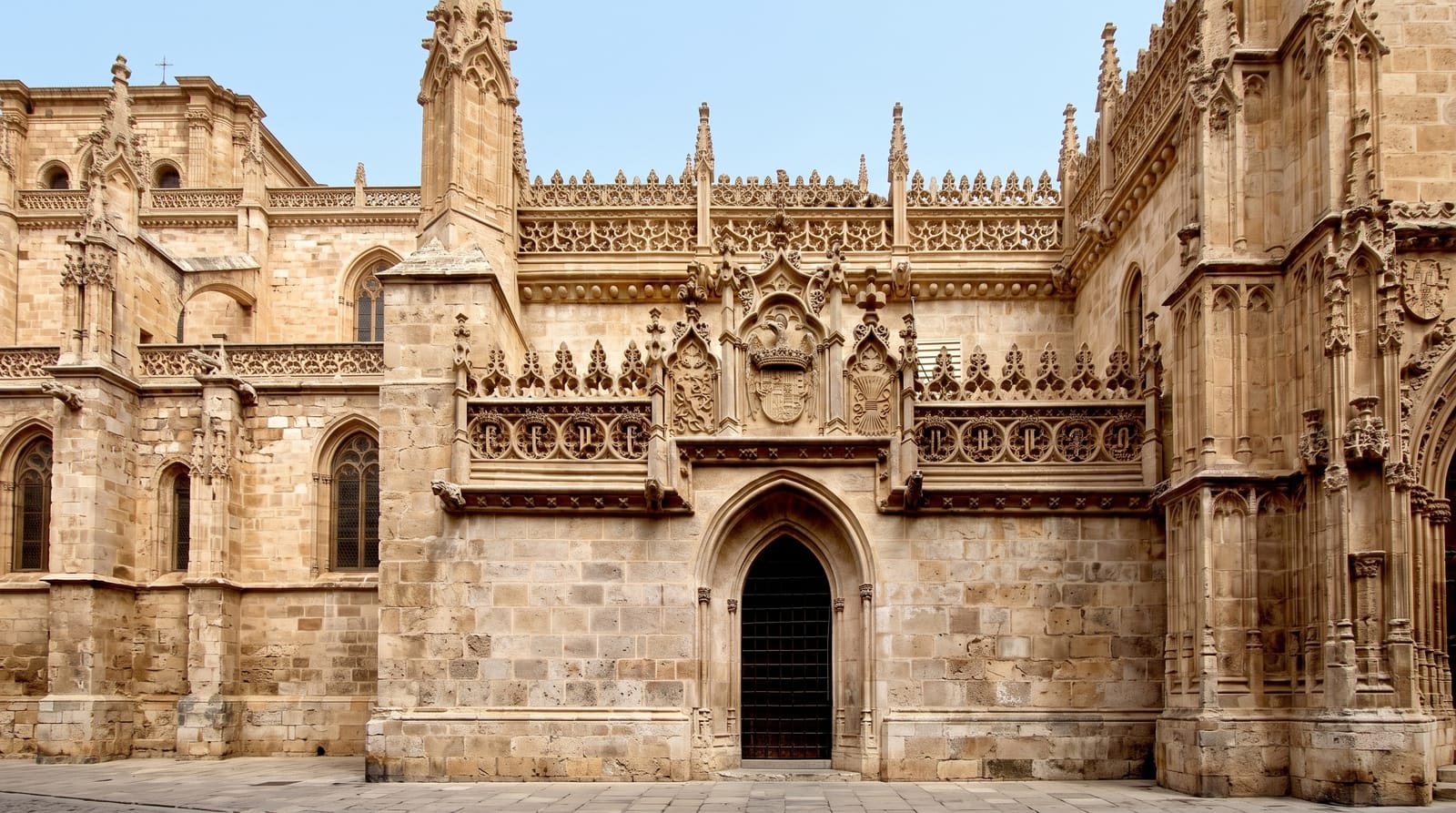
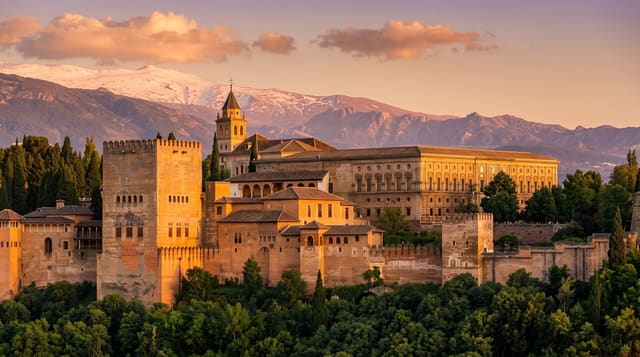
Guadix sits in a basin of soft reddish clay eroded into badlands, and from at least the sixteenth century people dug into it: the Barrio de las Cuevas holds several thousand cave houses, of which many are still occupied, marked from the surface only by a whitewashed facade, a door and a line of chimneys rising from the hillside above. The rock keeps the interiors at around eighteen degrees year-round without heating or cooling, which is the practical reason the tradition persists in a climate of extreme summer heat and cold winters. A cave museum shows a furnished dwelling, and some caves operate as hotels. The town also has a red sandstone cathedral and a Moorish alcazaba.
The main sights
- The chimney field - whitewashed chimneys rising from the hillside above the caves.
- The occupied dwellings - thousands of cave houses still lived in.
- The cave museum - a furnished house showing the interior layout.
- The badlands - eroded red clay landscape around the town.
When to go
Spring and autumn for comfortable walking; the caves themselves stay at a constant temperature, which makes them appealing in the summer heat. Winter in the basin is cold, another reason the tradition survives.
Things to know
Most caves are private homes, and walking through the barrio means walking past people's doorsteps. The district is not affluent and some visitors feel uncomfortable there. Only the museum and hotel caves can be entered.
Nearby
Guadix cathedral and alcazaba are in the town; Purullena and the Sierra Nevada lie west.
What to pack for Guadix Cave Houses
Chosen from what this place is for. Tap a kit for the full checklist.
- Head torch + spare batteries - Hands-free light is essential; caves are truly dark. Find on Amazon
- Comfortable walking shoes - Sightseeing means kilometres of pavement and cobbles daily. Find on Amazon
- Modest clothing - Shoulders and knees covered - the single most common requirement. Find on Amazon
- Grippy closed shoes - Cave floors are wet, muddy and slick with formations. Find on Amazon
Some links on this page are Amazon affiliate links - if you buy through them we may earn a small commission at no extra cost to you.
All packing kitsPlan your trip
Where to start if Guadix Cave Houses is going on the list.
Booking links on this page are affiliate links - if you book through them we may earn a small commission at no extra cost to you. It never changes what we write about a place.
Opening times, ticket prices and seasonal closures change - check the official source before you go: official site.