Almagro
A Ciudad Real town with a green-galleried plaza and a seventeenth-century open-air theatre, still used each July.
Updated 4 September 2026

AI illustration
Almagro's Plaza Mayor is unusual: a long rectangle enclosed by two-storey galleries of stone columns and green-painted wooden framing, a form owing something to the Fugger bankers who administered the area for the crown in the sixteenth century and brought central European influence. Off the plaza is the Corral de Comedias, an open-air courtyard theatre of 1628 with wooden galleries around a rectangular yard and a stage at one end, the only Spanish theatre of its kind surviving essentially intact; it was rediscovered in 1953 behind later building. It hosts the Festival Internacional de Teatro Clasico each July, staging Golden Age drama in the space it was written for. The town also has a lace-making tradition and a national theatre museum.
What you'll find
- The green-galleried plaza - a long rectangle of columned wooden galleries.
- The Corral de Comedias - a 1628 courtyard theatre surviving intact.
- The July festival - Golden Age drama staged in the original space.
- The lace tradition - bobbin lace still made and sold in the town.
When to go
April to June and September to November for comfort; July for the theatre festival, when performances fill the corral and the town. The Mancha plain is extremely hot in summer and cold in winter.
Good to know
The corral seats only a few hundred and festival tickets sell out months ahead. Performances are in Spanish in period language. Outside festival time the theatre is visited on a short guided tour.
Nearby
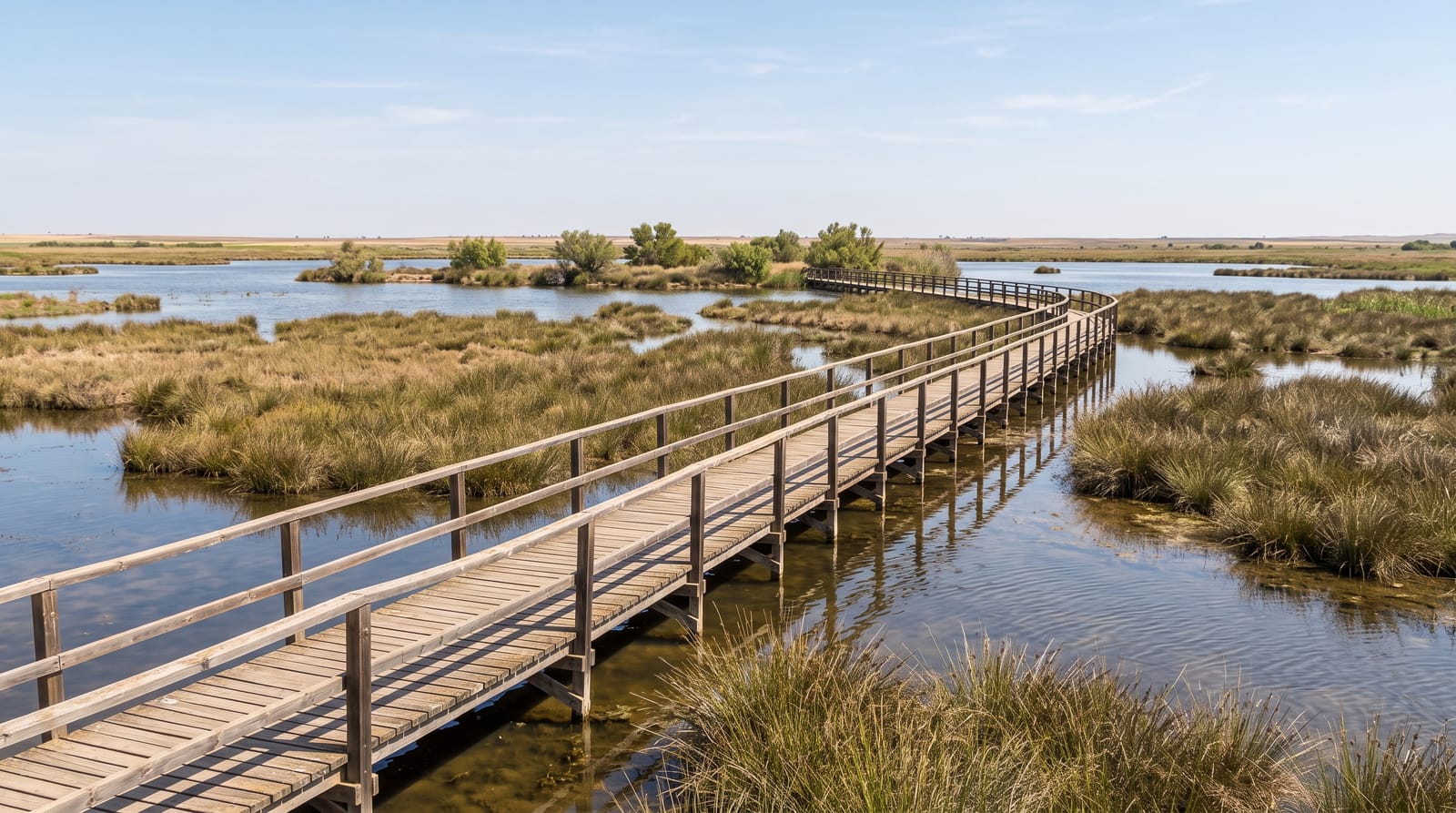
Ciudad Real lies northwest; the Tablas de Daimiel and Campo de Calatrava are close.
What to pack for Almagro
Chosen from what this place is for. Tap a kit for the full checklist.
- Comfortable walking shoes - Sightseeing means kilometres of pavement and cobbles daily. Find on Amazon
- A slim anti-theft daypack - Zips that close properly; keep it in front in crowds and on transit. Find on Amazon
- A refillable water bottle - Many cities have public fountains; save money and plastic. Find on Amazon
- A light layer + compact umbrella - For museum air-con and a sudden shower. Find on Amazon
Some links on this page are Amazon affiliate links - if you buy through them we may earn a small commission at no extra cost to you.
All packing kitsPlan your trip
Where to start if Almagro is going on the list.
Booking links on this page are affiliate links - if you book through them we may earn a small commission at no extra cost to you. It never changes what we write about a place.
Opening times, ticket prices and seasonal closures change - check the official source before you go: official site.