Seopjikoji
A grassy cape on Jeju's eastern tip with a white lighthouse, canola fields in spring and Seongsan Ilchulbong across the water.
Updated 25 August 2026
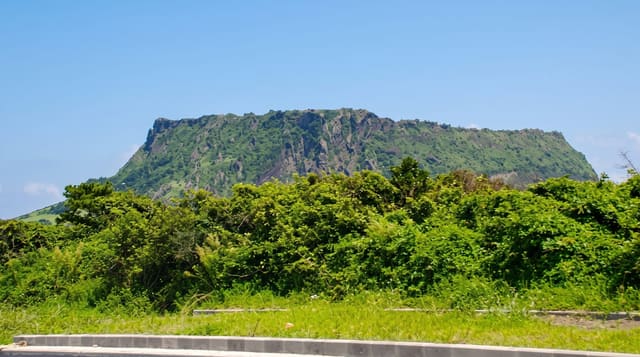
Koji is the Jeju word for a cape, and Seopjikoji is a low grassy headland running out into the sea on the island's eastern corner. The walk from the car park along the shore takes twenty minutes or so on a made path, past basalt cliffs, a beacon mound of the old signal-fire system, and the volcanic rock stack called Seondol standing offshore, to a white lighthouse on the point. Across the bay Seongsan Ilchulbong, the tuff cone that is Jeju's most recognisable landmark, fills the view. In April the fields on the cape are planted with canola and go bright yellow, which is when the place is most photographed and most crowded. There is a Tadao Ando-designed building, Glass House, on the headland and a former drama set nearby. Wind is constant. The Jeju Olle trail runs through, and Seongsan and the Udo ferry are minutes away.
What's there
- The white lighthouse - the tower at the end of the cape.
- The canola fields - yellow across the headland in April.
- Seongsan Ilchulbong - the tuff cone across the bay.
- Seondol rock - the stack standing off the shore.
When to go
April for the canola, which is the peak and the crowd; year-round otherwise for the walk and the view. Mornings are clearest for Ilchulbong.
Before you go
Canola fields are privately farmed and some charge for photographs among the flowers. The cape is fully exposed and the wind is relentless. April weekends are very busy.
Nearby
Seongsan Ilchulbong and the Udo ferry are minutes away; Gwangchigi beach is alongside.
What to pack for Seopjikoji
Chosen from what this place is for. Tap a kit for the full checklist.
- Broken-in walking shoes or boots - Grip and ankle support matter more than looks; never hike in brand-new boots. Find on Amazon
- Layers + a waterproof shell - Mountain weather turns fast; a packable rain jacket saves the day. Find on Amazon
- Daypack with rain cover - 20-30 litres holds water, snacks, layers and a first-aid kit. Find on Amazon
- Offline maps + a power bank - Download the trail before you lose signal; carry backup charge. Find on Amazon
Some links on this page are Amazon affiliate links - if you buy through them we may earn a small commission at no extra cost to you.
All packing kitsPlan your trip
Where to start if Seopjikoji is going on the list.
Booking links on this page are affiliate links - if you book through them we may earn a small commission at no extra cost to you. It never changes what we write about a place.
Opening times, ticket prices and seasonal closures change - check the official source before you go: official site.