Seongsan Ilchulbong
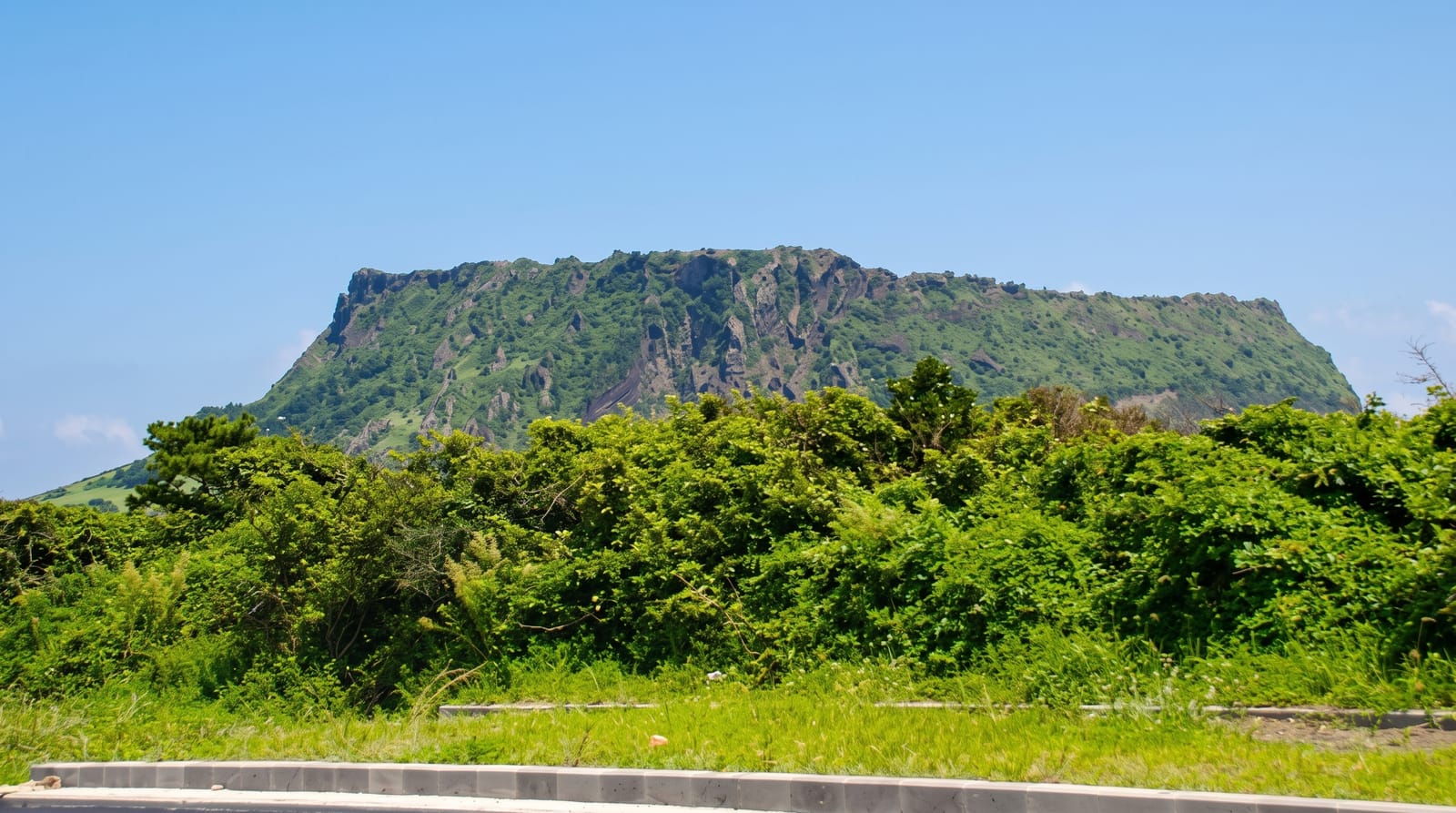
A tuff cone on Jeju's eastern tip with a grassy crater ringed by sea cliffs, climbed in twenty minutes and traditionally watched at sunrise.
Updated 18 October 2026
AI illustration
UNESCO World Heritage
Seongsan Ilchulbong is a tuff cone that erupted from the sea off Jeju's eastern tip and now stands as a green bowl ringed by cliffs, joined to the island by a low neck of land. The climb is short, a stepped path of about twenty minutes that ends on the rim above a wide grassy crater, with the coast and the fields of the east running away below. Its name refers to sunrise, and the eastern position makes it the island's traditional place to watch the first light of a new year. On the shore below the cone, the haenyeo, Jeju's women free-divers, still work the shallows and give demonstrations at set times.
History
Its name joins two older ones: Seongsan, fortress mountain, for its shape, and Ilchulbong, sunrise peak, long used for its view of the sunrise; older people sometimes still call it Cheongsan. Under Mongol rule in the 13th and 14th centuries horse ranches were set up nearby, and at the end of the Second World War the Imperial Japanese Navy dug some 18 caves into its sides to hide boats loaded with explosives against an expected Allied landing, caves that are now registered cultural heritage. In the 20th century farmers grew bamboo and raised horses in the crater until it became a protected site late in the century, and it is part of the Jeju Volcanic Island and Lava Tubes World Heritage Site (Wikipedia, Seongsan Ilchulbong).
The landscape
- The crater rim - the grassy bowl inside the ring of cliffs, seen from the top.
- The stepped climb - the short, steep staircase path to the summit platform.
- The sea cliffs - the eroded volcanic walls dropping straight into the water.
- The haenyeo divers - the women free-divers working and performing on the shore below.
When to go
Sunrise is the point, and the gate opens early for it, though the hour shifts with the season so check before setting an alarm. Autumn and spring give the clearest air. Any bright morning works if you would rather skip the crowd, but the light flattens by mid-morning. Wind is constant on this corner of the island.
Before you go
The climb is short but relentlessly stepped, and it congests badly, with slow queues on the narrow sections at sunrise and coach groups through the middle of the day. From the rim you look into the crater rather than at the cone, so the photograph everyone recognises is taken from the coast road, not from the top.
Nearby
Udo island is a short ferry ride away; the Seopjikoji headland and the Manjanggul lava tube are within half an hour.
Key facts
Source: Wikidata, item Q122225, read on 18 October 2026.
What to pack for Seongsan Ilchulbong
Chosen from what this place is for. Tap a kit for the full checklist.
- Broken-in walking shoes or boots - Grip and ankle support matter more than looks; never hike in brand-new boots. Find on Amazon
- Your own mask + snorkel - A well-fitting mask is the single biggest comfort upgrade underwater. Find on Amazon
- Head torch + spare batteries - Hands-free light is essential; caves are truly dark. Find on Amazon
- Layers for big temperature swings - Warm sun by day, near-freezing at night, even near the equator. Find on Amazon
Some links on this page are Amazon affiliate links - if you buy through them we may earn a small commission at no extra cost to you.
All packing kitsPlan your trip
Where to start if Seongsan Ilchulbong is going on the list.
Booking links on this page are affiliate links - if you book through them we may earn a small commission at no extra cost to you. It never changes what we write about a place.
Opening times, ticket prices and seasonal closures change - check the official source before you go: official site.