The Aletsch Glacier
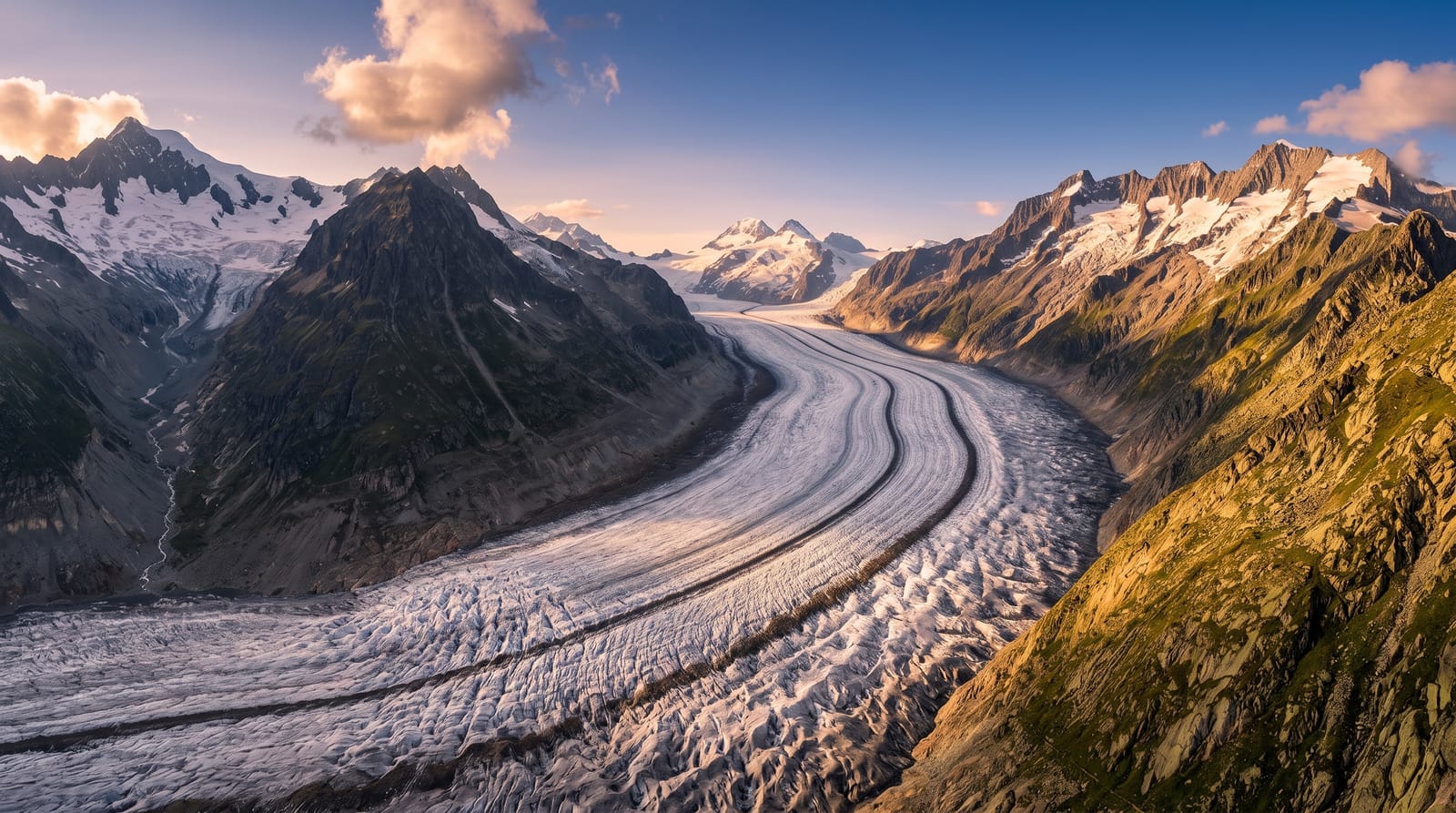
The largest glacier in the Alps, a twenty-three-kilometre river of ice you look down on from cable-car ridges rather than walk across.
Updated 12 October 2026
AI illustration
UNESCO World Heritage
The Aletsch is the biggest glacier in the Alps, and the thing that makes it extraordinary is that you can stand above it without any mountaineering at all. Three cable cars lift you from villages in the Valais to ridges at around 2,700 metres, and from each one the ice unrolls below in a slow grey-white curve, streaked with dark medial moraines that mark where tributary glaciers merged. The scale takes a while to register. What looks like a wrinkled road is a body of ice about twenty-three kilometres long, hundreds of metres deep, moving downhill fast enough to be measured and shrinking fast enough to be documented year by year in photographs pinned up at the viewpoints. It anchors the Swiss Alps Jungfrau-Aletsch UNESCO site, and the surrounding Aletsch Forest holds gnarled Swiss stone pines that have been growing beside the ice for centuries.
The landscape
- Eggishorn - the highest of the three viewpoints, reached from Fiesch, with the widest sweep of the ice.
- Bettmerhorn - a shorter lift with a small glacier exhibition at the top station.
- Moosfluh - the ridge above Riederalp, where the ground is visibly slumping as the ice retreats.
- The Aletsch Forest - ancient stone pines on the slopes above the glacier, walkable on marked trails.
When to go
June to October for clear ridge walking. The viewpoints run in winter too, with snow-covered approaches. Go early: cloud builds over the ice through the afternoon in summer, and the light is best in the first hours.
Before you go
The retreat is not an abstraction here. The ice has pulled back visibly within living memory, and the slopes at Moosfluh are slipping as the glacier that pressed against them thins. The walk between the three viewpoints is exposed and takes several hours, so check the weather rather than assuming a cable car means an easy day. Walking on the glacier itself needs a guide and equipment.
Nearby
Bettmeralp and Riederalp are car-free villages above the valley; the Rhone valley towns of Brig and Fiesch sit below.
Key facts
Source: Wikidata, item Q204658, read on 18 October 2026.
What to pack for The Aletsch Glacier
Chosen from what this place is for. Tap a kit for the full checklist.
- Broken-in walking shoes or boots - Grip and ankle support matter more than looks; never hike in brand-new boots. Find on Amazon
- Warm base layers - Merino or synthetic against the skin - never cotton, which chills when damp. Find on Amazon
- Layers for big temperature swings - Warm sun by day, near-freezing at night, even near the equator. Find on Amazon
- Layers + a waterproof shell - Mountain weather turns fast; a packable rain jacket saves the day. Find on Amazon
Some links on this page are Amazon affiliate links - if you buy through them we may earn a small commission at no extra cost to you.
All packing kitsPlan your trip
Where to start if The Aletsch Glacier is going on the list.
Booking links on this page are affiliate links - if you book through them we may earn a small commission at no extra cost to you. It never changes what we write about a place.
Opening times, ticket prices and seasonal closures change - check the official source before you go: official site.