Gyeongju
The museum without walls - the ancient capital of the Silla kingdom, a city scattered with royal burial mounds, temples, an old observatory and treasures across a thousand years, a UNESCO area.
Updated 18 October 2026
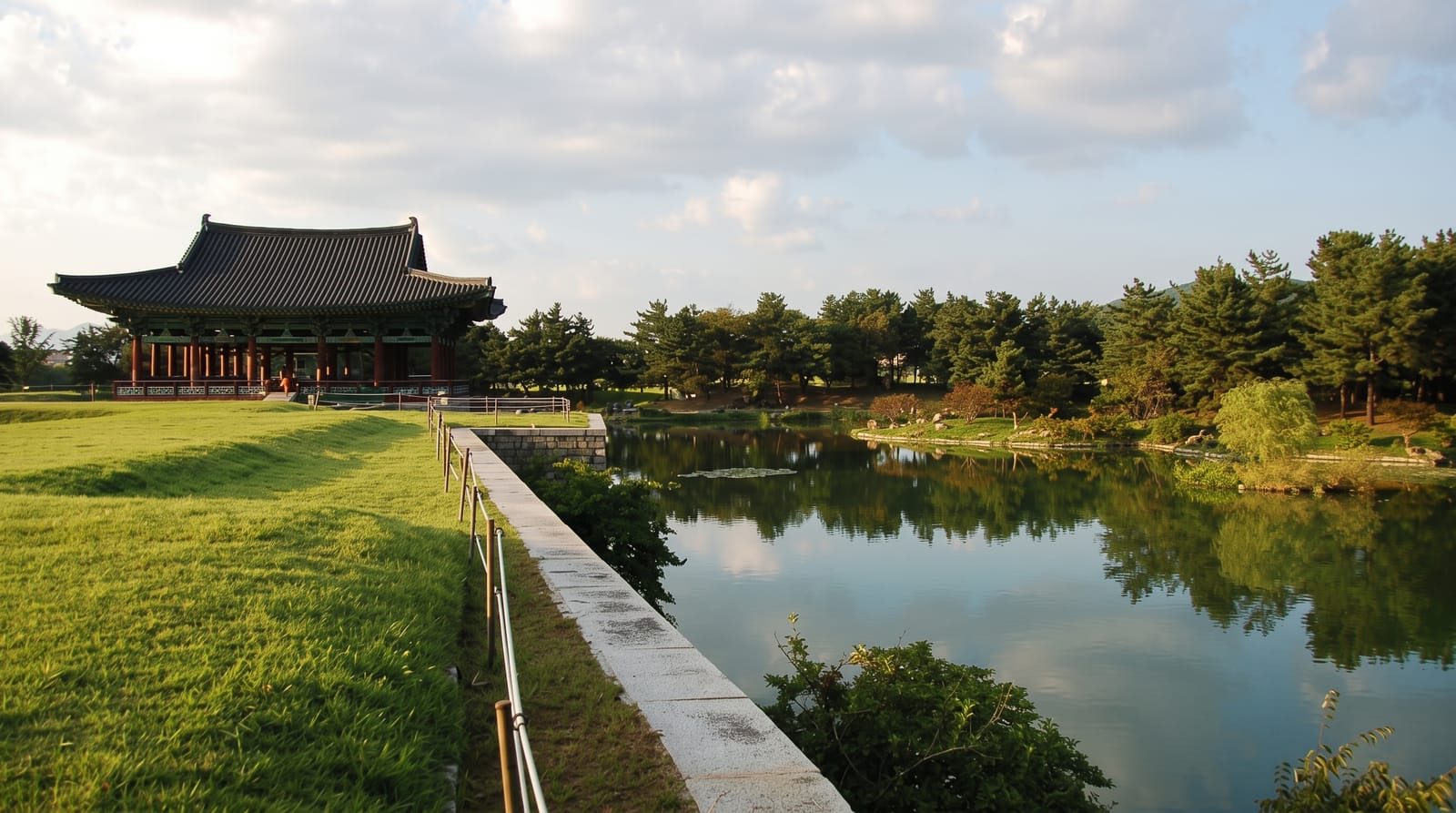
AI illustration
UNESCO World Heritage
Gyeongju, often called a museum without walls, was for a thousand years the capital of the ancient Silla kingdom, and the modern town is scattered with the treasures of that golden age. Great grassy royal burial mounds rise among the streets and parks, alongside the ancient Cheomseongdae observatory, the tranquil Anapji pond, temples and a superb museum, making this UNESCO area the richest concentration of ancient heritage in South Korea.
History
Korean records, probably drawn from Silla's chronicles, say that six villages around Gyeongju united under Bak Hyeokgeose in 57 BC to form Saro-guk, which grew into the kingdom of Silla, with this city, called Sŏrabŏl, Gyerim or Geumseong, as its capital for close to a thousand years. After Silla unified the peninsula up to the Taedong River in 668 it became the centre of Korean political and cultural life, its wealth reported as far away as Persia in a 9th-century book, and the Samguk yusa gives it 178,936 households at its peak, suggesting nearly a million people; many of its famous sites date from this Unified Silla period. Silla came to an end early in the 10th century, in 940 King Taejo of Goryeo renamed the city Gyeongju, and from 987 until 1012 it was the Eastern Capital (Wikipedia, Gyeongju).
The main sights
- The royal tombs - the great grassy burial mounds of the Silla kings.
- Cheomseongdae - one of the oldest observatories in East Asia.
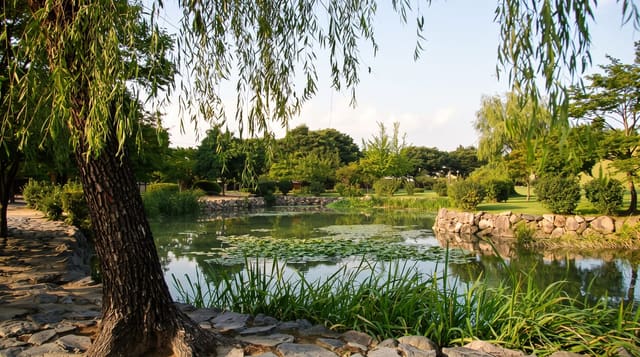
- Donggung and Anapji - the palace pond, beautiful at night.
- The Gyeongju National Museum - the treasures of the Silla kingdom.
When to go
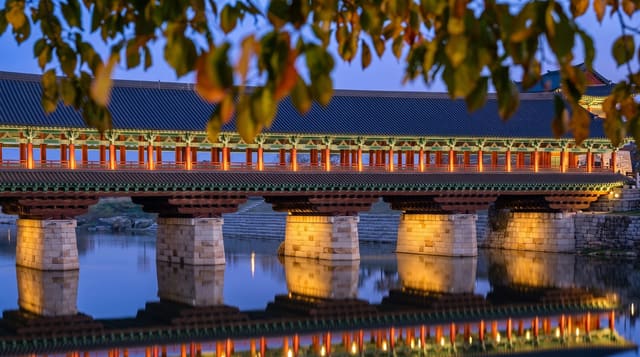
Spring and autumn for the mildest weather, cherry blossom or autumn colour; the sites are spread out, so a bicycle or a day is ideal. Anapji pond is beautifully lit and reflected after dark.
Good to know
The sights are spread across the town and beyond, so a bicycle, bus or a full day helps to link them, and the great tombs are grassy mounds you view rather than enter. It is best paired with the nearby Bulguksa temple. It is a relaxed, historic town rather than a dramatic single sight, rewarding an unhurried visit.
Nearby
The Bulguksa temple and Seokguram Grotto are just outside the town; Busan is to the south.
What to pack for Gyeongju
Chosen from what this place is for. Tap a kit for the full checklist.
- Padded shorts - The one thing that makes a full day in the saddle bearable. Find on Amazon
- Head torch + spare batteries - Hands-free light is essential; caves are truly dark. Find on Amazon
- Spare batteries + cards - Cold and long shoots drain power; never run out at the good light. Find on Amazon
- Comfortable walking shoes - Sightseeing means kilometres of pavement and cobbles daily. Find on Amazon
Some links on this page are Amazon affiliate links - if you buy through them we may earn a small commission at no extra cost to you.
All packing kitsPlan your trip
Where to start if Gyeongju is going on the list.
Booking links on this page are affiliate links - if you book through them we may earn a small commission at no extra cost to you. It never changes what we write about a place.
Opening times, ticket prices and seasonal closures change - check the official source before you go: official site.