El Tajín
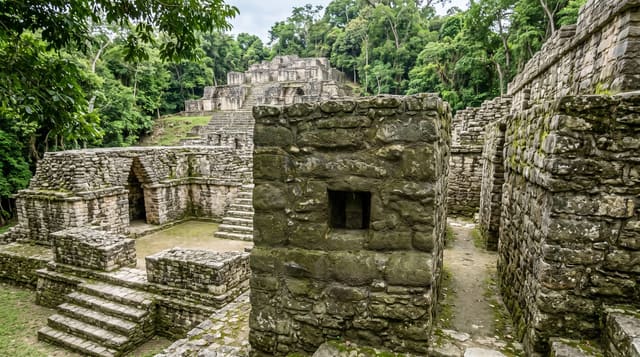
A UNESCO-listed city in the Veracruz jungle whose Pyramid of the Niches carries three hundred and sixty-five recesses, one for each day.
Updated 18 October 2026

AI illustration
UNESCO World Heritage
El Tajín flourished between roughly 600 and 1200 in the humid lowlands of northern Veracruz, and its architecture belongs to no other Mexican tradition: buildings covered in deep square niches that throw sharp shadows, the finest being the Pyramid of the Niches, whose seven tiers carry three hundred and sixty-five recesses, almost certainly a calendar. The site holds twenty ballcourts, the last three found only in 2013, an unusual number, several with carved panels showing what happened to the players afterwards. Outside the entrance, Totonac voladores perform the flying pole ceremony, in which four men descend head-down on ropes from a thirty-metre pole while a fifth plays a flute at the top, a ritual UNESCO also recognises separately.
History
The area has been occupied since at least 5600 BC, and the settlement was founded in the 1st century AD, by people who may have been Huastec, though some argue for the Totonacs; monumental building began soon after, and by 600 El Tajín was a city that, until about 1200, grew rich on its place on the old trade routes, exporting goods such as vanilla, and came to control much of today's Veracruz, with more than fifty ethnic groups living in the city. In 1785 the official Diego Ruiz, searching for illegal tobacco plantings, came upon the Pyramid of the Niches and reported it in the Gaceta de Mexico, saying the local people had kept the place secret; the find drew antiquarians in New Spain and Europe, and was publicised by Pietro Márquez and Alexander von Humboldt. The German architect Charles Nebel visited in 1831 and was the first to suggest the pyramid belonged to a larger city, archaeologists arrived in the early 20th century, 20 ballcourts have been found, the last three in March 2013, and in 1992 El Tajín, named after the Totonac rain god, became a World Heritage Site (Wikipedia, El Tajín).
What you'll find
- The Pyramid of the Niches - seven tiers with three hundred and sixty-five recesses.
- The ballcourts - twenty of them, with carved panels of the ritual.
- The voladores - the flying pole ceremony performed at the entrance.
- Tajín Chico - the upper residential and administrative complex.
When to go
November to April is the drier season; Veracruz lowlands are hot and humid year-round with heavy rain in summer. Mornings are best before the heat. The voladores perform through the day at the entrance, with more frequent shows at busy times.
Practical notes
It is a long way from anywhere on the usual routes, four hours from Veracruz city and further from Mexico City, which is why it sees a fraction of Teotihuacán's visitors. Heat and humidity are heavy and shade is limited. The voladores perform for tips rather than a set fee, and the pole itself is beside the car park rather than in a ceremonial setting.
Nearby
Papantla and its vanilla plantations are nearby; the Gulf coast is an hour east.
Key facts
Source: Wikidata, item Q753895, read on 18 October 2026.
What to pack for El Tajín
Chosen from what this place is for. Tap a kit for the full checklist.
- Strong insect repellent - DEET or picaridin; the jungle is where bites and disease risk are highest. Find on Amazon
- Comfortable walking shoes - Sightseeing means kilometres of pavement and cobbles daily. Find on Amazon
- Long, light, quick-dry clothing - Covers skin from insects and sun without cooking you in the humidity. Find on Amazon
- A slim anti-theft daypack - Zips that close properly; keep it in front in crowds and on transit. Find on Amazon
Some links on this page are Amazon affiliate links - if you buy through them we may earn a small commission at no extra cost to you.
All packing kitsPlan your trip
Where to start if El Tajín is going on the list.
Booking links on this page are affiliate links - if you book through them we may earn a small commission at no extra cost to you. It never changes what we write about a place.
Opening times, ticket prices and seasonal closures change - check the official source before you go: official site.