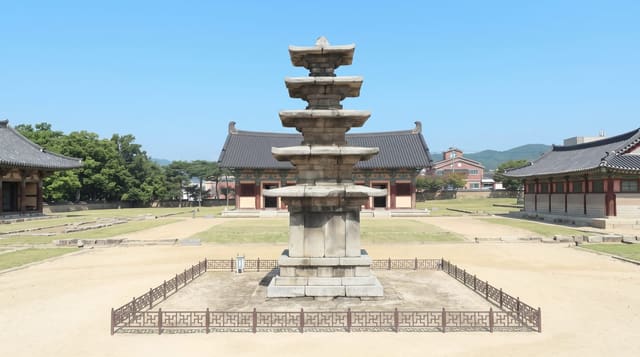
Busosanseong Fortress
The wooded hill fortress behind the last Baekje capital at Buyeo, walked on earth ramparts above the Baengma River.
Updated 1 September 2026
UNESCO World Heritage
Baekje moved its capital to Sabi - modern Buyeo - in 538, and Busosanseong is the fortified hill immediately behind the palace ground, a last refuge and a lookout over the river. What survives is earth rampart rather than stone wall, running about two and a half kilometres round the wooded hill, with the sites of storage pits, gates and buildings marked along it and pavilions at the viewpoints. Paths loop through pine and oak, and the walk is gentle. On the far side above the water are Goran-sa, a small temple with a spring, and Nakhwaam, the cliff over the Baengma. The fortress is part of the Baekje Historic Areas inscribed by UNESCO in 2015. A boat runs from below Goran-sa back to the town side, which is the pleasant way to finish. Buyeo is a small country town and the fortress is effectively its park, used daily by residents walking.
What you'll find
- The earth ramparts - the wooded bank round the hill.
- The excavated sites - storage pits and gate positions marked.
- Goran-sa - the small temple and spring above the river.
- The river boat - the return crossing from below the cliff.
When to go
April to June and September to November. Autumn colour on the hill is good. Mornings are quiet; it is a local walking park as much as a monument.
Things to know
There is no standing fortification - this is earthwork and woodland, and the interest is historical. Ticketed. The Buyeo National Museum supplies the context and is a separate visit.
Nearby
Nakhwaam and Goran-sa are on the hill; Gungnamji pond and the museum are in the town.
Key facts
Source: Wikidata, item Q12598898, read on 18 October 2026.
What to pack for Busosanseong Fortress
Chosen from what this place is for. Tap a kit for the full checklist.
- Comfortable walking shoes - Sightseeing means kilometres of pavement and cobbles daily. Find on Amazon
- Modest clothing - Shoulders and knees covered - the single most common requirement. Find on Amazon
- A slim anti-theft daypack - Zips that close properly; keep it in front in crowds and on transit. Find on Amazon
- A scarf or shawl - To cover the head or shoulders on entry; women especially at mosques. Find on Amazon
Some links on this page are Amazon affiliate links - if you buy through them we may earn a small commission at no extra cost to you.
All packing kitsPlan your trip
Where to start if Busosanseong Fortress is going on the list.
Booking links on this page are affiliate links - if you book through them we may earn a small commission at no extra cost to you. It never changes what we write about a place.
Opening times, ticket prices and seasonal closures change - check the official source before you go: official site.