Acrocorinth
The limestone rock above ancient Corinth, walled by every power that held the isthmus, with three stacked gates and an empty upper town.
Updated 19 October 2026
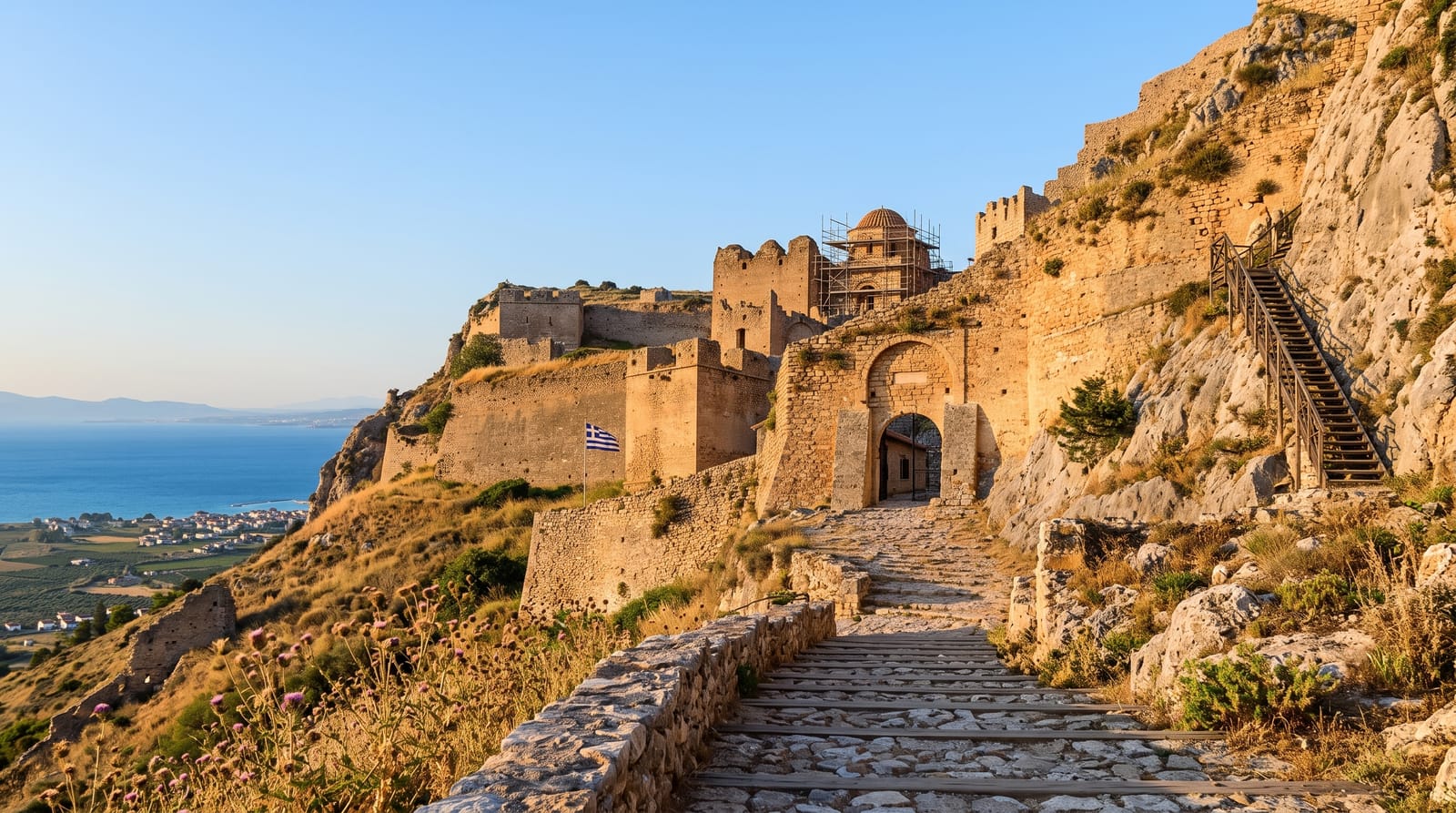
AI illustration
Acrocorinth is the rock that made Corinth matter, a limestone mass standing around 575 metres over the plain and controlling the land bridge between mainland Greece and the Peloponnese. The approach runs through three successive gates, the outer one rebuilt in Ottoman and Venetian times, the middle Frankish, the inner set on ancient foundations. Beyond them opens a walled enclosure big enough to hold a town, now empty apart from cisterns, chapel shells, the stump of a mosque and a great deal of thistle. A path climbs to the higher of the two peaks, where a temple of Aphrodite once stood and the view runs across both gulfs and the isthmus between them.
History
Acrocorinth was occupied continuously from archaic times to the early 19th Century, and with its secure water supply it was used again and again as a last line of defence for the Peloponnese; in the Hellenistic period, with Demetrias and Chalcis, it was one of the "Fetters of Greece" held by the Macedonians. The Byzantines fortified it heavily as the seat of the governor of the theme of Hellas and later of the Peloponnese, Leo Sgouros held it against the Crusaders for three years, and it then passed to the Frankish Principality of Achaea, the Venetians and the Ottomans; the temple of Aphrodite on the highest peak became a church and then a mosque. The American School began excavating here in 1929 (Wikipedia, Acrocorinth).
Highlights
- The triple gates - three defensive lines stacked up the approach, each from a different century.
- The Upper Peirene spring - an underground chamber inside the walls that still holds water.
- The summit - foundations of the Aphrodite temple on the higher peak, with the widest view.
- The empty enclosure - cisterns, ruined chapels and a mosque shell scattered through the scrub.
When to go
Spring puts wildflowers across the whole enclosure and keeps the air clear enough to pick out Attica across the water. Summer is punishing, since there is no shade above the gates and the pale rock throws heat back at you. Late afternoon gives the best light on the gulfs, but leave enough time to get back down before the parking area empties.
Before you go
This is a hike, not a monument visit. Expect uneven stone, loose gravel and the better part of an hour of climbing to reach the top peak. Bring water, because there is nothing to buy once you are through the gates. Signage is thin and much of the interior is unexcavated scrub. The Ancient Corinth site below is ticketed separately and is a much smaller, tidier thing.
Nearby
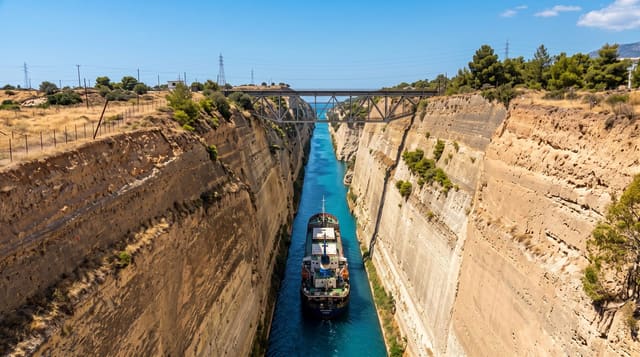
Ancient Corinth with its temple of Apollo and museum sits at the foot of the rock, and the canal is fifteen minutes east.
Key facts
Source: Wikidata, item Q420810, read on 18 October 2026.
What to pack for Acrocorinth
Chosen from what this place is for. Tap a kit for the full checklist.
- Broken-in walking shoes or boots - Grip and ankle support matter more than looks; never hike in brand-new boots. Find on Amazon
- Head torch + spare batteries - Hands-free light is essential; caves are truly dark. Find on Amazon
- Comfortable walking shoes - Sightseeing means kilometres of pavement and cobbles daily. Find on Amazon
- Modest clothing - Shoulders and knees covered - the single most common requirement. Find on Amazon
Some links on this page are Amazon affiliate links - if you buy through them we may earn a small commission at no extra cost to you.
All packing kitsPlan your trip
Where to start if Acrocorinth is going on the list.
Booking links on this page are affiliate links - if you book through them we may earn a small commission at no extra cost to you. It never changes what we write about a place.
Opening times, ticket prices and seasonal closures change - check the official source before you go: official site.