Ancient Corinth
The ruins of a great Greco-Roman city, with an archaic temple standing above a Roman forum and a spring still running.
Updated 19 October 2026
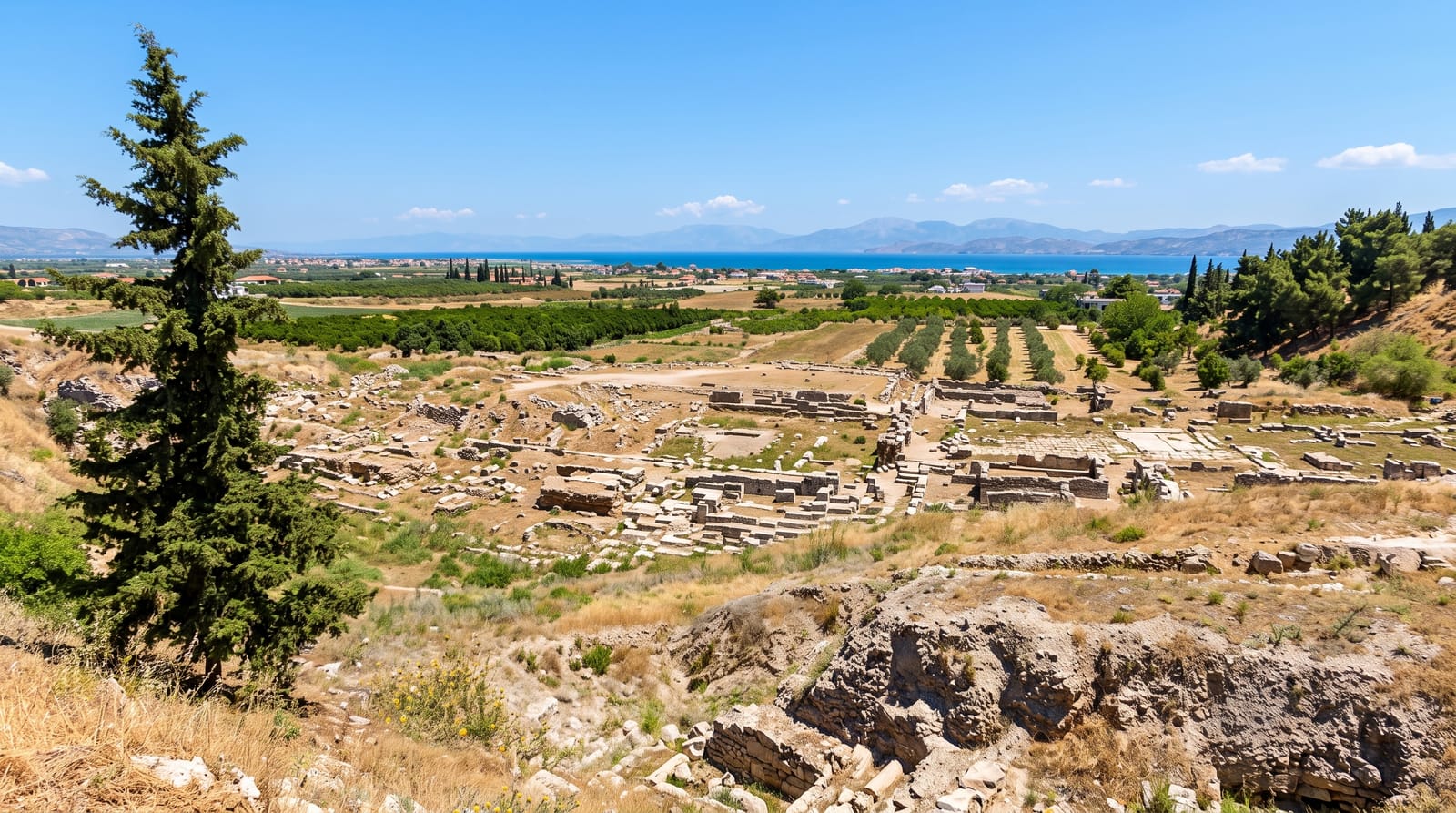
AI illustration
Corinth controlled the isthmus and grew enormously rich on the traffic between two seas, until Rome destroyed it in 146 BC and Julius Caesar refounded it a century later as a Roman colony; what you walk through is largely that Roman city, laid out around a huge forum. Above it stand seven monolithic columns of the Temple of Apollo, built around 540 BC and one of the oldest stone temples in Greece, their weathered limestone shafts cut from a single block each. The Peirene fountain, fed by a spring that has never stopped flowing, sits at the forum's edge with its chambers and arches intact. The site museum holds mosaics, sculpture and a large collection of the votive body parts left at the sanctuary of Asklepios. Behind everything rises Acrocorinth, the enormous fortified rock that served as the city's citadel.
History
Corinth sits on two broad terraces with arable plains and natural springs at their edge, and its oolitic limestone, quarried and traded across the Aegean, and its marl for pottery supplied the city's building and crafts. Neolithic pottery shows the site was occupied from at least as early as 6500 BC and into the Early Bronze Age, when it may have been a trading centre, though it was only sparsely inhabited just before the Mycenaean period; by myth it was founded by Corinthos, a descendant of Zeus, or by the goddess Ephyra, its ancient name, and Sisyphus founded a line of its kings, while the Iliad lists the Corinthians among Agamemnon's forces at Troy. For Christians the city is known from Paul's two letters to the Corinthians and his travels in the Acts of the Apostles (Wikipedia, Ancient Corinth).
The main sights
- The Temple of Apollo - seven archaic monolithic columns above the forum.
- The Roman forum - shops, basilicas, the bema and the paved square.
- The Peirene fountain - a spring house still supplied by its ancient source.
- The museum - mosaics, sculpture and the Asklepieion votives.
When to go
Spring and autumn; the site is open and stony, and midsummer afternoons are punishing. Combine with Acrocorinth in the same day, taking the fortress in the cooler hours.
Good to know
Much of the site is Roman rather than classical Greek, which surprises visitors expecting Corinthian columns everywhere. The village around it is touristy. The museum was robbed in 1990 and some pieces were recovered years later, so displays have changed over time.
Nearby
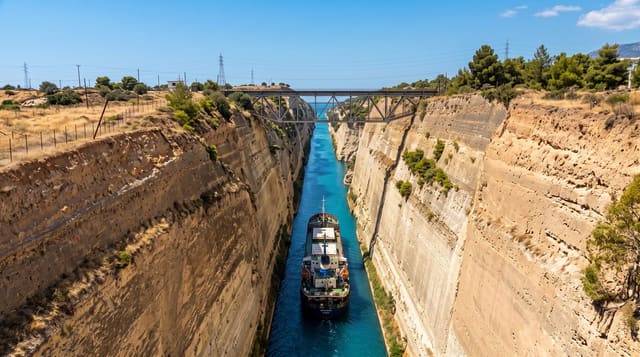
Acrocorinth rises directly above; the Corinth Canal is fifteen minutes east.
Key facts
Source: Wikidata, item Q1363688, read on 18 October 2026.
What to pack for Ancient Corinth
Chosen from what this place is for. Tap a kit for the full checklist.
- Comfortable walking shoes - Sightseeing means kilometres of pavement and cobbles daily. Find on Amazon
- Modest clothing - Shoulders and knees covered - the single most common requirement. Find on Amazon
- A slim anti-theft daypack - Zips that close properly; keep it in front in crowds and on transit. Find on Amazon
- A scarf or shawl - To cover the head or shoulders on entry; women especially at mosques. Find on Amazon
Some links on this page are Amazon affiliate links - if you buy through them we may earn a small commission at no extra cost to you.
All packing kitsPlan your trip
Where to start if Ancient Corinth is going on the list.
Booking links on this page are affiliate links - if you book through them we may earn a small commission at no extra cost to you. It never changes what we write about a place.
Opening times, ticket prices and seasonal closures change - check the official source before you go: official site.