Beopjusa Temple
A temple in Songnisan holding Palsangjeon, the only wooden pagoda left standing in Korea, next to a huge modern bronze Buddha.
Updated 18 October 2026
AI illustration
UNESCO World Heritage
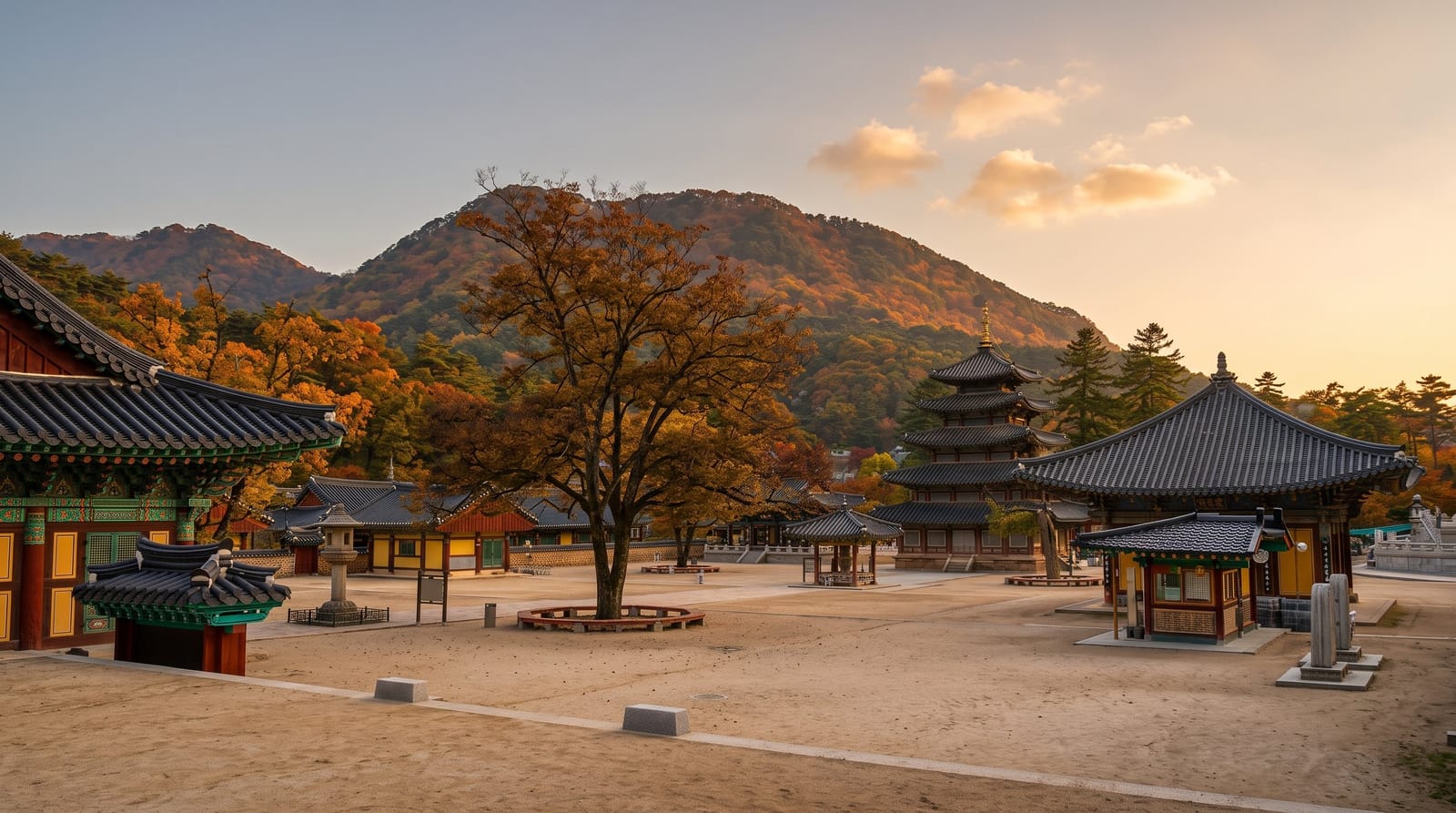
Every Korean temple once had a wooden pagoda and almost all of them burned. Beopjusa has the survivor: Palsangjeon, five storeys of timber rising over the courtyard, rebuilt in the early seventeenth century after the earlier one was lost, with painted scenes from the life of the Buddha inside. Around it stand much older pieces, including a stone lantern carried on two facing lions and an enormous iron cauldron from the years when the community ran to thousands. Dominating all of it is a gilt bronze Maitreya of the 1990s, tall enough to see from the car park. The walk in from the park gate goes through good old forest.
History
The Silla monk Uisin founded the temple in 553 and named it Beopju, residence of the Dharma, after the Indian sutras he brought back and kept there, and it became associated with Beopsang thought and the worship of the Maitreya Buddha. In the Goryeo period it is said to have housed as many as 3,000 monks, and a cistern and an iron pot from those years for feeding them survive; its wooden pagoda, Palsangjeon, the tallest in Korea, was burned with most of the buildings during the Japanese invasions and rebuilt in 1624. The temple shrank as state support for Buddhism faded under the Joseon dynasty, whose founder Taejo is said to have retired near Beopjusa, weary of his sons' quarrels (Wikipedia, Beopjusa).
The main sights
- Palsangjeon - the five-storey wooden pagoda, the last of its kind in Korea.
- The twin lion lantern - a stone lantern carried on two facing lions.
- The iron cauldron - the great vessel left from the temple's largest years.
- The forest approach - the walk in from the park gate under old trees.
When to go
Autumn colour in Songnisan is the busiest and the best time, with car parks full on October weekends. Spring is quieter and the approach walk greener. Come early to have the courtyard before the coach groups arrive. The walk from the park gate takes about twenty minutes each way, and parking is charged separately.
What to expect
The huge gilded modern Buddha sits awkwardly beside the old buildings and plenty of visitors find it swamps them. The site is heavily restored and busy. Songnisan in autumn means slow traffic on the approach road and queues at the gate. A long run of souvenir stalls and restaurants comes before you reach the woods.
Nearby
Songnisan's ridge trails start behind the temple; Cheongju is about an hour and a half away.
Key facts
Source: Wikidata, item Q484931, read on 18 October 2026.
What to pack for Beopjusa Temple
Chosen from what this place is for. Tap a kit for the full checklist.
- Comfortable walking shoes - Sightseeing means kilometres of pavement and cobbles daily. Find on Amazon
- Modest clothing - Shoulders and knees covered - the single most common requirement. Find on Amazon
- A slim anti-theft daypack - Zips that close properly; keep it in front in crowds and on transit. Find on Amazon
- A scarf or shawl - To cover the head or shoulders on entry; women especially at mosques. Find on Amazon
Some links on this page are Amazon affiliate links - if you buy through them we may earn a small commission at no extra cost to you.
All packing kitsPlan your trip
Where to start if Beopjusa Temple is going on the list.
Booking links on this page are affiliate links - if you book through them we may earn a small commission at no extra cost to you. It never changes what we write about a place.
Opening times, ticket prices and seasonal closures change - check the official source before you go: official site.