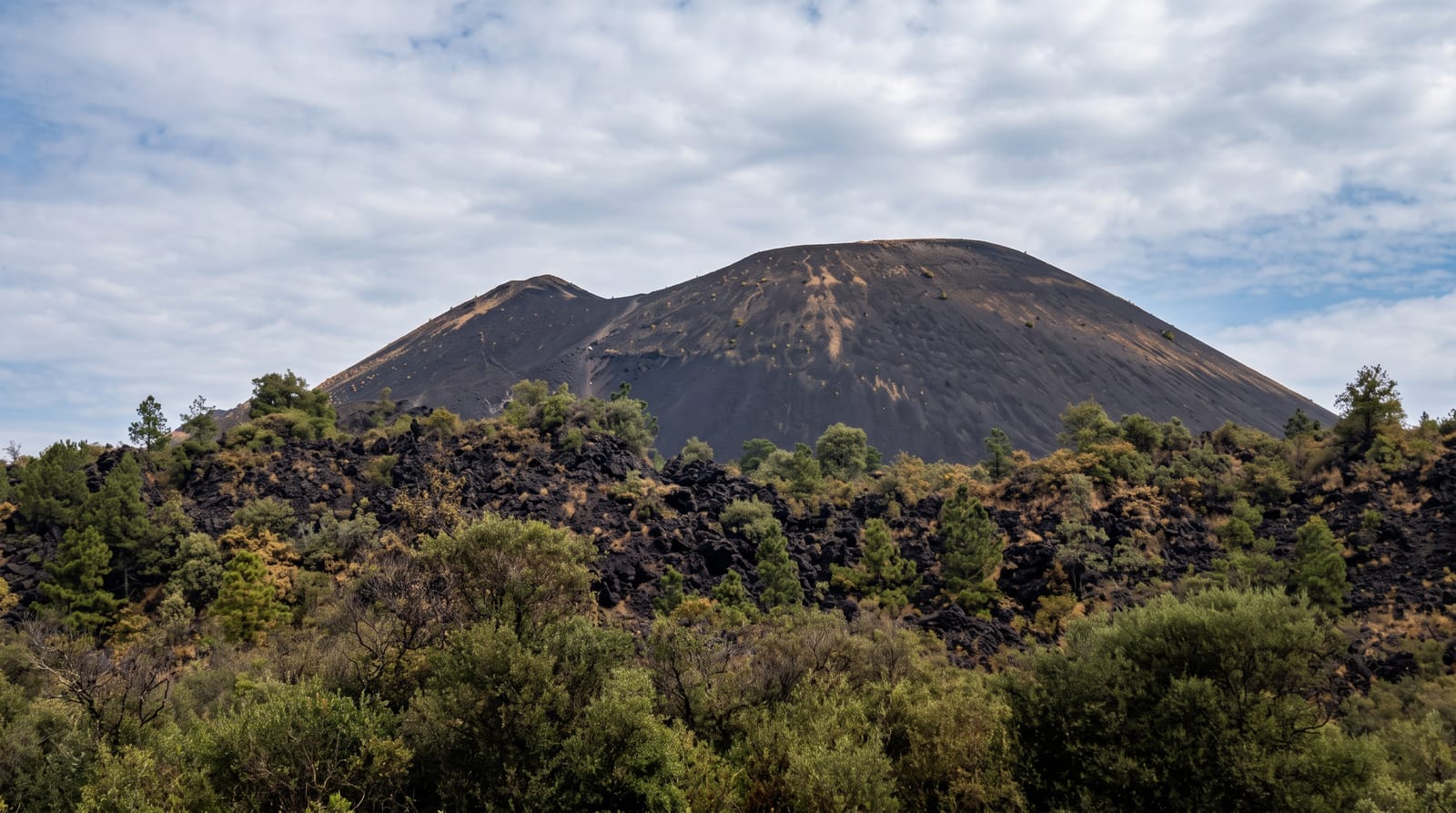
Mount Bisoke
A Virunga volcano with a crater lake at 3,711 metres, climbed and descended in a single long day.
Updated 21 October 2026
Bisoke rises to 3,711 metres on the Rwanda-Congo border and is the Virunga climb most people do, because it can be done in a day: around three hours up through bamboo and Hagenia forest into open Afroalpine vegetation, and a crater lake in the summit bowl, the largest in the range. Eruptions are recorded in 1891 and 1957, the later one from the north flank. The mud is the defining feature. Golden monkeys and, occasionally, gorilla sign are met on the lower slopes, and the whole route is inside Volcanoes National Park.
What's there
- The crater lake - water in the summit bowl at 3,711 metres.
- The vegetation bands - bamboo, Hagenia forest and Afroalpine plants in sequence.
- The mud - deep churned ground for much of the climb, the route's main feature.
- The chain view - Karisimbi and the other Virungas from the rim.
When to go
June to September and December to February are the drier windows. The wet months make the mud far worse and the descent treacherous. Starting at dawn is standard.
Practical notes
The mud is genuinely severe and gaiters or a porter are worth the money; the descent is slippery. Cloud covers the crater on many days. A permit and guide are compulsory and cannot be arranged on the day.
Nearby
Karisimbi is on the same massif, and Musanze is below.
Key facts
Source: Wikidata, item Q804039, read on 18 October 2026.
What to pack for Mount Bisoke
Chosen from what this place is for. Tap a kit for the full checklist.
- Broken-in walking shoes or boots - Grip and ankle support matter more than looks; never hike in brand-new boots. Find on Amazon
- Binoculars - The single best wildlife tool - even a compact pair transforms a sighting. Find on Amazon
- Layers for big temperature swings - Warm sun by day, near-freezing at night, even near the equator. Find on Amazon
- Layers + a waterproof shell - Mountain weather turns fast; a packable rain jacket saves the day. Find on Amazon
Some links on this page are Amazon affiliate links - if you buy through them we may earn a small commission at no extra cost to you.
All packing kitsPlan your trip
Where to start if Mount Bisoke is going on the list.
Booking links on this page are affiliate links - if you book through them we may earn a small commission at no extra cost to you. It never changes what we write about a place.
Opening times, ticket prices and seasonal closures change - check the official source before you go: official site.