Lake Baskunchak
A brilliant white salt lake still mined by rail-mounted harvesters, supplying a large share of Russia's salt.
Updated 21 October 2026
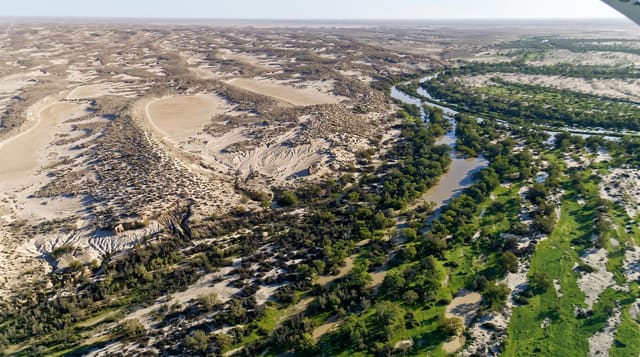
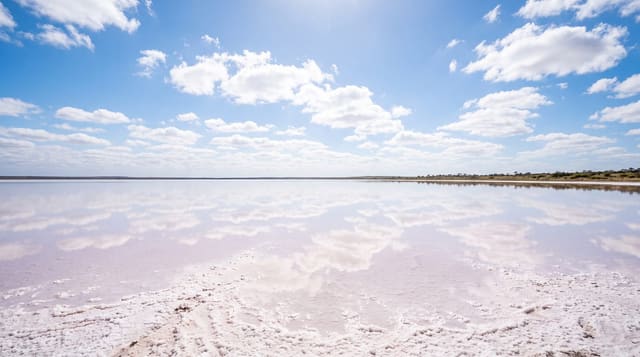
Baskunchak, about 115 square kilometres and 21 metres below sea level, protected since 1997, sits in a depression above a salt dome, fed by springs carrying dissolved salt, and it is essentially a solid salt body under a thin brine layer - the deposit runs to great depth and the surface is renewed continuously, so it has been mined since the eighth century and industrially since the nineteenth without exhausting it. A large share of Russian salt comes from here. Extraction is done by combine harvesters that run on rails laid out across the lake and cut the salt from below the brine, and the rails, the machinery and the salt crusts are as much what visitors photograph as the whiteness. The brine is dense enough to float in, like the Dead Sea, and people do; the crystallised shore forms sharp ridges and shapes. It is a working industrial site with a natural park around it, and Mount Bolshoye Bogdo rises a few kilometres away.
What's there
- The white surface - a salt body under thin brine, renewed by inflowing springs.
- The rail harvesters - combines running on tracks laid across the lake.
- The floating - brine dense enough to hold a body up.
- The crystal shore - salt ridges and formations along the margins.
When to go
April to June and September; July and August regularly exceed forty degrees with no shade. A day.
Good to know
It is an active industrial site - stay clear of machinery and rails. Salt is severely corrosive to skin, cuts, eyes and equipment, and rinsing water is not available on the lake. No shade whatsoever. Summer heat here is genuinely dangerous.
Nearby
Mount Bolshoye Bogdo is a few kilometres away; Lake Elton is north in Volgograd region.
Key facts
Source: Wikidata, item Q810395, read on 18 October 2026.
What to pack for Lake Baskunchak
Chosen from what this place is for. Tap a kit for the full checklist.
- Broken-in walking shoes or boots - Grip and ankle support matter more than looks; never hike in brand-new boots. Find on Amazon
- Layers + a waterproof shell - Mountain weather turns fast; a packable rain jacket saves the day. Find on Amazon
- Daypack with rain cover - 20-30 litres holds water, snacks, layers and a first-aid kit. Find on Amazon
- Offline maps + a power bank - Download the trail before you lose signal; carry backup charge. Find on Amazon
Some links on this page are Amazon affiliate links - if you buy through them we may earn a small commission at no extra cost to you.
All packing kitsPlan your trip
Where to start if Lake Baskunchak is going on the list.
Booking links on this page are affiliate links - if you book through them we may earn a small commission at no extra cost to you. It never changes what we write about a place.
Opening times, ticket prices and seasonal closures change - check the official source before you go: official site.