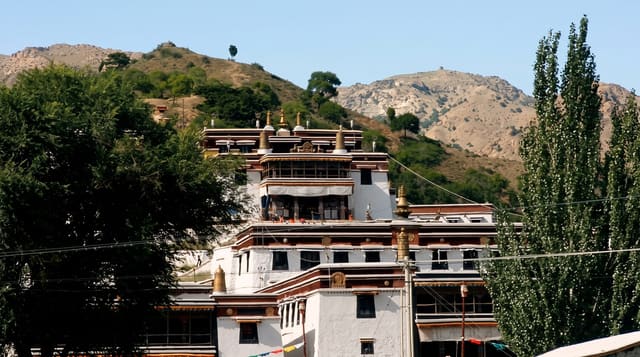
Sâmbăta de Sus Monastery
A Brâncovenesc monastery at the foot of the Făgăraș, rebuilt in the twentieth century and now a major pilgrimage centre.
Updated 22 October 2026
The monastery was founded by Constantin Brâncoveanu at the end of the seventeenth century, destroyed in 1785 under an order from the imperial court in Vienna disbanding contemplative monasteries, and left in ruins until rebuilding began in 1926; the new church was consecrated in 1946 and further restoration followed. The result is a large complex in the Brâncovenesc manner, with a stone-carved porch, painted interior, and extensive later ranges around courtyards, all set on the last slope before the Făgăraș wall rises behind it. It has become one of the most visited monasteries in Transylvania, particularly for the icon-painting school here and for the glass icon collection in its museum. The setting is genuinely fine, with forest above and the mountains close, and a road continues past it up to the Bâlea valley trailhead for walkers heading into the range.
History
Hermits lived in the area by the early 17th century, and the Brâncoveanu family acquired the village in 1654; around 1696 Constantin Brâncoveanu replaced an older wooden church with one of stone and brick, and the monastery existed by 1701. It escaped an order of 1761 against the Orthodox monasteries, but an imperial order of 1782 dissolving contemplative houses brought its ruin in November 1785; rebuilding began in 1926 and the church was consecrated in 1946 (Wikipedia, Sâmbăta de Sus Monastery).
The main sights
- The rebuilt church - Brâncovenesc carving and painted interior.
- The glass icon museum - a notable collection of Transylvanian glass icons.
- The icon-painting school - working studios attached to the monastery.
- The mountain setting - the Făgăraș wall rising immediately behind.
When to go
Year-round. Feast days and summer weekends bring very large numbers of pilgrims and the car park overflows. Winter is quiet and the mountains behind are at their most dramatic. Early morning is best for a calm visit.
Things to know
Almost everything you see is twentieth-century work rather than the original foundation, which surprises those who come for a seventeenth-century monastery. It is busy and can feel more like a pilgrimage site than a historic monument. Modest dress is expected and photography is restricted indoors. Parking is difficult in season.
Nearby
Cârța abbey ruin is west; the Transfăgărășan climbs into the mountains nearby.
Key facts
Source: Wikidata, item Q652286, read on 18 October 2026.
What to pack for Sâmbăta de Sus Monastery
Chosen from what this place is for. Tap a kit for the full checklist.
- Comfortable walking shoes - Sightseeing means kilometres of pavement and cobbles daily. Find on Amazon
- Modest clothing - Shoulders and knees covered - the single most common requirement. Find on Amazon
- A slim anti-theft daypack - Zips that close properly; keep it in front in crowds and on transit. Find on Amazon
- A scarf or shawl - To cover the head or shoulders on entry; women especially at mosques. Find on Amazon
Some links on this page are Amazon affiliate links - if you buy through them we may earn a small commission at no extra cost to you.
All packing kitsPlan your trip
Where to start if Sâmbăta de Sus Monastery is going on the list.
Booking links on this page are affiliate links - if you book through them we may earn a small commission at no extra cost to you. It never changes what we write about a place.
Opening times, ticket prices and seasonal closures change - check the official source before you go: official site.