Tibes Indigenous Ceremonial Center
The largest indigenous cemetery yet found in the Antilles, uncovered by a hurricane, with ball courts and plazas of the Igneri and pre-Taíno peoples.
Updated 21 October 2026
AI illustration
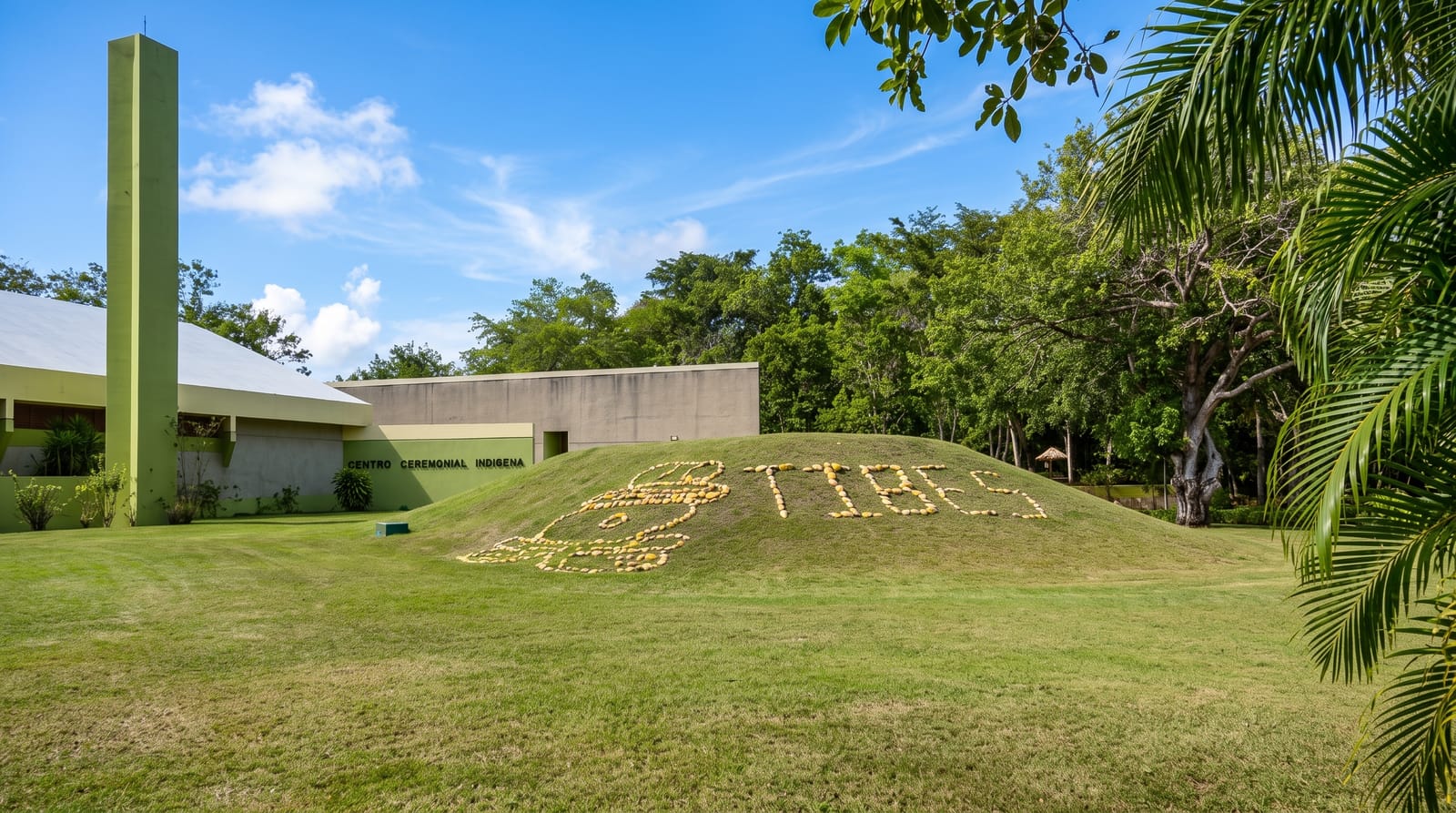
In 1975 a hurricane flooded the Portugués river and stripped soil from its bank, exposing stone alignments and human remains that turned out to be the largest and oldest indigenous cemetery yet found in the Antilles, with close to two hundred burials. Excavation revealed a ceremonial centre settled from about 25 AD by the Igneri, abandoned around 600 and used again from about 1000 by the Taíno, with nine ball courts and plazas bordered by stone slabs, some aligned to solstice and equinox sunrises. Pottery, amulets and stone collars came out with the burials. The site has reconstructed bohíos, a botanical garden of useful plants and a museum of the finds.
The main sights
- The ball courts - nine bateyes bordered by upright stone slabs.
- The astronomical alignments - plazas oriented to solstice sunrises.
- The museum - burials, pottery, amulets and stone collars from the site.
- The reconstructed village - bohíos and a garden of useful plants.
When to go
December to April is drier. Entry is by guided tour at set times, mostly in Spanish with English available on request. Mornings are cooler for walking the open plazas.
Practical notes
What survives above ground is stone borders and grass plazas, so the museum and the guide carry the visit; going without the tour would be pointless. Tours are often Spanish-only unless arranged. The site has closed for extended repairs after storms.
Nearby
Ponce is fifteen minutes south; Hacienda Buena Vista is nearby in the hills.
Key facts
Source: Wikidata, item Q3991131, read on 18 October 2026.
What to pack for Tibes Indigenous Ceremonial Center
Chosen from what this place is for. Tap a kit for the full checklist.
- Comfortable walking shoes - Sightseeing means kilometres of pavement and cobbles daily. Find on Amazon
- A slim anti-theft daypack - Zips that close properly; keep it in front in crowds and on transit. Find on Amazon
- A refillable water bottle - Many cities have public fountains; save money and plastic. Find on Amazon
- A light layer + compact umbrella - For museum air-con and a sudden shower. Find on Amazon
Some links on this page are Amazon affiliate links - if you buy through them we may earn a small commission at no extra cost to you.
All packing kitsPlan your trip
Where to start if Tibes Indigenous Ceremonial Center is going on the list.
Booking links on this page are affiliate links - if you book through them we may earn a small commission at no extra cost to you. It never changes what we write about a place.
Opening times, ticket prices and seasonal closures change - check the official source before you go: official site.