São Vicente de Fora Monastery
A white mannerist monastery above Alfama with kilometres of azulejos, a roof terrace, and the Braganza royal tombs.
Updated 22 October 2026
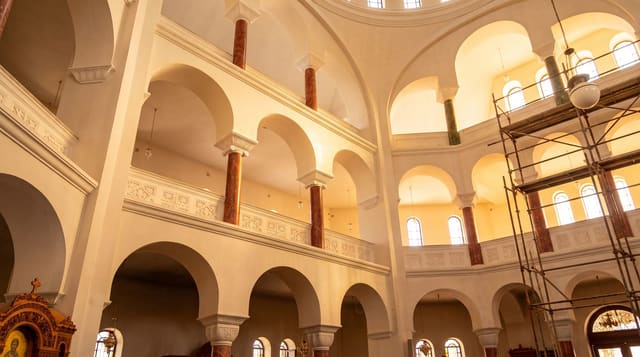
São Vicente de Fora was rebuilt from 1582, to designs attributed to Filippo Terzi, for Philip II, then king of Portugal as well as Spain, in a severe Italianate mannerism - a white limestone front with twin towers that set the pattern for a century of Portuguese church building. The interior is plain by comparison; the reason to buy the ticket is the cloisters and corridors, which carry one of the largest azulejo schemes anywhere, including a famous series of thirty-eight panels illustrating La Fontaine's fables in blue and white, made in the 1730s. Beyond them is the Braganza pantheon, in a former refectory: the tombs of almost every monarch of the dynasty from João IV to Manuel II, including Carlos I and his son Luís Filipe, and Catherine of Braganza, who married Charles II of England. The roof terrace gives Alfama, the river and the castle.
History
Afonso Henriques founded the first monastery here around 1147 for the Augustinians, outside the city walls and dedicated to Saint Vincent, whose relics came to Lisbon in the 12th century. Philip II, king of Portugal from 1580, ordered its rebuilding: the church was built between 1582 and 1629, the other buildings were finished only in the 18th century, and Joaquim Machado de Castro carved the main altarpiece (Wikipedia, Monastery of São Vicente de Fora).
What's there
- The La Fontaine panels - thirty-eight 1730s azulejo scenes of the fables in the cloisters.
- The Braganza pantheon - the dynasty's tombs from João IV to the last king.
- The roof terrace - Alfama rooftops, the Tagus and the castle.
- The mannerist front - the white twin-towered facade, attributed to Baltazar Álvares.
When to go
Year-round. Two hours. The Feira da Ladra flea market runs in the square below on Tuesdays and Saturdays.
Practical notes
The church is free but the cloisters, pantheon and terrace need the ticket. Steep climb from the river. Roof access closes in bad weather. Photography is restricted in the pantheon.
Nearby
The National Pantheon and Feira da Ladra are below; Alfama and the castle are west.
Key facts
Source: Wikidata, item Q1776168, read on 18 October 2026.
What to pack for São Vicente de Fora Monastery
Chosen from what this place is for. Tap a kit for the full checklist.
- Broken-in walking shoes or boots - Grip and ankle support matter more than looks; never hike in brand-new boots. Find on Amazon
- Comfortable walking shoes - Sightseeing means kilometres of pavement and cobbles daily. Find on Amazon
- Modest clothing - Shoulders and knees covered - the single most common requirement. Find on Amazon
- Layers + a waterproof shell - Mountain weather turns fast; a packable rain jacket saves the day. Find on Amazon
Some links on this page are Amazon affiliate links - if you buy through them we may earn a small commission at no extra cost to you.
All packing kitsPlan your trip
Where to start if São Vicente de Fora Monastery is going on the list.
Booking links on this page are affiliate links - if you book through them we may earn a small commission at no extra cost to you. It never changes what we write about a place.
Opening times, ticket prices and seasonal closures change - check the official source before you go: official site.